Vegetable Infusions
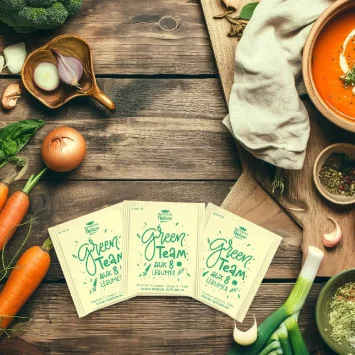
Green team with 8 vegetables*
Thyme - Garlic - Carrot - Onion - Parsley - Leeks - Lovage - Parnsnip
Provence d’Antan Organic Herbs: Natural flavors to enhance your dishes. Explore 100% organic, aromatic herbs grown in the heart of Provence.
Vegetable Infusions
Green team with 8 vegetables*
Thyme - Garlic - Carrot - Onion - Parsley - Leeks - Lovage - Parnsnip
Vegetable Infusions
Tomato and Co Organic Herbal Tea – Tomato, Garlic, Parsley
Garlic - Onion - Parsley - Tomato
Provence d’Antan organic aromatic herbs invite the plant world into everyday cooking. Thyme, rosemary, basil, oregano, savory or tarragon: each plant has its own personality, between fresh, botanical, woody or delicately powerful notes.
Used on their own or combined, aromatic herbs accompany vegetables, fish, meats, marinades, sauces and Mediterranean recipes. Selected with high standards and sourced from organic agriculture when specified by the reference, they make it possible to cook simply, in tune with the seasons.
Our selections and compositions are elaborated with care in France, in the botanical and generous spirit of Provence d’Antan.
For Provence d’Antan, aromatic herbs are intimately connected to seasonal cooking that is simple and generous.
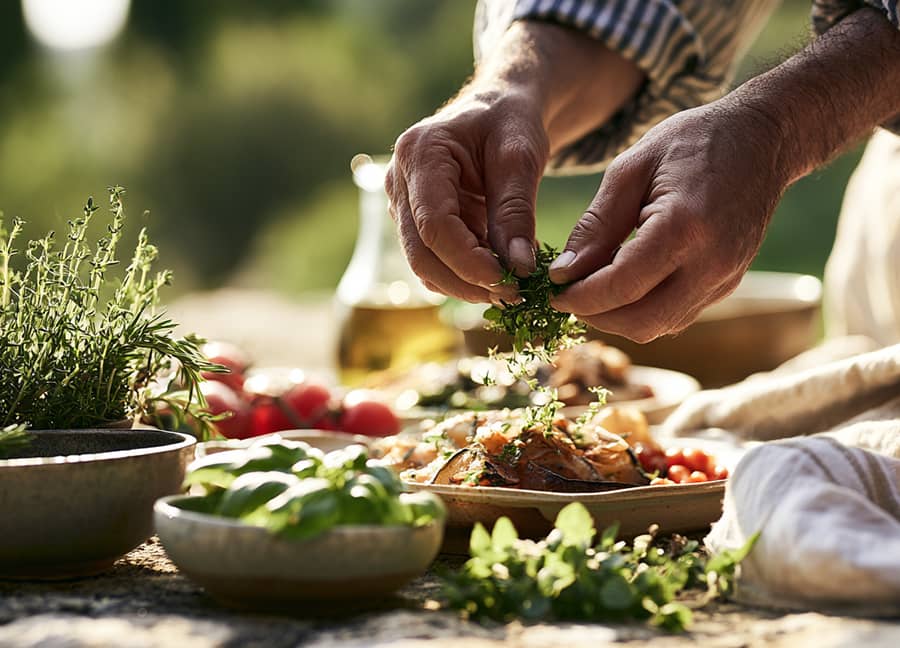
A few thyme leaves on roasting vegetables. Rosemary around potatoes. Basil on a tomato still warm from the sun. Savory in more rustic cooking.
They recall that Mediterranean cuisine which does not need to multiply ingredients in order to have character.
Our work consists of selecting plants for their taste qualities and their ability to naturally find their place in recipes.
An approach faithful to our vision of contemporary herbalism: knowing plants, respecting their personality and bringing them to life both in the cup and on the plate.
Thyme has a botanical and powerful personality particularly suited to cooking.
It accompanies tomatoes, roasted vegetables, potatoes, meats, fish, sauces and marinades.
Rosemary has a more woody and intense character.
A few leaves are generally enough to accompany potatoes, oven-baked vegetables, grilled dishes and marinades.
Basil immediately evokes Mediterranean cuisines.
Tomatoes, vegetables, sauces, pasta and salads offer it a particularly natural field of expression.
Oregano easily finds its place in tomato sauces, pizzas, vegetables and Mediterranean-inspired recipes.
Savory offers a more pronounced and rustic profile.
It pairs particularly well with vegetables, pulses, sauces and slow-cooked recipes.
Tarragon brings a highly recognisable personality to sauces, vinaigrettes, fish, poultry and egg-based recipes.
Thyme, rosemary, oregano and basil are great classics.
Ideally, follow the seasons too: basil with summer tomatoes, thyme and rosemary with roasted vegetables, for example.
Choose a measured use in order to preserve the finesse of the fish. Thyme, tarragon or certain botanical pairings make it possible to vary preparations.
Thyme, rosemary, savory and oregano can accompany marinades, barbecue and plancha cooking.
Basil, tarragon and oregano make it possible to build very different profiles from the same base.
Thyme, rosemary, savory and oregano naturally hold a special place in the Mediterranean culinary imagination.
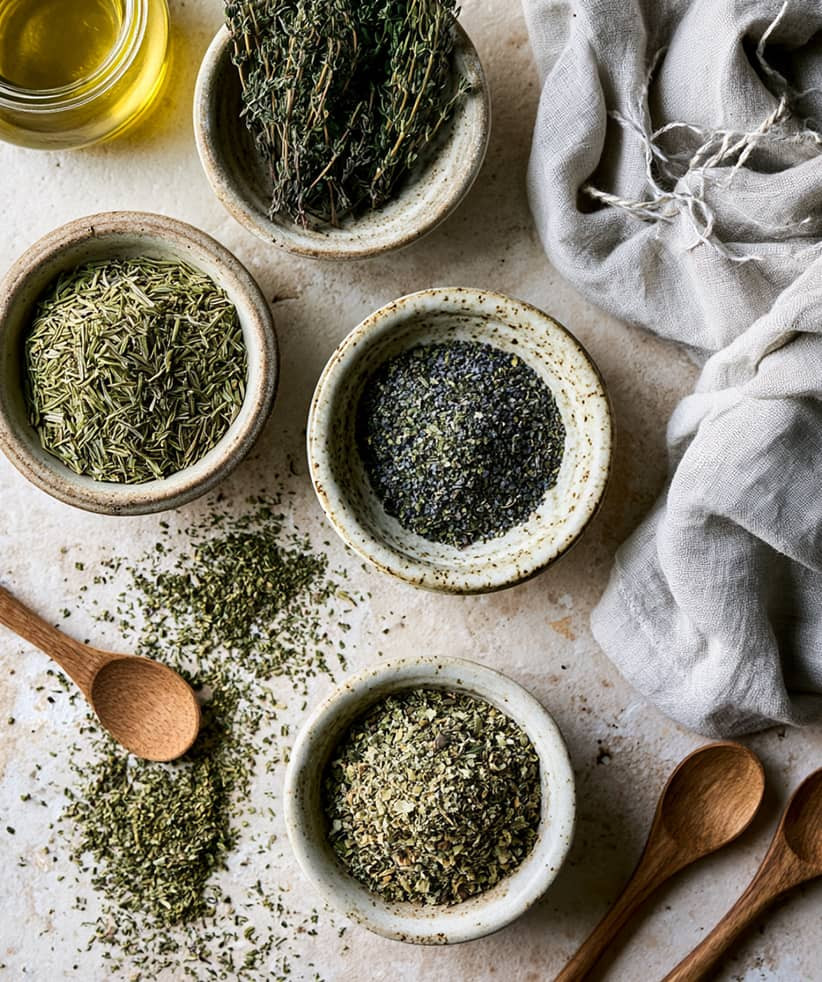
Aromatic herbs form a large family of culinary plants that can be used individually or combined.
Herbes de Provence correspond to a blend of aromatic herbs whose composition responds to a specific profile.
Choosing a single herb therefore makes it possible to work precisely with its personality. A blend makes it possible to obtain a direct balance between several plants.
The two approaches are complementary: a jar of thyme to give a recipe its signature, Herbes de Provence to immediately rediscover a Mediterranean profile.
It is not about determining which are “better”, but about understanding their uses.
They are particularly interesting when you are looking for freshness and botanical presence, notably in salads and certain finishing touches.
Practical and available all year round, they allow you to always keep a few great classics in your cupboard.
Drying also concentrates their expression: the quantity used should therefore be adapted.
For slow-cooked dishes or oven-baked vegetables, dried herbs naturally find their place.
Not all plants react to heat in the same way.
Robust herbs such as thyme or rosemary can accompany slow-cooked, roasted or oven-baked preparations.
They allow botanical flavours to gradually diffuse into a sauce or preparation.
Certain herbs benefit from being added later in order to better preserve their character.
The best reflex remains to taste: an aromatic herb should accompany the ingredient rather than mask it.
An almost elementary recipe where the quality of each ingredient makes all the difference.
Add rosemary and olive oil before slow cooking in the oven.
A few pinches of thyme immediately bring a Mediterranean dimension to a pan-fried dish.
Courgettes, aubergines and peppers are particularly well suited to aromatic herbs on a plancha or barbecue.
Olive oil, aromatic herbs and seasoning: a simple base for preparing vegetables, fish or meats.
Add oregano during cooking to accompany a homemade sauce, pasta or pizza.
A simple way to give a different personality to salads and raw vegetables.
Store your dried aromatic herbs in a properly closed container, away from light, heat and humidity.
In particular, avoid placing jars just above cooking hobs.
Do not pour herbs directly from their container over a steaming pan: the steam can bring humidity into the jar.
Good storage helps preserve their taste qualities for longer.
Provence has a very strong historical and cultural connection with aromatic plants. However, this does not mean that all references sold within the Provence d’Antan universe are necessarily grown in Provence.
This distinction is important.
The botanical and geographical origin depends on each plant and each reference. We favour a discerning selection, attentive to the quality of the raw materials and their flavour profile.
Our selections and compositions are then elaborated with care in France.
This transparency seems fairer to us than a general promise of Provençal origin that would not necessarily correspond to each product.
Used in culinary quantities, aromatic herbs naturally fit into a varied diet.
However, usual food use should be distinguished from concentrated consumption or use in the form of a food supplement.
Certain plants may require particular precautions in cases of pregnancy, breastfeeding, medical treatment or individual sensitivity.
In case of doubt regarding significant or regular consumption of a particular plant, seek advice from a healthcare professional.