Thyme from Provence
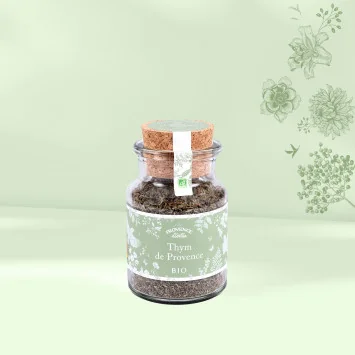
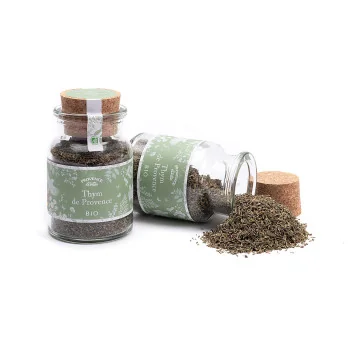
Thyme from Provence IGP Bio - 25g
Thyme
Provence d’Antan Thyme from Provence: Authentic thyme grown at the foot of Sainte-Victoire. Enhance your dishes with intense, 100% Provençal flavors.
Thyme from Provence
Thyme from Provence IGP Bio - 25g
Thyme
Thyme from Provence
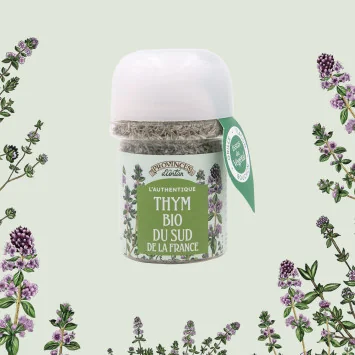
Organic Thyme from Southern France*
Thyme
Provence d’Antan Provence Thyme is grown at the foot of Sainte-Victoire, in a landscape where aromatic plants are fully part of the terroir. Its botanical, powerful and lightly woody profile naturally accompanies vegetables, meats, fish, sauces, marinades and slow-cooked dishes.
Used on its own or combined with other herbs, thyme brings an immediately recognisable Mediterranean signature. Selected with high standards and elaborated with care in France, it belongs to seasonal, authentic and unpretentious cooking, faithful to the Provence d’Antan spirit.
For us, thyme is one of the plants that best tells the story of Provence.
It evokes dry hills, stones warmed by the sun, scented paths and a style of cooking that favours few ingredients, but the right ingredients.
The connection to the terroir is concrete here: our thyme is grown at the foot of Sainte-Victoire.
This proximity gives meaning to the selection, to the producers’ know-how and to the way we wish to present the product.
Thyme is not simply a herb added to a recipe. It is a plant with character, deeply connected to Mediterranean culinary culture.
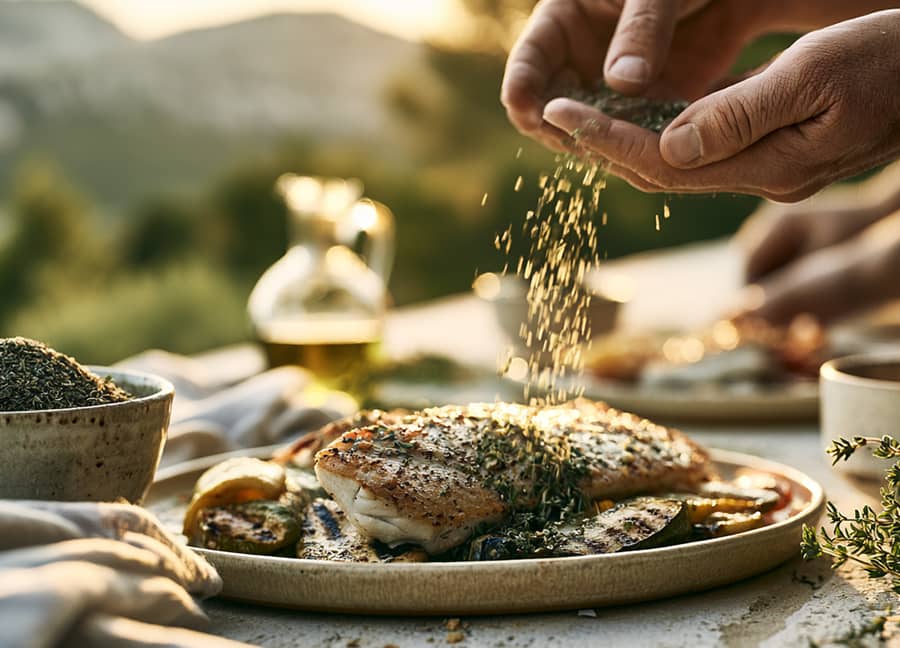
Thyme pairs particularly well with tomatoes, courgettes, aubergines, peppers and potatoes.
A few pinches before cooking are enough to bring a botanical and Mediterranean note.
It naturally pairs with poultry, grilled dishes, slow-cooked recipes and marinades.
Used with measure, thyme can bring a botanical touch without masking the finesse of the fish.
It fits easily into a tomato sauce, cooking jus or slow-cooked preparation.
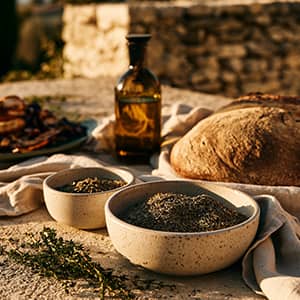
Combined with olive oil, thyme forms a simple base for preparing vegetables, meats or fish.
Thyme can be sprinkled over ingredients before placing them in the oven or added to a marinade.
It is well suited to long and slow-cooked preparations, where its botanical profile gradually diffuses.
A small quantity can also be added just before serving, depending on the recipe and the desired intensity.
Provence Thyme is a single plant.
Herbes de Provence correspond to a blend of several aromatic plants, of which thyme may be part.
Thyme therefore allows you to work with a precise flavour signature, while the Herbes de Provence blend offers a more complex and immediately Mediterranean profile.
The two are complementary in Provençal cooking.
Thyme is particularly well suited to oven cooking and Mediterranean vegetables.
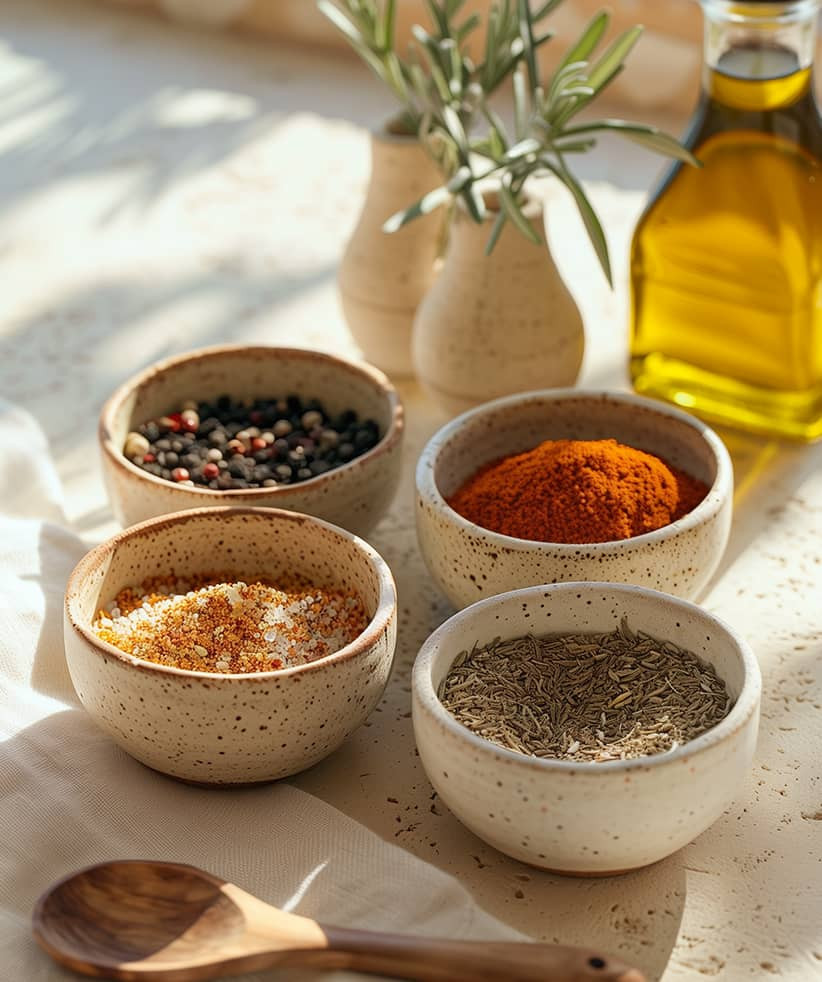
It works well with olive oil and can be combined with other herbs or spices.
A few pinches before or after cooking bring a simple and effective Provençal touch.
Thyme withstands long cooking well and gradually develops its character.
It naturally accompanies tomato sauces and vegetable-based preparations.
Add a drizzle of olive oil and a few pinches of thyme before cooking.
Tomatoes, thyme and olive oil are enough to create a very simple side dish.
Thyme naturally accompanies poultry, on its own or combined with other herbs.
Courgettes, aubergines and peppers are very well suited to thyme on a plancha or barbecue.
Use it with measure to preserve the balance of the dish.
Add thyme during cooking to bring greater depth to the preparation.
Store dried thyme in a properly closed container, away from light, heat and humidity.
In particular, avoid leaving it directly near cooking hobs.
It is also preferable not to pour thyme directly from its jar over a steaming dish, in order to prevent steam from entering the container.
Here, origin is at the heart of the product.
Provence d’Antan thyme is grown at the foot of Sainte-Victoire, in an environment naturally connected to the cultivation of Mediterranean aromatic plants.
This local origin makes it possible to value agricultural know-how, proximity to producers and strong coherence between the plant, the territory and its use in cooking.
The product is then elaborated with care in France.
Used in culinary quantities, thyme naturally fits into a varied diet.
Classic food consumption should, however, be distinguished from concentrated use or consumption in the form of a food supplement.
Certain particular situations may require professional advice, notably in cases of pregnancy, breastfeeding, medical treatment or individual sensitivity.
In case of doubt, seek advice from a healthcare professional.
Provence d’Antan Provence Thyme is an emblematic aromatic herb of Mediterranean cooking, grown at the foot of Sainte-Victoire. Its botanical, herbaceous and lightly resinous taste accompanies vegetables, grilled dishes, fish, meats, sauces, marinades and slow-cooked recipes. A Provençal essential for simple cooking with character.
Provence thyme is an emblematic aromatic herb of Mediterranean cooking. It is appreciated for its botanical, herbaceous, intense and lightly resinous taste. At Provence d’Antan, Provence Thyme is grown at the foot of Sainte-Victoire, then carefully prepared to accompany everyday recipes.
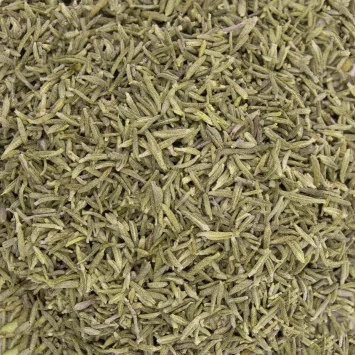
Provence thyme has a bold, botanical, herbaceous and lightly resinous taste. It evokes the garrigue, slow-cooked dishes, roasted vegetables and Provençal recipes. Its intensity brings relief to preparations without masking the main ingredients when properly dosed.
Provence thyme can be added to sauces, marinades, roasted vegetables, grilled dishes, fish, meats, soups and slow-cooked recipes. It withstands cooking well and can be used from the beginning of a recipe. For a livelier touch, it can also be added in small quantities at the end of preparation.
Yes, Provence thyme pairs very well with vegetables. It works with courgettes, aubergines, tomatoes, peppers, potatoes, mushrooms, carrots, onions and roasted vegetables. Simply add a pinch of thyme, a drizzle of olive oil and, depending on the recipe, a little garlic or lemon.
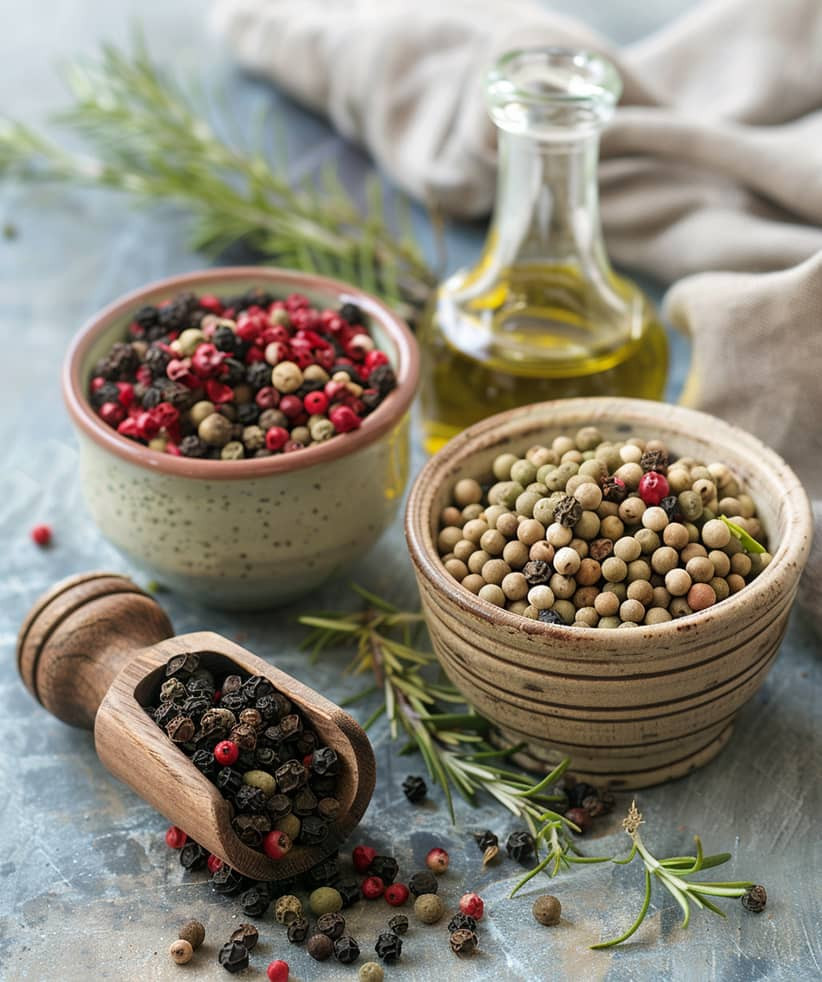
Yes, Provence thyme is very well suited to grilled meats, poultry, roasts, skewers, marinades and slow-cooked dishes. It can be combined with olive oil, garlic, pepper, rosemary or bay leaf to create a simple Mediterranean seasoning base.
Yes, Provence thyme can accompany fish, especially when oven-baked, cooked en papillote or prepared in a light marinade. It pairs well with lemon, olive oil, tomatoes, courgettes and potatoes. It is recommended to dose it moderately in order to preserve the finesse of the fish.
Yes, thyme is ideal in a tomato sauce. It brings a Provençal touch to sauces for pasta, pizzas, stuffed vegetables, gratins, ratatouilles and slow-cooked dishes. It can be added at the beginning of cooking to diffuse its taste, then adjusted at the end of preparation if needed.
Yes, Provence thyme is very well suited to marinades. It can be mixed with olive oil, lemon, garlic, pepper, rosemary or other spices depending on the recipe. It accompanies meats, fish, vegetables, potatoes, tofu or vegetarian skewers.
Thyme is an aromatic herb used on its own. Herbes de Provence are a blend of several Mediterranean herbs, often composed of thyme, rosemary, savory, oregano or basil depending on the recipes. Thyme brings a precise note, while Herbes de Provence offer a more complete profile.
Thyme has an herbaceous, botanical and lightly resinous taste. Rosemary is more powerful, woodier and more pronounced. Thyme is often easier to use in everyday cooking, while rosemary sometimes requires more precise dosage so as not to dominate the dish.
Thyme withstands cooking well. It can be added from the beginning in a slow-cooked dish, sauce or marinade. For roasted vegetables or grilled dishes, it can be added before cooking with a drizzle of oil. As a finishing touch, a small quantity can reinforce the botanical note.
The quantity depends on the dish, the size of the preparation and the desired intensity. For a family-style recipe, start with a small pinch or half a teaspoon, then adjust after tasting. As thyme is quite expressive, it is preferable to add it gradually.
Provence thyme sold on its own generally does not contain salt. However, it is recommended to check the exact composition of the product. Using a single herb makes it easier to control seasoning and add salt separately according to taste.
Provence thyme should be stored in a dry place, away from light, heat and humidity. It is recommended to close the sachet or jar properly after each use. Avoid placing it near a cooking hob or source of steam in order to preserve its intensity.
Yes, Provence thyme is perfectly suited to vegetarian cooking. It brings character to vegetables, cereals, pulses, sauces, gratins, savoury tarts, soups, tofu, chickpeas and potatoes. It is a simple and versatile herb for bringing a Mediterranean touch to plant-based dishes.
Choosing Provence d’Antan Provence Thyme means favouring an emblematic herb of Mediterranean cooking, grown at the foot of Sainte-Victoire and selected for its bold, botanical and lightly resinous taste.
It also means choosing a house attentive to ingredient quality, respect for taste, respect for the environment and fair remuneration for producers as well as partners throughout the supply chain, thanks to internal charters followed with care and high standards.