BBQ Spices
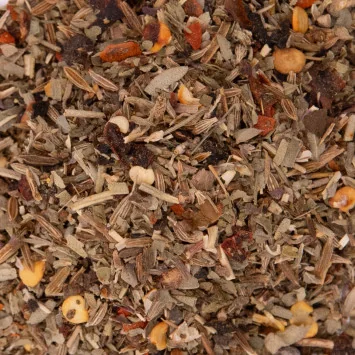
Organic Barbecue mix* Vegetable Pot
Thyme - Rosemary - Tomato - Savory - Oregano
"Provence d’Antan BBQ Spices: Natural, flavorful blends to elevate your grilling. Perfect for meats, fish, or vegetables, bring a unique touch to every barbecue.
BBQ Spices
Organic Barbecue mix* Vegetable Pot
Thyme - Rosemary - Tomato - Savory - Oregano
Provence d’Antan BBQ spices invite you to rediscover the pleasure of convivial, generous and spontaneous cooking. Designed for the barbecue, plancha and grilled dishes, our spice blends accompany meats, fish and vegetables alike.
In a marinade, as a dry rub, before cooking or as a finishing touch, a few pinches are enough to bring character to a recipe and vary inspirations. From Provençal shared tables to BBQ recipes inspired from elsewhere, our compositions are elaborated with care in France to make every flame-cooked moment one of sharing.
For us, barbecue first tells the story of a way of coming together.
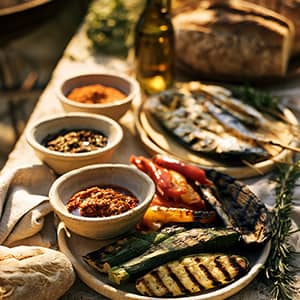
A table set outdoors, a few vegetables from the market, a plancha heating up, the first grilled dishes and that very Provençal way of letting the meal stretch out when the days are long.
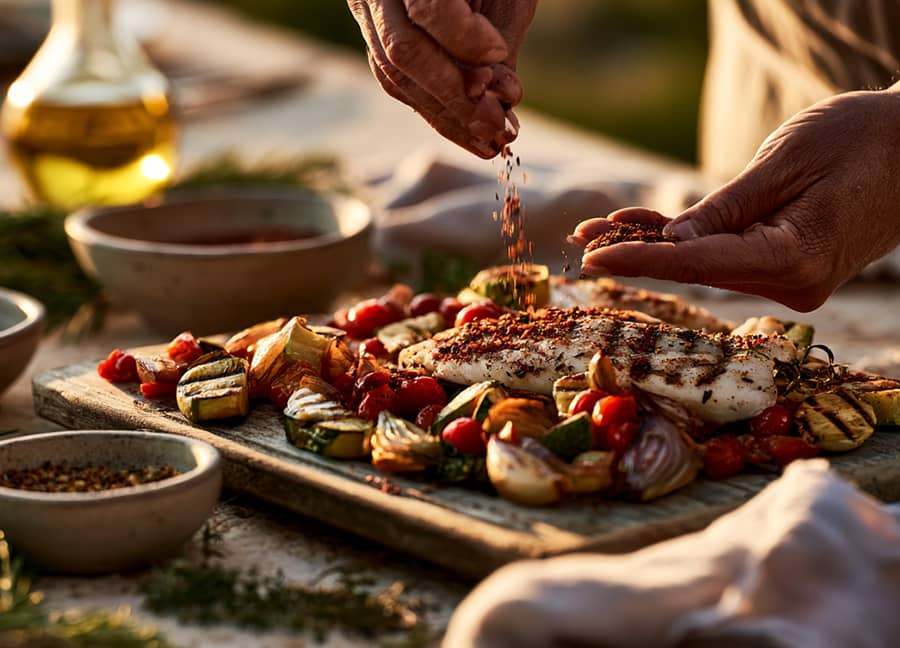
Our BBQ spice blends are part of this spirit. They are designed to make seasoning easier while allowing everyone to create their own style of cooking: a few pinches on a courgette, a marinade for skewers, grilled fish or a generous rub on a piece of meat.
Provence then meets other fire-cooking cultures, notably the American tradition of dry rub, where spices are rubbed directly onto food before cooking. This technique is now a search intention particularly associated with barbecue spices.
Look for blends intense enough to accompany the character of the meat. Peppery and spiced profiles work particularly well.
More balanced compositions make it possible to flavour the flesh without masking it. They can be used directly or in a marinade.
Choose a measured use and more delicate profiles. The aim is to accompany the fish while preserving its finesse.
Courgettes, aubergines, peppers, mushrooms, corn and potatoes are perfect for experimenting with spices for grilled dishes.
A drizzle of olive oil, a few pinches of spices and a few minutes on the plancha are often enough.
Choose a blend with more character and gradually adapt the quantity to your sensitivity.
The English word rub means “to rub”.
A barbecue rub is a dry blend spread over the surface of the ingredient before cooking. This technique is particularly associated with American barbecue traditions.
It is suited to meats, but can also be adapted for certain fish or vegetables.
The spices are mixed with a liquid element, such as olive oil, before being spread over the ingredients.
It is a simple way to prepare skewers, vegetables, fish or meats before placing them on the barbecue or plancha.
A few pinches added after cooking make it possible to work the intensity of the blend differently.
These three techniques are not opposed to one another: they simply make it possible to obtain different results.
Lightly sprinkle the ingredients or use the blend as a dry rub.
For a marinade, mix the spices with a drizzle of olive oil, then spread the preparation over the ingredients.
Suitable blends can be added gradually, while remaining attentive to very high-temperature cooking in order to avoid burning the spices.
A small quantity as a finishing touch can reinforce the character of certain preparations.
There is no universal dosage: intensity varies depending on the composition.
Start with a moderate quantity, spread it evenly, then adjust. If the blend already contains salt, take this into account before salting your preparation.
The name could almost be misleading.
BBQ spices are naturally associated with embers and summer meals, but they can accompany cooking well beyond grilling season. Barbecue blends are commonly used on the plancha and in the oven, and certain compositions also work well with potatoes or vegetables.
In autumn, try them on roasted squash.
In winter, on oven-baked potatoes.
In spring, with new-season vegetables.
And as soon as the sun returns, bring out the plancha.
The barbecue spice can therefore become an everyday seasoning rather than a jar brought out only in July.
Cut them into slices, add a drizzle of olive oil and a few pinches of spices before placing them on the plancha.
Combine your BBQ blend with olive oil and let the pieces absorb the flavours before cooking.
Baby potatoes, olive oil and spices: a simple recipe to prepare in the oven or around the barbecue.
Use the spices with measure to accompany the fish without masking its taste.
A few pinches after cooking can transform a simple corn cob into a summer side dish.
Courgette, aubergine and pepper bring barbecue and Provence together on the same plate.
The heat of the barbecue is perfect for cooking, much less so for storing spices.
Keep the jars in a dry place, away from light, humidity and sources of heat. Storage recommendations for dry spice blends generally follow this principle.
Also avoid sprinkling the blend directly from its container over a preparation producing a lot of steam.
Carefully close the jar after use.
A recipe can be elaborated with care in France while bringing together spices from different terroirs.
This is an essential distinction.
Peppers, spices, aromatic plants and other ingredients each have their own growing areas and characteristics. We select raw materials for their quality and their ability to find their rightful place in the composition.
The spirit is Provençal; curiosity has never had borders.
Provence d’Antan BBQ spices are flavourful blends elaborated in France to accompany grilled dishes, marinades and plancha cooking. Meats, fish, vegetables, skewers or vegetarian recipes: they bring taste, colour and character to every barbecue, depending on the desired intensity and profile.
A BBQ spice blend is a composition designed to accompany grilled dishes, marinades, barbecue cooking and plancha recipes. It may combine spices, herbs, seeds, peppers or condiments in order to bring taste, colour and character to meats, fish, vegetables or plant-based alternatives.
BBQ spices are generally designed for grilled cooking, marinades and outdoor recipes. They often offer warmer, smoky, lively or herbaceous profiles.
Classic spices can be used in all types of preparations, while a BBQ blend is created specifically to accompany grilled dishes, skewers, meats, fish and vegetables on the barbecue.
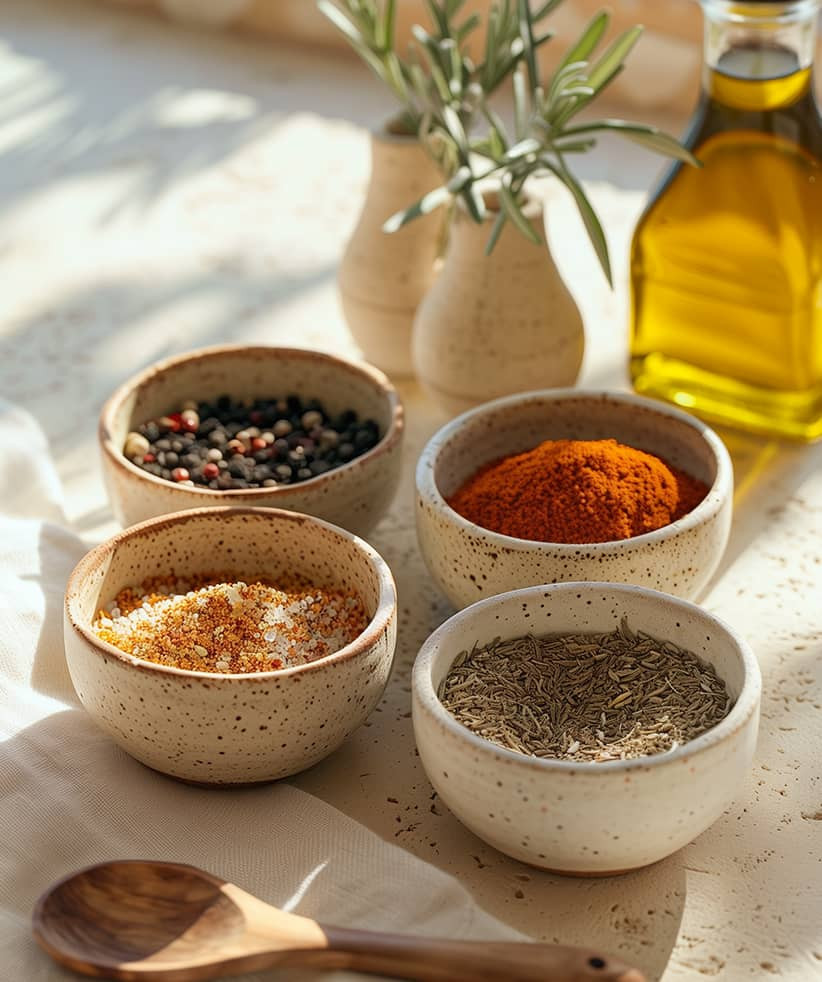
For a barbecue, you can use blends based on paprika, garlic, pepper, cumin, mild chilli, herbs, thyme, rosemary, coriander or smoky notes, depending on the recipes.
These spices bring relief to grilled dishes and make it possible to vary flavour profiles: mild, lively, Mediterranean, smoky or more spiced.
BBQ spices can be sprinkled directly onto meat before cooking, or mixed with oil, lemon, mustard, honey or yoghurt to create a marinade.
It is recommended to let the meat rest before cooking so that the spices can diffuse. Dosage depends on the type of meat and the desired intensity.
For chicken, blends based on paprika, garlic, herbs, pepper, lemon, cumin or mild chilli work very well.
They can be used in a marinade, on skewers, thighs, breasts or chicken wings. Gentle and regular cooking helps preserve the taste of the spices without burning them.
Grilled vegetables pair very well with BBQ blends based on herbs, paprika, garlic, cumin, thyme, rosemary or pepper.
Courgettes, aubergines, peppers, mushrooms, potatoes, corn or onions can be seasoned before cooking with a drizzle of olive oil and a few pinches of spices.
Yes, BBQ spices can accompany fish, provided you choose a suitable blend and dose it lightly.
Herbaceous, lemony, peppery or lightly smoky profiles work well with grilled fish, prawns, fish skewers or barbecue papillotes.
Yes, BBQ spices are very well suited to plancha cooking.
They can be used on vegetables, meats, fish, prawns, skewers or potatoes. The plancha allows quick cooking, so it is recommended to distribute the spices evenly and watch the cooking carefully to prevent them from burning.
Yes, BBQ spices can be used all year round, even without a barbecue.
They work very well in the oven, in a pan, on the plancha or in marinades. They make it possible to recreate a grilled, warm or summery spirit in simple everyday recipes.
To prepare a homemade BBQ marinade, mix barbecue spices with olive oil, lemon, vinegar, mustard, honey, yoghurt or a sauce, depending on the recipe.
Add the meat, fish, vegetables or plant-based alternative, then leave to rest before cooking. The marinade allows the spices to diffuse better into the preparation.
Not all BBQ spices are necessarily strong. Some recipes are mild, herbaceous or lightly smoky, while others are more lively.
The intensity depends on the presence of chilli, pepper, ginger or powerful spices. It is recommended to read the composition and start with a small quantity.
Dosage depends on the dish, the quantity prepared and the desired intensity.
To begin with, a small pinch or half a teaspoon is often enough for a family-style preparation. You can always adjust after tasting. The aim is to bring relief to the dish without masking the taste of the ingredients.
BBQ spices can be added before cooking, in a marinade, or as a finishing touch after cooking.
Before cooking, they become more integrated into the recipe. As a finishing touch, they bring a livelier note. For very high-temperature cooking, it is important to avoid burning the spices, as this can create bitterness.
Yes, BBQ spices are very well suited to vegetarian cooking.
They bring character to grilled vegetables, potatoes, vegetable skewers, tofu, chickpeas, halloumi, corn or mushrooms. They are ideal for creating generous and convivial meat-free recipes.
Barbecue spices should be stored in a dry place, away from light, heat and humidity.
It is recommended to close the sachet or jar properly after each use. Avoid placing them near a hot barbecue, cooking hob or source of steam.
Choosing Provence d’Antan BBQ spices means favouring flavourful blends elaborated in France to accompany grilled dishes, marinades, vegetables, fish, meats and plancha recipes.
It also means choosing a house attentive to ingredient quality, respect for taste, respect for the environment and fair remuneration for producers as well as partners throughout the supply chain, thanks to internal charters followed with care and high standards.