French Honey
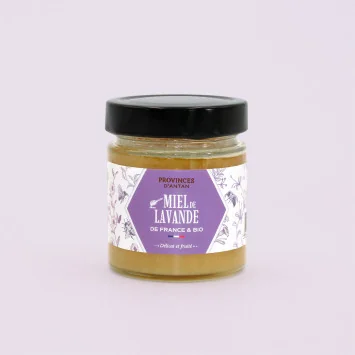
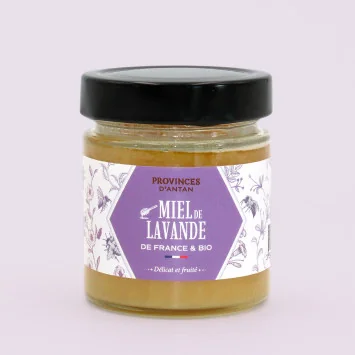
Organic French Lavander Honey* 220g jar
Provence d’Antan Flower Honey: A soft, aromatic honey from a blend of floral nectars. Perfect for toast, hot drinks, or sweet-and-savory recipes, crafted 100% naturally.
Filter By
French Honey
Organic French Lavander Honey* 220g jar
Discover Provence d’Antan flower honeys, an organic selection composed of three floral origins with distinctive personalities.
French lavender reveals a floral softness, Greek thyme offers a more pronounced character, and Spanish orange blossom charms with its fruity delicacy.
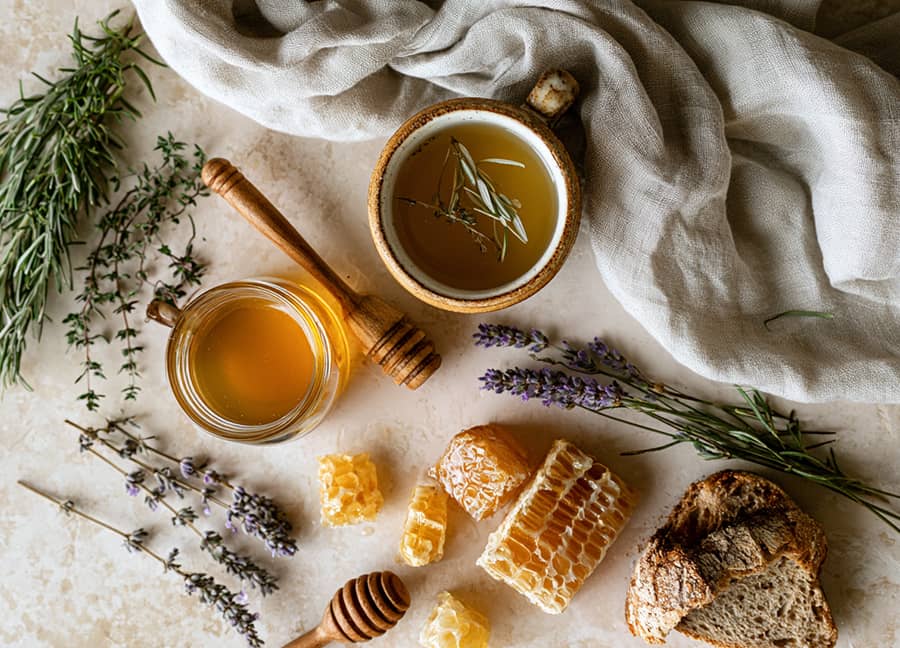
On toast, in yoghurt, with a herbal tea or at the heart of a sweet-and-savoury recipe, each honey makes it possible to imagine a different pairing.
An invitation to travel between Mediterranean landscapes and beekeeping traditions, through harvests chosen for the diversity of their flavour profiles.
Flower honey is produced by bees from nectar gathered from flowers. It may come mainly from one plant variety, such as lavender, thyme or orange blossom, or bring together nectars from several floral species.
At Provence d’Antan, this category brings together three honeys identified by their main floral origin. Each has its own colour, texture, intensity and flavour signature.
The floral mention does not automatically indicate the country of harvest. Lavender honey may be harvested in France, while thyme honey may come from Greece and orange blossom honey from Spain. These two pieces of information should therefore be distinguished.
Floral and delicate, lavender honey evokes the luminous landscapes of the South of France. Its softness accompanies toast, crêpes, dairy products, fruits and hot drinks.
It can also be used in biscuits, an almond cake, a fruit salad or a light vinaigrette. Its elegant profile allows it to be paired with simple recipes without dominating the other ingredients.
Greek thyme honey has a more pronounced character. Its herbaceous and Mediterranean profile is suited to those looking for a honey with a beautiful presence on the palate.
It accompanies rustic breads, mature cheeses, roasted vegetables, marinades and certain pastries. A few touches are enough to bring relief to a preparation.
Spanish orange blossom honey is distinguished by floral sweetness accompanied by a delicately fruity nuance. It naturally finds its place at breakfast, with a herbal tea, yoghurt, brioche or crêpe.
Its finesse is also suited to citrus desserts, fruit salads, fresh cheeses and light sweet-and-savoury sauces.
Choose orange blossom honey if you are looking for a mild, floral and lightly fruity profile. It easily accompanies dairy products, crêpes, fruits and hot drinks.
Lavender honey is also a delicate choice, with a more floral signature evocative of the landscapes of the South of France.
Thyme honey is suited to lovers of more intense profiles. Its herbaceous personality allows it to remain perceptible with rustic bread, mature cheese, roasted vegetables or a marinade.
Lavender honey can accompany toast and drinks as well as pastries and sweet-and-savoury recipes. Its balance makes it an easy variety to integrate into everyday habits.
Also choose your honey according to the origin you are looking for:
The country of harvest for each reference must be indicated on its label.
Spread a thin layer of honey on bread, brioche, crêpes or pancakes. Orange blossom honey brings fruity sweetness, lavender a floral touch, and thyme a more intense presence.
You can also add a spoonful of honey to yoghurt, fromage blanc, porridge or granola.
Lavender honey accompanies floral and delicate infusions. Orange blossom honey pairs well with citrus or fruit-based compositions. Thyme honey is better suited to characterful infusions and spiced blends.
Add the honey once the drink has cooled slightly, so that its taste can be better perceived.
Flower honeys can be used in biscuits, cakes, gingerbread, compotes or roasted fruits.
Orange blossom honey accompanies citrus desserts. Lavender pairs well with almond, apricot or peach. Thyme brings a more intense dimension to rustic cakes and Mediterranean preparations.
Mix a small quantity of honey with mustard, vinegar or lemon, then gradually add the oil of your choice.
Orange blossom honey is suited to a light salad. Lavender accompanies a goat’s cheese salad. Thyme brings greater relief to a composition of grilled vegetables.
Honey can be combined with olive oil, lemon, mustard and spices. Thyme honey is particularly suited to roasted vegetables and marinades with character.
Orange blossom honey makes it possible to create a fruitier pairing, while lavender brings floral sweetness.
Orange blossom honey and lavender honey accompany fresh cheeses, mild goat’s cheeses and certain creamy cheeses.
More intense, thyme honey creates an interesting contrast with tomme, mature goat’s cheese or blue-veined cheese. Serve the honey in small quantities to preserve the balance of the tasting experience.
Place a few slices of goat’s cheese on lightly toasted bread. Add a drizzle of lavender honey and a few herbs before serving.
Pour a spoonful of orange blossom honey over plain yoghurt. Complete with orange segments, almonds or a few seeds to create a simple, luminous breakfast.
Mix carrots, squash or sweet potatoes with a drizzle of olive oil and a small quantity of thyme honey. Roast in the oven until meltingly tender and lightly golden.
Combine lavender honey with vinegar, mustard and olive oil. This vinaigrette accompanies a goat’s cheese salad, grilled vegetables or a plate of raw vegetables.
Peaches, apricots, apples or pears can be lightly coated with honey before going into the oven. Choose lavender for a floral note, orange blossom for a fruity touch, or thyme for greater contrast.
Three flowers, three invitations to travel
From French lavender to Spanish orange trees, via Greek thyme, choose the honey that will accompany your next indulgent moment.
Button: Discover our flower honeys
The three references in the category have distinct origins:
The floral origin indicates the flowers mainly foraged by the bees. The geographical origin indicates the country in which the honey was harvested. These two pieces of information are complementary.
The characteristics of a honey may vary from one harvest to another depending on flowering, the season and the conditions specific to each environment. Consult the label and product sheet for the precise information for each jar.
Provence d’Antan builds a selection where Mediterranean landscapes echo one another. The products are chosen for the diversity of their profiles, within a universe elaborated with care in France.
Store honey at room temperature, in a dry place and away from direct light. Carefully close the jar after each use and take the honey with a clean, dry spoon.
The refrigerator is not necessary. Too low a temperature can make honey firmer and accelerate the crystallisation of certain varieties.
Crystallisation is a natural evolution. To restore a more fluid consistency, place the closed jar for a few minutes in a warm bain-marie, then stir gently. Avoid excessively high temperatures and prolonged heating.
Honey should never be given to a child under one year old, even in small quantities or incorporated into a preparation. This precaution is recalled by ANSES.
Honey naturally contains a significant proportion of sugars. Its consumption should therefore remain adapted to each person’s needs and eating habits.
Flower honey is produced by bees from the nectar they gather from flowers. It may come mainly from one plant variety, such as lavender, thyme or orange blossom, or bring together nectars from several flowers depending on harvesting conditions.
The mention “flower honey” gives information about the floral origin of the honey. The mention “French honey” indicates its country of harvest. A honey can therefore be both a flower honey and a French honey, like the French lavender honey offered in this category.
The category currently brings together three certified organic references: lavender honey harvested in France, thyme honey harvested in Greece and orange blossom honey harvested in Spain. These three varieties offer complementary flavour profiles and uses.
Orange blossom honey offers floral sweetness with a fruity nuance. Lavender honey also has a delicate profile. The choice between the two will depend on whether you prefer a lightly fruity note or a more floral expression.
Greek thyme honey has the most pronounced profile in the selection. Its herbaceous and Mediterranean character allows it to accompany rustic breads, cheeses, roasted vegetables and sweet-and-savoury recipes.
Orange blossom honey and lavender honey are particularly suited to toast, crêpes and brioches. Thyme honey can be paired with wholemeal or cereal bread when you are looking for a more pronounced flavour.
Lavender honey accompanies floral and delicate infusions. Orange blossom honey pairs well with fruity blends or citrus compositions. Thyme honey is better suited to intense, Mediterranean or spiced herbal teas.
Let your herbal tea or tea cool slightly before adding the honey. A less hot drink allows the nuances of the chosen variety to be better perceived. Then stir gently until you obtain the desired sweetness.
Orange blossom honey is suited to citrus desserts, crêpes and biscuits. Lavender honey accompanies almond, apricot or peach. Thyme honey brings more character to gingerbread and rustic preparations.
Honey can replace part of the sugar in many preparations. As it also brings moisture and a specific taste, the substitution is not always made in equal quantities. It may be necessary to slightly reduce liquids or adapt the cooking.
Thyme honey is suited to marinades, roasted vegetables and sauces with character. Orange blossom honey makes it possible to create a softer, fruitier pairing. Lavender honey finds a beautiful balance in a vinaigrette or with goat’s cheese.
Orange blossom honey accompanies fresh and creamy cheeses. Lavender honey pairs with mild or lightly matured goat’s cheese. Thyme honey, more intense, creates a contrast with tommes, blue-veined cheeses and cheeses with character.
The lavender honey offered by Provence d’Antan is presented as organic honey harvested in France. To check its origin, certification, batch and best-before date, consult the information shown on its jar and product sheet.
The organic thyme honey in the Provence d’Antan selection is harvested in Greece. Its geographical origin and floral origin are indicated in its name. Always consult the jar label to find all regulatory information.
The organic orange blossom honey offered by Provence d’Antan is harvested in Spain. Its mild, floral and lightly fruity profile accompanies toast, dairy products, hot drinks, citrus desserts and certain sweet-and-savoury recipes.
The colour depends notably on the flowers foraged, the region, the season and the particularities of each harvest. Orange blossom honey, lavender honey and thyme honey may therefore have different shades. Variation between several harvests is also possible.
The texture depends on the variety, the composition of the honey, time and its storage temperature. Some honeys remain fluid for longer, while others crystallise quickly and become creamy or firmer.
Crystallisation is a natural transformation linked to the balance between the different sugars present in honey. Its speed varies according to the floral origin and storage conditions. It changes the texture, but does not mean that the honey has deteriorated.
Yes, when the jar has been properly stored and shows no unusual signs. Crystallisation can give honey a creamy, grainy or firm texture. It can be enjoyed as it is or gently softened in a bain-marie.
Place the closed jar in a warm bain-marie for a few minutes, then stir gently. Avoid heat that is too strong or prolonged. If the honey remains firm, repeat the process gradually rather than suddenly increasing the temperature.
No. Honey should be stored at room temperature, in a dry place and away from direct light. The jar should be closed after each use. The refrigerator may make it firmer and accelerate the crystallisation of certain varieties.
Refer to the best-before date indicated on the jar. Use a clean, dry spoon and close the container properly. Crystallisation or a change in texture does not automatically mean that the honey should be discarded.
No. Organic certification and the country of harvest are two different pieces of information. In this category, lavender honey is harvested in France, thyme honey in Greece and orange blossom honey in Spain.
Certification indicates that production complies with the European specifications for organic agriculture. These notably govern certain beekeeping practices and the environment of the hives. However, the organic logo does not determine the country of harvest, which must be indicated separately.
A product sold under the regulatory designation “honey” cannot contain any added food substance. If another ingredient is incorporated, the product must bear a different descriptive name, such as “honey-based preparation”.
Honey should never be given to a child under one year old, even incorporated into a drink or recipe. After this age, its consumption should remain suited to the child’s diet and take into account its sugar content.
Organic Greek thyme honey is available in the Provence d’Antan Flower Honeys category. Consult its product sheet to check its format, origin, certification, flavour characteristics and the information shown on its label.
Present the three honeys with separate spoons and a neutral-tasting bread. Start with orange blossom, continue with lavender, then finish with thyme, generally more intense. Compare their colour, texture, sweetness and persistence on the palate.