Provence Flavor Gift Boxes
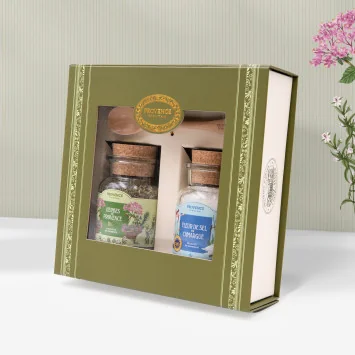
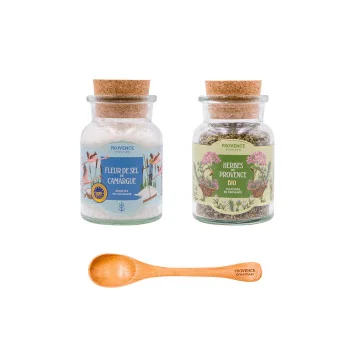
2 Glass Bottles of Camargue Fleur de Sel IGP 125g and Organic Herbes de Provence 30g & Wooden Spoon
Herbes de Provence - Fleur de sel
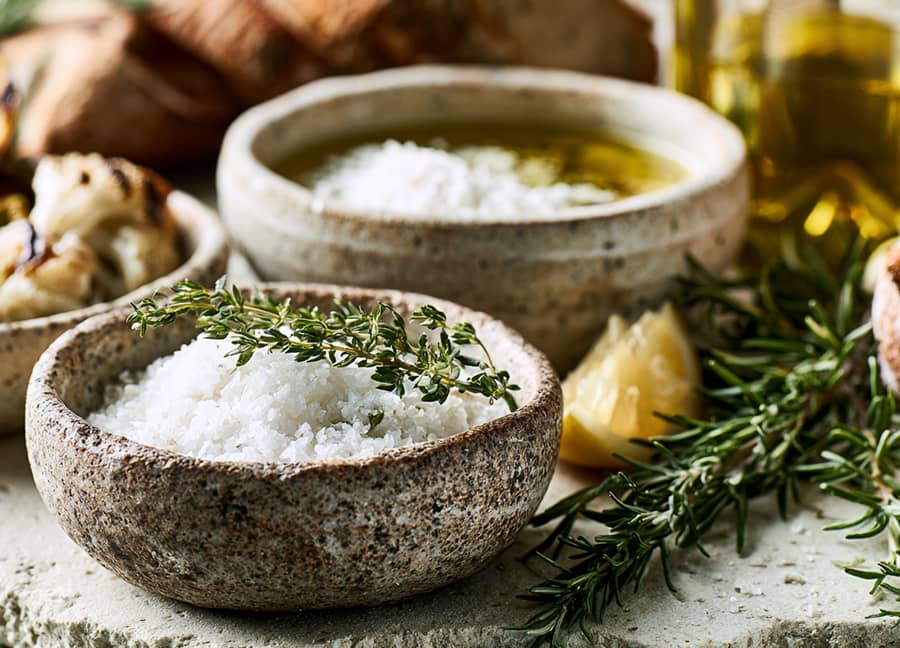
Provence d’Antan Fleur de Sel: Fine, crunchy crystals to elevate your dishes. 100% natural and hand-harvested, it adds a delicate and refined touch to your recipes.
Filter By
Provence Flavor Gift Boxes
2 Glass Bottles of Camargue Fleur de Sel IGP 125g and Organic Herbes de Provence 30g & Wooden Spoon
Herbes de Provence - Fleur de sel
Fleur de Sel
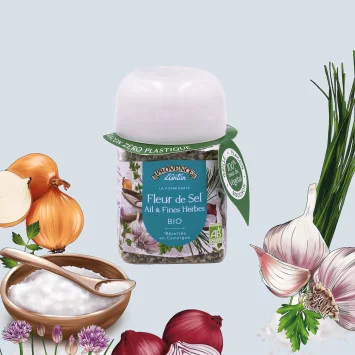
Organic Fleur de Sel with Garlic and Fine Herbs – 70g*
Fleur de Sel - Chives - Lovage - Garlic - Onion - Parsley
Provence d’Antan fleur de sel is one of those simple ingredients capable of transforming the finishing touch of a plate. Its delicate, lightly crunchy crystals are used sparingly on seasonal vegetables, grilled meat, fish, eggs, a salad or even a chocolate dessert.
More than a simple seasoning, it plays with textures and punctuates the tasting experience with a subtle saline touch. Selected with high standards, it naturally finds its place in generous Mediterranean cooking, where a few good ingredients and a precise gesture are often enough to make all the difference.
Fleur de sel is made up of fine crystals that appear on the surface of salt ponds when weather conditions allow.
It differs from coarse salt through its formation method, grain size and, above all, its texture on the palate.
It is precisely this texture that explains why it is mainly used as a finishing salt: rather than dissolving entirely into a preparation, its crystals punctuate the tasting experience.
Fleur de sel therefore deserves to be considered a finishing salt, to be sprinkled with measure over a dish.
Although both come from salt harvesting, their culinary uses are different.
Fine and delicately crunchy, it finds its place directly on the plate, after cooking or at the very last moment.
Its larger crystals are better suited to cooking water, certain marinades, oven cooking or salt-crust preparations.
One does not therefore necessarily replace the other.
Coarse salt accompanies the preparation; fleur de sel often signs the finishing touch.
Tomatoes, grilled courgettes, aubergines, asparagus or roasted vegetables: add a few crystals at the moment of serving.
With a ripe tomato, a drizzle of olive oil and a few aromatic herbs, often nothing more is needed.
After cooking and a few moments of resting, a few crystals can finish a grilled meat.
Used with measure, fleur de sel can finish a roasted, grilled or plancha-cooked fish.
Boiled egg, soft-boiled egg or scrambled eggs: its texture is particularly interesting on very simple preparations.
A few crystals combined with herbs and a drizzle of olive oil are enough to create a very Provençal aperitif.
To enjoy its texture, favour adding it after cooking.
Fleur de sel can naturally be used during the preparation of a recipe, but its crystals will gradually dissolve and lose part of what makes them distinctive.
As a finishing touch, they remain perceptible on the palate.
This is particularly interesting on grilled meat, fish, a tomato, roasted vegetables or a salad.
Fleur de sel should be used sparingly.
There is no need to cover the whole dish: a few well-distributed crystals are generally enough to create the desired contrast.
This approach also makes it possible to think about seasoning differently: rather than adding a lot of salt during preparation, you can work with spices, peppers and aromatic herbs, then finish the plate with a few crystals.
On the barbecue or plancha, fleur de sel is particularly interesting after cooking.
On a piece of meat, grilled vegetables or certain fish, it brings a texture that contrasts with grilled notes.
You can build the seasoning before cooking with BBQ spices or Herbes de Provence, then reserve the fleur de sel for the final touch.
Two different gestures, two complementary functions.
Yes, and it is even one of the most interesting ways to take fleur de sel beyond its usual register.
A few crystals create a contrast between the intensity of cocoa and the saline touch.
The sweet-and-salty pairing has become a great pastry classic.
On certain fruits, a tiny quantity can create a surprising tasting experience. The aim is not to make the dessert salty, but to bring contrast.
A few crystals at the last moment and some herbs are enough.
A very simple summer plate where the texture of the salt naturally finds its place.
Add fleur de sel after they come out of the oven.
Finish the plate with a few crystals rather than salting generously during cooking.
Fleur de sel, freshly ground pepper and a few herbs: a simple and precise finishing touch.
A very light pinch is enough to explore the chocolate-salt pairing.
Fleur de sel should mainly be protected from humidity.
Keep it in a properly closed container and always use a dry spoon or dry fingers to take it.
Also avoid storing it directly near a significant source of steam.
If it is presented in a composition with plants or spices, follow the storage instructions indicated on the product.
Fleur de sel, coarse salt and fine salt remain sources of dietary salt.
The finesse of a product therefore does not change the recommendations relating to salt consumption.
Fleur de sel can precisely invite you to work more on the finishing touch: a few well-placed crystals, combined with spices, peppers, herbs or citrus fruits, make it possible to seek flavour differently rather than systematically adding more salt.
People who need to limit their sodium intake should follow the recommendations of their healthcare professional.
Provence d’Antan Fleur de Sel is a finishing salt with fine, delicate and lightly crunchy crystals. Added at the last moment, it accompanies vegetables, fish, grilled meats, salads, eggs, fresh cheeses or sweet-and-savoury recipes. A precise mineral touch for cooking with simplicity, elegance and balance.
Fleur de sel is a delicate salt, formed in a fine layer on the surface of salt marshes. It is distinguished by its fine crystals, lightly crunchy texture and use as a finishing salt. It is generally added at the last moment, directly onto the dish, to bring a precise mineral touch.
Fleur de sel is finer, more delicate and better suited to finishing. It is added just before serving to preserve its texture. Coarse salt, on the other hand, has larger crystals and is used more often in cooking water, broths, slow-cooked dishes or salt-crust cooking.
Fine salt dissolves quickly and is easily incorporated into everyday preparations. Fleur de sel, however, keeps a lightly crunchy texture when added at the last moment. It is therefore used more as a finishing salt, to bring a more precise touch to a plate.
Fleur de sel is used at the end of preparation, just before serving. It is ideal on vegetables, grilled meats, fish, salads, eggs, potatoes, fresh cheeses, tartines or sweet-and-savoury recipes. It adds a mineral note without overloading the preparation.
It can be used in cooking, but it reveals its true interest above all as a finishing touch. During long cooking or in boiling water, it would lose its delicate texture. For cooking pasta, rice or vegetables, coarse salt or fine salt are often better suited. Fleur de sel is best reserved for the moment of serving.
Fleur de sel is dosed in small pinches. Because it is added as a finishing touch, it is perceived directly on the palate. It is better to start with a small quantity, taste, then adjust if necessary. Its role is to bring relief, not to dominate the recipe.
Yes, fleur de sel is perfect on grilled, roasted, steamed or raw vegetables. It goes particularly well with tomatoes, courgettes, aubergines, potatoes, mushrooms, carrots, asparagus or salads. Added at the last moment, it brings a crunchy and mineral touch.
Yes, fleur de sel is very well suited to fish. It can be added after cooking to grilled, oven-baked, en papillote or plancha-cooked fish. It pairs well with olive oil, lemon, aromatic herbs and Mediterranean vegetables.
Yes, fleur de sel is ideal as a finishing touch on grilled meat, a rib of beef, roasted poultry, skewers or pan-seared meat. It allows you to season with precision just before tasting. For long cooking or a marinade, other salts may be more suitable.
Yes, fleur de sel is very popular in sweet-and-savoury recipes. It brings contrast to caramel, dark chocolate, brownies, shortbread biscuits, chocolate tart, roasted fruits or a dessert cream. A very small quantity is enough to create a beautiful balance.
Fleur de sel is traditionally harvested by hand from the surface of salt marshes. If this mention is properly verified for the Provence d’Antan reference, it may be indicated in the product text. It is preferable not to state it without precise confirmation of the origin and harvesting method.
Fleur de sel is more delicate because it forms in a fine layer on the surface of salt marshes and because of the finesse of its crystals. Its light, lightly crunchy texture makes it a finishing salt appreciated for simple plates, quality ingredients and recipes where the final seasoning matters greatly.
Fleur de sel should be stored in a dry place, away from humidity. It is recommended to close the jar or sachet properly after each use. As it can absorb ambient humidity, it is best to avoid placing it near a source of steam, a hob or a sink.
Plain fleur de sel generally does not contain herbs or spices. However, there are composed fleurs de sel, combined with herbs, peppers, spices or condiments. It is therefore important to check the exact composition of the product before use.
A fleur de sel presented in beautiful packaging can be a simple and refined gift idea for cooking enthusiasts. It can also be paired with organic peppers, Herbes de Provence, spice blends or a grocery gift set to create an indulgent gesture.
Choosing Provence d’Antan Fleur de Sel means choosing a finishing salt with fine, delicate crystals, designed to accompany everyday recipes as well as more refined plates. It also means choosing a house attentive to quality, respect for taste, the environment and the balance of its culinary compositions.