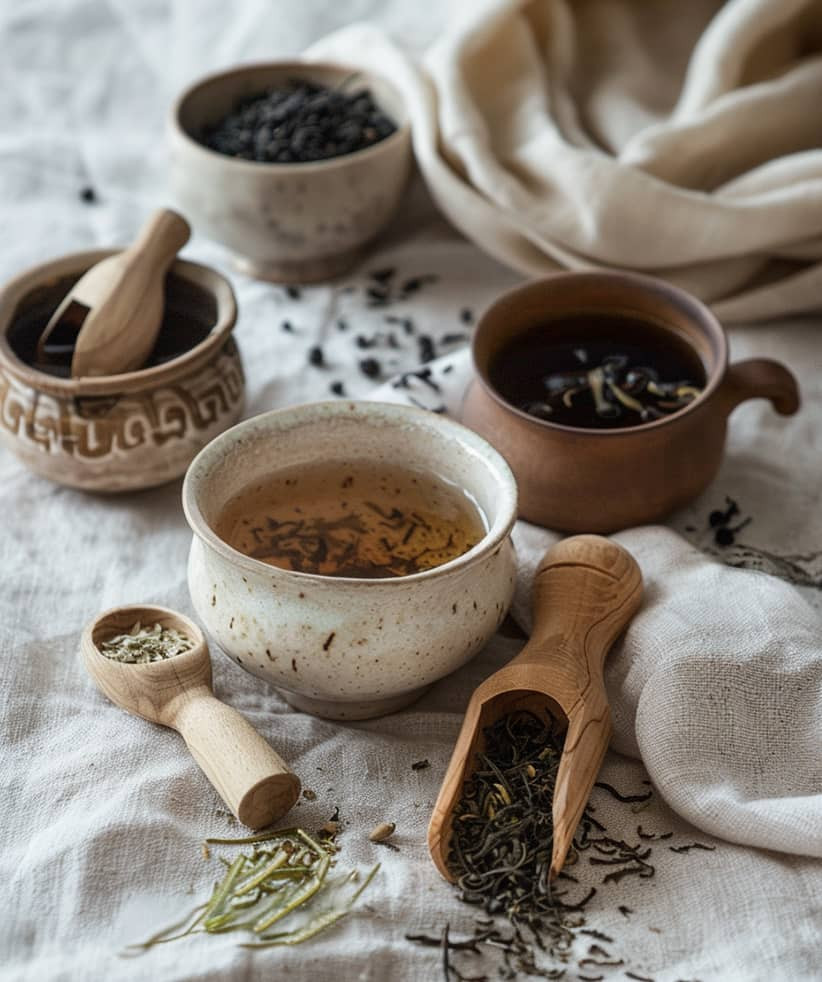
Green tea
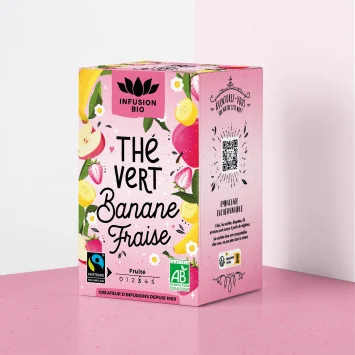
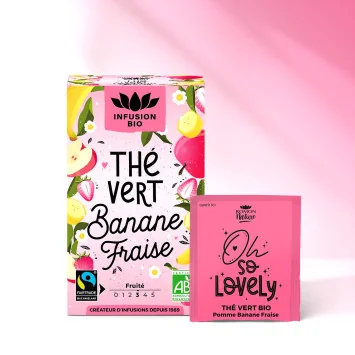
Organic Green Tea – Banana & Strawberry
Green Tea - Banana - Strawberry
Provence d’Antan Organic Green Tea: A natural, antioxidant-rich drink perfect for vitality. Enjoy its delicate flavors and benefits any time of the day.
Filter By
Green tea
Organic Green Tea – Banana & Strawberry
Green Tea - Banana - Strawberry
Green tea
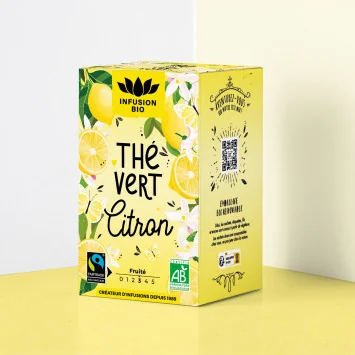
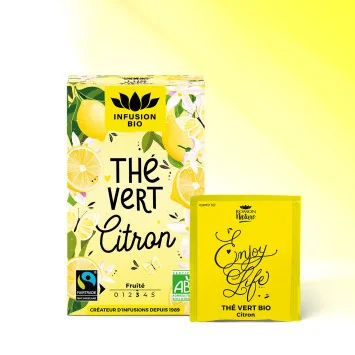
Organic Green Tea Lemon*
Green Tea - Lemon - Ginger
Green tea
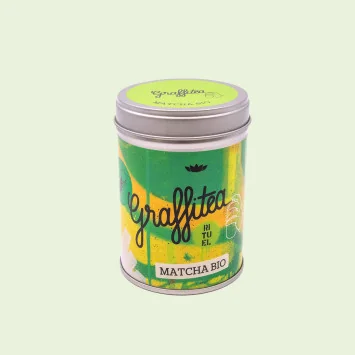
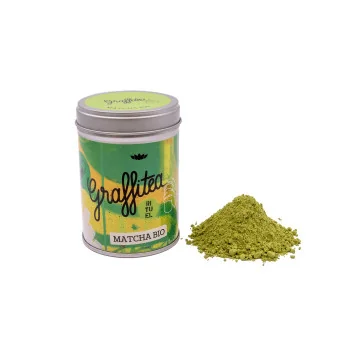
Organic Matcha – 50g*
Thé Matcha
Organic green tea is elaborated from the leaves of the tea plant, Camellia sinensis. After harvesting, the leaves are quickly heated in order to limit oxidation and preserve their botanical character, freshness and diversity of nuances.
Depending on the variety, terroir and work on the leaf, green tea can offer a soft, herbaceous, floral, lightly iodised or more intensely botanical cup. Provence d’Antan green teas are elaborated with care in France and can be discovered plain or combined with plants, fruits, flowers or spices.
Available, depending on the reference, as loose organic green tea or in sachets, they invite you to explore the full richness of this family of teas, enjoyed hot or iced.
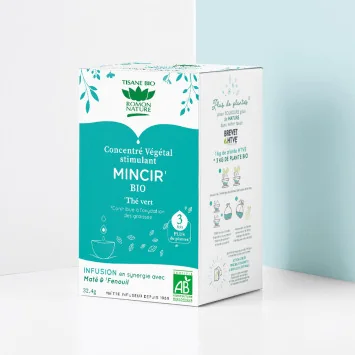
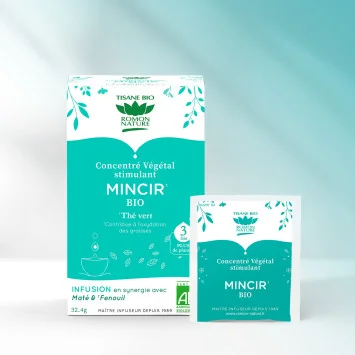
Organic Slimming Herbal Teas
Organic Slimming Herbal Tea* Patented Plant Extraction
Green Tea - Fennel - Mate (Yerba Mate) - Lemongrass
Organic Slimming Herbal Teas
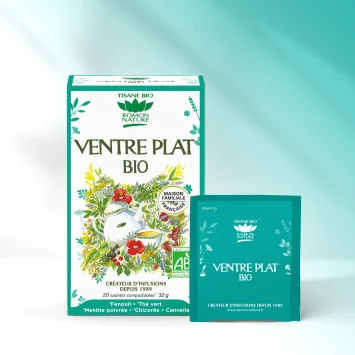
Organic Flat Tummy Herbal Tea*
Green Tea - Cinnamon - Chicory - Fennel - Peppermint
Organic Slimming Herbal Teas
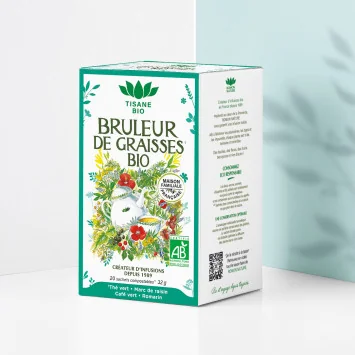
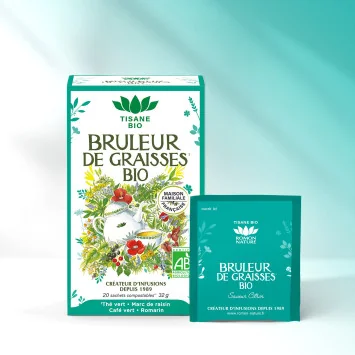
Organic Fat Burner Herbal Tea*
Green Tea - Grape marc - Rosemary - Green Coffee
Organic Slimming Herbal Teas
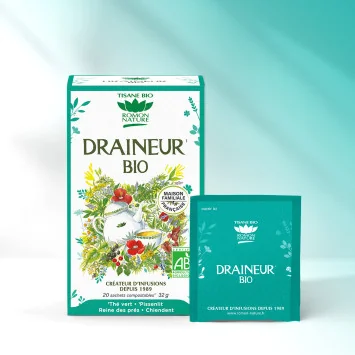
Organic Draining Herbal Tea*
Green Tea - Dandelion - Couch Grass - Meadowsweet
Organic Slimming Herbal Teas
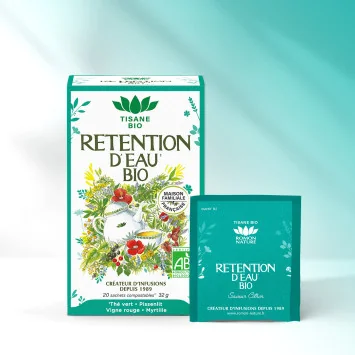
Organic Water Retention Herbal Tea*
Green Tea - Dandelion - Blueberry - Red Vine
Green tea naturally contains different botanical compounds, including polyphenols, among which catechins are found. This composition explains why green tea is regularly studied for its natural content of antioxidant compounds.
In everyday language, searches such as “green tea rich in antioxidants”, “green tea health benefits” or “green tea and antioxidants” are therefore frequently encountered.
However, it is important to distinguish the natural composition of tea from authorised health claims. The presence of antioxidant compounds alone does not make it possible to attribute a therapeutic action or protection against disease to green tea.
The leaves of Camellia sinensis naturally contain polyphenols, including catechins. The limited processing of green tea helps preserve a botanical composition different from that of a more strongly oxidised tea.
These compounds contribute to the identity of green tea and explain the scientific interest shown in this drink for many years.
From a dietary perspective, green tea remains above all a drink to be included as part of a varied and balanced diet.
Green tea is obtained from young leaves that are quickly heated after harvesting in order to preserve their natural characteristics. This method allows it to retain its green colour and characteristic botanical flavours.
Depending on the varieties, it may reveal herbaceous, floral, fresh or lightly toasted notes. Each cup offers a unique sensory experience, between delicacy and freshness.
Choosing organic green tea also means favouring an approach that is more respectful of crops and the environment, while fully enjoying the aromatic richness of the tea leaf.
Green tea is recognised for contributing to the protection of cells against oxidative stress thanks to the compounds naturally present in the tea leaf.
The uses traditionally associated with green tea also include:
These properties are associated with regular consumption as part of a varied and balanced diet.
The immune system frequently appears in searches associated with green tea. However, it would not be appropriate to present Provence d’Antan green tea as a product that “strengthens immune defences” without a specifically authorised claim applicable to its composition.
Green tea can, however, be presented for what it truly is: a botanical drink naturally containing different polyphenols and appreciated in many cultures around the world.
There are many varieties of organic green tea, whose profiles evolve according to their origin, cultivar, harvest and the way the leaves are worked.
China has a very ancient green tea culture. The leaves are traditionally worked there using different methods, which can produce botanical, soft, floral, sometimes lightly roasted or fruity profiles.
Chinese green teas therefore form an extremely diverse family, ranging from light and delicate leaves to teas with a more intense character.
In Japan, leaves intended for green tea are generally steamed in order to stop their oxidation. This method often gives particularly botanical, fresh and sometimes marine profiles.
Sencha, bancha and hojicha illustrate the diversity of Japanese tea culture.
Organic hojicha, when sourced from organic agriculture, is notably distinguished by a roasting stage that gives it a particularly recognisable toasted character.
Sri Lanka and Vietnam are also among the world’s major tea-producing regions. While Sri Lanka is often associated with black tea, it also produces green teas. Vietnam also has a long tradition of tea cultivation and offers highly varied profiles.
These origins help show just how much the same Camellia sinensis can produce different cups depending on the terroir and processing methods.
The exact origin of the tea used in each Provence d’Antan recipe should always be checked on the product page concerned.
A plain organic green tea allows you to discover the personality of the leaf directly.
A green tea combined with flowers, fruits, plants or spices offers a different experience: jasmine, lemon, mint, ginger or fruits can extend or soften the botanical character of the tea.
At Provence d’Antan, this diversity makes it possible to travel from one cup to the next, between great classics and more creative compositions.
Green tea accompanies both dynamic mornings and afternoon pauses.
Its botanical profile pairs particularly well with:
It can be enjoyed on its own or accompanied by a light pastry, a fruit dessert or a moment of relaxation in the garden.
A quality organic green tea can first be recognised by its traceability, the visual quality of its leaves and the precision of the information provided to the consumer.
For loose tea, choosing leaves that are clearly identifiable and relatively regular often makes it easier to appreciate the botanical material.
The presence of whole leaves or leaves that are only slightly broken may be sought for certain references, even though leaf size also naturally depends on the type of tea and the processing method.
A whole leaf is therefore not automatically synonymous with better tea: it is one criterion among others.
An organic green tea marketed as such must comply with the European rules applicable to organic production.
The presence of the European organic logo on a certified pre-packed product notably makes it possible to identify its organic status. It is accompanied by the regulatory information concerning the control body and the origin of the agricultural raw materials.
Organic labels and organic certification therefore provide consumers with verifiable information about the production method.
Origin can also give indications about the style of the tea: China, Japan, Vietnam, Sri Lanka and other producing regions each have their own traditions.
However, it is important to distinguish the origin of the tea leaves from the place where the final recipe is elaborated. Provence d’Antan teas are elaborated with care in France; the provenance of the ingredients is specified depending on the reference.
For a plain green tea, a short composition allows Camellia sinensis to be fully highlighted.
For a composed recipe, it is preferable to look at the full list of ingredients in order to know which plants, fruits, spices or flowers are combined with the tea.
The choice between loose organic green tea and organic green tea in sachets mainly depends on the tasting ritual you are looking for.
Loose tea allows you to see the leaves directly and personalise the dosage according to the size of the cup or teapot.
It is particularly suited to enthusiasts who enjoy taking the time to prepare their infusion and explore different temperatures or infusion times.
Loose tea can also allow whole leaves or larger leaves to have more space during infusion.
The sachet favours simplicity and consistent dosage. It is easy to slip into a cup at the office, while travelling or when you want a quick preparation.
The choice between loose tea and sachets is therefore not necessarily a question of quality: above all, it is about two different ways of preparing and savouring tea.
At Provence d’Antan, the different formats allow everyone to choose the ritual that suits them.
Green tea appreciates hot but not boiling water.
For a balanced cup:
Water that is too hot or an infusion that is too long may accentuate bitterness and mask the most delicate notes.
Green tea is equally suited to hot tasting and iced tea preparation.
In summer, a cooled infusion can be accompanied by lemon, fresh mint or a few fruits. This preparation reveals another facet of green tea, lighter and particularly refreshing.
Plain, floral, fruity or spiced, green tea follows the seasons and your desires.
Choosing a Provence d’Antan green tea means discovering a collection that brings together tea tradition and botanical creativity.
Our recipes are elaborated with care in France and imagined as a series of stopovers: the freshness of plain green tea, the elegance of jasmine, the brightness of citrus fruits, the freshness of mint or the subtle warmth of spices.
A contemporary way to rediscover Camellia sinensis, between know-how, tasting pleasure and a taste for travel.
The world of green tea is particularly rich and allows for many discoveries:
Each recipe reveals a new facet of this great tea tradition.
Provence d’Antan green tea offers a botanical, fresh and delicately herbaceous cup. Elaborated in France, it accompanies morning and daytime pauses with a light, luminous and refined tasting experience. Naturally theinated, it can be enjoyed hot or iced, depending on your preferences, for a simple and elegant ritual around tea leaves.
Green tea is a drink prepared from tea leaves, appreciated for its botanical, fresh and sometimes lightly herbaceous taste. Unlike herbal tea, it naturally contains theine.
At Provence d’Antan, green tea is elaborated in France to offer a fine, luminous tasting experience, faithful to the world of plants and infused leaves.
Green tea has a botanical, fresh, light and sometimes lightly herbaceous taste. Depending on the recipe, it may reveal softer, floral, lemony, fruity or delicately toasted notes.
Its profile is generally lighter than black tea and more structured than a theine-free plant infusion.
Green tea is ideally enjoyed in the morning, late morning or afternoon. As it naturally contains theine, it is best consumed earlier in the day, especially for sensitive individuals.
It pairs very well with an office pause, a light breakfast or a moment of concentration.
Yes, green tea naturally contains theine, as it is prepared from tea leaves. Its content may vary depending on the recipe, dosage, infusion time and individual sensitivity.
For evening tasting, it is often preferable to choose a theine-free infusion, such as a plant-based herbal tea or rooibos.
Green tea is prepared from tea leaves and naturally contains theine. Herbal tea is generally made from plants, flowers, fruits, roots or spices, without tea leaves.
The main difference therefore lies in the composition and the presence of theine. Green tea offers a cup that feels more botanical and stimulating, while herbal tea may be easier to enjoy in the evening.
Green tea and black tea both come from the tea plant, but they differ in their processing and taste.
Green tea offers a fresher, lighter and more botanical cup. Black tea often reveals more full-bodied, rounded, malty or woody notes.
Both naturally contain theine, but their tasting profiles are very different.
To prepare green tea, it is recommended to use hot but not boiling water, in order to preserve the finesse of the leaves and avoid excessive bitterness.
Pour the water over the sachet or leaves, then leave to infuse for the time indicated on the packaging. An infusion that is too long may make the cup more bitter and more vegetal on the palate.
Yes, green tea can be enjoyed after a meal, especially if you appreciate botanical, light drinks perceived as low in sweetness.
It pairs well with lunches, simple desserts or early afternoon pauses. In the evening, however, it is preferable to take its natural theine content into account.
Green tea can be consumed in the evening by some people, but it naturally contains theine.
Sensitive individuals may prefer to keep it for the morning or afternoon. For an evening pause, it may be more suitable to choose a theine-free infusion, such as verbena, linden, chamomile, lemon balm or rooibos.
Yes, green tea is very well suited to iced tasting. Prepare a slightly more concentrated infusion, leave it to cool, then place it in the refrigerator.
Served with ice cubes, a slice of lemon, a few mint leaves or pieces of fruit, it becomes a fresh, botanical and elegant drink.
For a fresh cup, choose a green tea combined with lemony, minty or floral notes.
Recipes with lemon, mint, verbena or fruits can bring more brightness to the tasting experience. Green tea then acts as a botanical, light and refined base, ideal for a luminous pause.
For a green tea perceived as more indulgent, choose a recipe combined with red fruits, citrus fruits, peach, mango or other fruity notes.
These pairings soften the botanical character of green tea and create a more accessible cup, ideal hot or iced depending on the season.
Green tea naturally contains theine. It is therefore recommended that sensitive individuals, pregnant or breastfeeding women, children and people taking medication check the directions for use or seek advice from a healthcare professional.
As with all plant-based drinks, the exact composition of the product should be consulted before regular consumption.
Green tea can be included in a daily tasting routine if consumption is adapted to individual sensitivity.
As it naturally contains theine, it is preferable to adjust the quantities and times of consumption. Alternating with theine-free infusions also makes it possible to vary pleasures throughout the day.
Green tea should be stored in a dry place, away from light, heat and humidity.
It is recommended to close the bag, box or refill carefully after each use in order to preserve the finesse of the leaves. Avoid placing it near spices or highly fragrant ingredients, as tea can absorb surrounding scents.
Choosing Provence d’Antan green tea means enjoying a botanical, fresh and refined drink, elaborated in France in the spirit of contemporary herbalism.
Its light and luminous cup accompanies morning pauses, daytime moments and iced tastings with naturalness, simplicity and elegance.
It also means choosing a house attentive to the entire value chain: selection of growing areas, leaf quality, respect for taste, respect for the environment and fair remuneration for producers as well as the committed partners involved at every stage.
Without relying solely on a label, Provence d’Antan ensures respect for its own charters, with the requirement of a sincere, balanced product that remains faithful to its origin.