Green tea
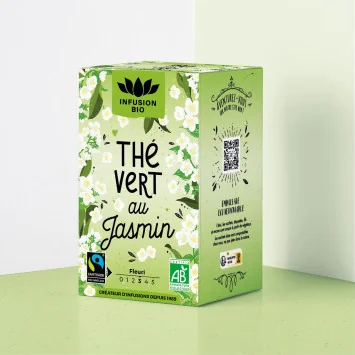
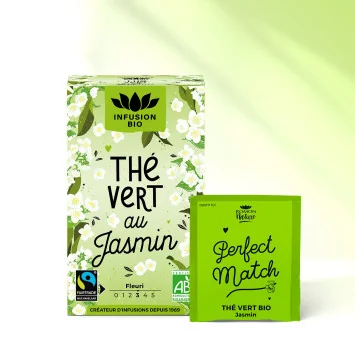
Organic Jasmine Green Tea*
Green tea infused with jasmine
Fruity green tea combines the botanical freshness of green tea with fruit notes such as lemon, peach, red fruits, citrus fruits or hibiscus. It can be enjoyed hot or iced, as a refreshing pause, an afternoon treat or a non-alcoholic aperitif. As it naturally contains theine, it is best to adapt consumption according to individual sensitivity and the time of day.
When the days become brighter, fruity green tea naturally finds its place in summer cups and carafes. It has that double personality that makes it so enjoyable: the botanical freshness of green tea, and the sunnier indulgence of fruit. Lemon, peach, red fruits, citrus fruits, mint, ginger or hibiscus create lively, colourful cups that are easy to enjoy hot or iced.
Lighter than a classic sweet drink, more refined than a simple glass of flavoured water, fruity green tea accompanies simple moments: breakfast in the sun, a refreshing afternoon pause, a garden snack, or a carafe shared on a summer table.
At Provence d’Antan, teas and infusions elaborated in France are designed as small sensory journeys. Fruity green tea is part of this spirit: an invitation to rediscover the taste of fruits, plants and beautiful days, in a ritual that is as simple as it is elegant.
Fruity green tea is a beautiful gateway for those who sometimes find plain green tea too botanical or too pronounced. Fruits bring roundness, freshness or a tangy touch, depending on the composition.
It is also appreciated because it adapts to several seasons. Hot, it accompanies a delicate pause. Cold, it becomes an elegant summer drink, to be served in a carafe with ice cubes, lemon slices or a few fresh fruits.
Another advantage is its versatility. A lemon green tea will be livelier. A peach green tea will be rounder. A red fruit green tea will feel more indulgent. A mint green tea will be fresher. A ginger green tea will bring a more tonic sensation on the palate.
The right choice therefore depends less on a strict rule than on a desire: freshness, indulgence, liveliness, lightness or character.
Green tea is often sought after for its benefits, particularly because it naturally contains polyphenols, including catechins, plant compounds associated with the antioxidant properties of green tea. In a fruity version, it combines the botanical freshness of tea leaves with notes of lemon, peach, red fruits, citrus fruits or hibiscus, creating a drink that is light, lively and pleasant to enjoy hot or iced.
According to the uses attributed to green tea, several aspects can be mentioned with care.
Green tea is recognised for helping to protect against oxidative stress and free radicals. Its naturally occurring compounds, particularly polyphenols, contribute to its interest within traditions surrounding plant-based drinks.
As part of a daily routine, fruity green tea can therefore accompany a lighter pause, especially when enjoyed without added sugar, as an occasional alternative to sweeter drinks.
Green tea is also associated with helping to fight free radicals and may help support a feeling of youthfulness and vitality. This wording should remain linked to green tea itself, and should not be presented as a direct promise of the product.
Its appeal also lies in its sensory richness: a botanical, fruity, fresh cup, sometimes lemony or lightly tangy, that invites you to create a true tasting ritual.
The polyphenols naturally found in green tea, particularly catechins, are traditionally associated with glucose and lipid metabolism.
Green tea is also associated with maintaining normal or healthy cholesterol levels, as well as helping to maintain blood lipids at a healthy level. These claims should be used carefully and within an informative context, without promising individual results.
In an SEO article, it is therefore appropriate to explain that green tea fits into an overall healthy lifestyle, alongside a varied and balanced diet, rather than as a standalone solution.
Green tea is traditionally used to support weight control, alongside dietary measures. It is also associated with lipid metabolism and fat oxidation.
This section should remain very carefully framed: fruity green tea should not be presented as a miracle slimming drink. The right wording is to say that it can be included in a balanced food routine, particularly when it occasionally replaces a sweetened drink, while preserving the pleasure of a fruity and refreshing beverage.
Green tea is also recognised for supporting the renal elimination of water and helping to maintain normal urinary elimination functions. This claim should be expressed with moderation, without suggesting any spectacular detox effect.
Served iced, fruity green tea can become a pleasant summer drink, enjoyed in a carafe with ice cubes, citrus fruits or a few fresh fruits. It then contributes to a more enjoyable drinking routine, without replacing water or a balanced diet.
Green tea
Organic Jasmine Green Tea*
Green tea infused with jasmine
Green tea
Organic Green Tea – Banana & Strawberry
Green Tea - Banana - Strawberry
Green tea
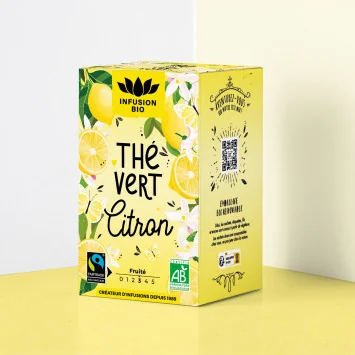
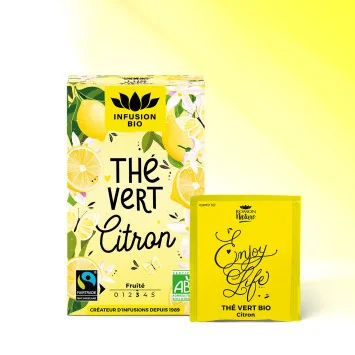
Organic Green Tea Lemon*
Green Tea - Lemon - Ginger
Green tea
Organic Green Mint Tea*
Green Tea - Mild Mint
Green tea
Green Tea Mint Organic*
Green Tea - Mild Mint
Organic Slimming Herbal Teas
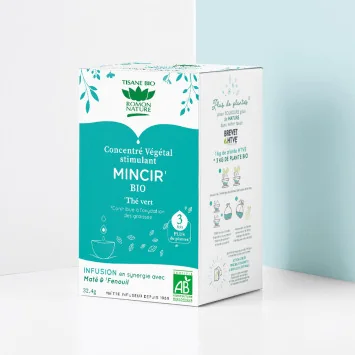
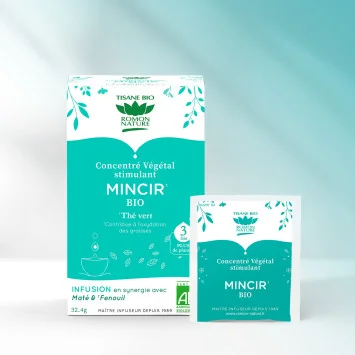
Organic Slimming Herbal Tea* Patented Plant Extraction
Green Tea - Fennel - Mate (Yerba Mate) - Lemongrass
Organic Slimming Herbal Teas
Organic Flat Tummy Herbal Tea*
Chicory - Fennel - Peppermint - Green Tea - Cinnamon
Organic Slimming Herbal Teas
Organic Fat Burner Herbal Tea*
Green Tea - Grape marc - Rosemary - Green Coffee
Organic Slimming Herbal Teas
Organic Elimination Herbal Tea*
Green Tea - Fennel - Blackcurrant - Ash Tree
Organic Slimming Herbal Teas
Organic Draining Herbal Tea*
Green Tea - Dandelion - Couch Grass - Meadowsweet
Detox Tea
Organic Detox Vegetable Herbal Tea*
Turmeric - Laurel - Tomato - Couch Grass - Fennel - Dandelion
Organic Digestion Tea
Organic Purifying Herbal Tea
Marjoram - Thyme - Black radish - Rosemary
Detox Tea
Organic Detox Herbal Tea
Chicory - Fennel - Hibiscus - Dandelion - Black radish - Couch Grass
Spicy herbal tea
Organic 3 Ginger Infusion
Ginger - Turmeric - Galanga
Transit Tea
Organic Herbal Tea for Better Transit Regulation* Patented Plant Extraction
Chicory - Licorice - Marshmallow - Mallow
Green tea naturally contains theine. It is therefore different from a theine-free fruity infusion. It is particularly suited to the morning, late morning or early afternoon, depending on individual sensitivity.
For evening tasting, people sensitive to theine may prefer a fruity infusion, rooibos or a theine-free herbal tea.
The table indicates the use of 1 to 2 teaspoons of dried leaves in a cup of water, 1 to 3 times per day. As one teaspoon corresponds to approximately 2.5 g, this represents around 2.5 to 15 g of leaves per day, depending on the indicated uses.
For a fruity green tea, it is still preferable to follow the preparation advice specific to the product: water at around 75 to 85°C, a short infusion of 2 to 3 minutes, then hot or iced tasting according to preference.
Green tea is intended for adults. It is not recommended for pregnant or breastfeeding women, or in cases of gastroduodenal ulcers, heart conditions such as arrhythmia or hypertension, or hyperthyroidism.
It is recommended to seek advice from a healthcare professional in case of concomitant medication use, particularly certain sedatives or sympathomimetics, or in case of doubt.
Like any plant-based drink, fruity green tea should be consumed as part of a varied and balanced diet. It does not replace medical advice, water, or appropriate care in case of persistent discomfort.
Fruity green tea combines the botanical freshness of green tea with fruit notes such as lemon, peach, red fruits, citrus fruits or hibiscus.
Green tea is recognised for helping to protect against oxidative stress and free radicals.
It is traditionally associated with lipid metabolism, the maintenance of normal cholesterol levels, weight control alongside dietary measures, and normal urinary elimination functions.
It naturally contains theine: it is therefore best enjoyed in the morning or early afternoon, depending on individual sensitivity.
It can be prepared hot or iced, with water at around 75 to 85°C and a short infusion time of 2 to 3 minutes.
Green tea is intended for adults and is not recommended for pregnant or breastfeeding women, or in cases of certain medical conditions or treatments.
Green tea is recognised for helping to protect against oxidative stress and free radicals. It is also traditionally associated with lipid metabolism, the maintenance of normal cholesterol levels, weight control alongside dietary measures, and normal urinary elimination functions.
In a fruity version, it offers a botanical, fresh and pleasant drink, to be enjoyed hot or iced.
Yes, fruity green tea naturally contains theine, as it is prepared from green tea leaves. It is therefore best enjoyed in the morning, late morning or early afternoon, depending on individual sensitivity.
Yes, fruity green tea is very well suited to cold preparation. It can be infused hot and then cooled over ice cubes, or slowly cold-infused in the refrigerator.
The iced version is particularly pleasant in summer, with lemon, peach, red fruits or a few mint leaves.
To prepare iced fruity green tea, infuse the tea in a small amount of water at 75–85°C for 2 to 3 minutes.
Then pour this concentrated base over ice cubes and top up with very cold water. You may also add fresh fruits or citrus slices.
Fruity green tea contains a green tea base, and therefore naturally contains theine.
A fruity infusion may be composed of fruits, flowers, plants or rooibos, without tea leaves. Depending on its composition, it may therefore be theine-free.
Green tea is intended for adults. It is not recommended for pregnant or breastfeeding women, or in cases of gastroduodenal ulcers, heart conditions such as arrhythmia or hypertension, or hyperthyroidism.
In case of medical treatment or doubt, it is recommended to seek advice from a healthcare professional.
Fruity green tea can be included in a varied daily routine, provided its natural theine content is taken into account and the preparation advice is followed.
It is recommended to alternate drinks and enjoy it as part of a varied and balanced diet.
Fruity green tea is ideally enjoyed in the morning, late morning or early afternoon.
Served iced, it is perfect for a refreshing pause, lunch on a terrace, a garden snack or a non-alcoholic aperitif. In the evening, people sensitive to theine may prefer a theine-free infusion.
For summer, green teas with lemon, citrus fruits, peach, red fruits, mint or hibiscus are particularly suitable.
They work very well as iced preparations, served in a carafe with ice cubes and a few fresh fruits.
Green tea is traditionally associated with weight control alongside dietary measures, particularly through its link with lipid metabolism.
It should not be presented as a standalone slimming solution. It can simply be included in a balanced food routine, especially when it occasionally replaces a sweetened drink.
Green tea is recognised for helping to protect against oxidative stress and free radicals, thanks to its naturally occurring plant compounds, particularly polyphenols.
This property relates to green tea itself and should be understood as part of a varied and balanced diet.
Green tea is associated with the maintenance of normal cholesterol levels and the maintenance of blood lipids at a healthy level.
This information should be expressed with care: green tea does not replace a balanced diet, medical follow-up or treatment when necessary.
Yes, when prepared without added sugar, fruity green tea can be a pleasant alternative to classic sweetened drinks.
Served iced, it brings a fresh, botanical and fruity drink, ideal for varying pleasures in summer.
To avoid bitterness, use water that is less hot than for a herbal tea, around 75 to 85°C, and respect a short infusion time, generally 2 to 3 minutes.
An infusion that is too long or water that is too hot may make green tea more bitter.
Yes, fruity green tea can be prepared by cold infusion. Simply place the tea in a carafe of fresh water, then leave it to infuse for several hours in the refrigerator.
This method often creates a softer, less tannic drink, very pleasant on warm days.
Fruity green tea pairs very well with lemon, orange, peach, red fruits, hibiscus, mint or ginger.
Depending on the pairing, these ingredients bring freshness, softness, a tangy note or a livelier sensation on the palate.
Fruity green tea naturally contains theine and is better suited to the morning or early afternoon.
Fruity rooibos, on the other hand, contains no theine and may be an interesting option for a later tasting moment, depending on each person’s habits.
Yes, iced fruity green tea can become a beautiful base for a non-alcoholic aperitif.
Serve it in a carafe with ice cubes, citrus slices, a few fresh fruits and, if desired, a splash of sparkling water. It offers a fresh, elegant and less expected alternative.
The indicative dosage is 1 to 2 teaspoons of dried leaves in one cup of water, or around 2.5 g to 5 g depending on the desired intensity.
For fruity green tea, it is best to follow the instructions indicated on the product and adjust according to taste.
The claims table indicates a use of 1 to 2 teaspoons of dried leaves per cup, 1 to 3 times per day.
This should be adapted according to sensitivity to theine, consumption habits and any specific situations. In case of doubt, it is preferable to seek advice from a healthcare professional.