Rooïbos
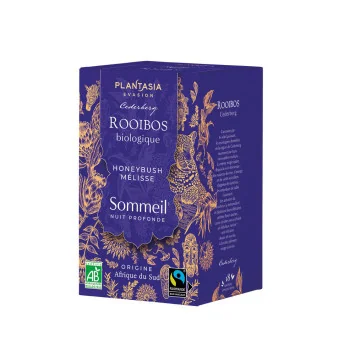
Organic Sleep Infusion Rooibos Lemon Balm, Honeybush
Lemon Balm - Lemon - Rooibos
Provence d’Antan Organic Sleep Teas: Natural infusions with relaxing plants for gentle sleep and restorative nights. Enjoy organic, flavorful blends for serene moments before bed.
Filter By
Rooïbos
Organic Sleep Infusion Rooibos Lemon Balm, Honeybush
Lemon Balm - Lemon - Rooibos
The Sleep & Stress category brings together infusions designed to accompany pauses, soothe the mind and gently support falling asleep. Inspired by traditional herbalism, our recipes are elaborated in France from plants selected for their recognised uses: contributing to relaxation, supporting a moment of calm or inviting a serene transition towards rest.
To be enjoyed at the end of the day or included in a regular ritual, these infusions offer a sensory, botanical experience that respects the body’s natural rhythm.
A category dedicated to well-being infusions that accompany relaxation, calm and sleep as part of a daily routine.
Plants chosen for their traditional uses in herbalism: relaxation, mental calm and support for peaceful sleep.
To be enjoyed in regular cups or as a carafe infusion to enrich pleasant hydration.
Plant mentions are formulated as traditional uses or contributions attributed to each ingredient.
General precautions: pregnancy, breastfeeding, ongoing treatment — seek professional advice if necessary.
Certain plants are traditionally used to promote relaxation and accompany natural sleep. Among the best known are passionflower (Passiflora incarnata), valerian, lemon balm, chamomile and linden.
A herbal tea for sleep can be included in an evening ritual, but does not replace medical advice in cases of persistent sleep disorders.
Sleep is influenced by many factors: lifestyle rhythm, stress, environment, diet and evening habits.
Creating a ritual around a herbal tea for sleep can provide a moment that encourages a return to calm. Plants traditionally used in evening infusions are appreciated for their relaxing properties and their ability to accompany relaxation before bedtime.
At Provence d’Antan, our recipes combine plants selected for their aromatic qualities and traditional uses in order to create herbal teas for sleep suited to evening rituals.
Passionflower contributes to relaxation and promotes natural sleep.
It is traditionally used in preparations intended for people seeking greater calm before bedtime.
Valerian contributes to maintaining natural sleep.
It is one of the best-known plants in traditional herbalism for accompanying evening rituals.
Lemon balm contributes to relaxation and mental well-being.
Its naturally occurring compounds are appreciated for accompanying moments of relaxation.
Chamomile contributes to optimal relaxation and helps maintain healthy sleep.
Its soft and floral taste makes it an essential plant in evening herbal teas.
Linden contributes to relaxation and helps maintain natural sleep.
Its flowers are traditionally enjoyed in the evening to create a moment of calm.
Verbena contributes to relaxation and mental well-being. Traditionally consumed at the end of the day, it accompanies evening rituals and helps maintain natural sleep. Its delicately lemony fragrance makes it one of the most appreciated plants in herbal teas for sleep.
To fully enjoy the aromatic qualities of the plants:
1 sachet per cup;
One cup of simmering water;
Cover;
Leave to infuse for 5 to 10 minutes;
Enjoy approximately 30 to 60 minutes before bedtime.
Always follow the instructions shown on the packaging.
For an evening ritual
Combinations of passionflower, lemon balm and linden are particularly appreciated.
In cases of night awakenings
A regular ritual, combined with an evening infusion, can accompany a return to calm.
Need advice on evening rituals? Discover our article: Sleep: evening ritual, plants for sleep and tips for peaceful nights
For periods of stress
Plants traditionally used to promote relaxation, such as passionflower, lemon balm or chamomile, naturally fit into a well-being routine.
For a soft tasting experience
Linden and chamomile appeal through their floral and delicate notes.
Scientific research has long been interested in plants traditionally used to promote relaxation and sleep.
Studies focus in particular on:
Passionflower;
Valerian;
Lemon balm;
Chamomile.
The mechanisms studied concern the active compounds naturally present in plants and their interaction with mechanisms involved in relaxation.
However, the available results do not make it possible to consider a herbal tea as a treatment for insomnia or sleep disorders.
It is possible to combine several plants traditionally used for relaxation.
A simple recipe may, for example, bring together:
Lemon balm;
Chamomile;
Linden;
Passionflower.
Respect the recommended dosages for each plant and favour quality ingredients.
Plants are not trivial.
Certain infusions are not recommended:
During pregnancy;
During breastfeeding;
For young children;
In cases of sedative medication or other medical treatments.
In cases of persistent sleep disorders, chronic insomnia or doubt, seek advice from a healthcare professional.
Infusions do not replace medical treatment or consultation.
Provence d’Antan herbal teas for sleep combine plants traditionally used in evening rituals, such as lemon balm, chamomile, linden, verbena, lavender, passionflower or valerian, depending on the recipes. They accompany calm moments before bedtime, without replacing medical advice in cases of insomnia, frequent night awakenings or persistent sleep disorders.
A herbal tea for sleep may combine plants traditionally used in the evening, such as lemon balm, chamomile, linden, verbena, lavender, passionflower or valerian, depending on the recipes.
The choice depends on the taste you are looking for: floral with chamomile or linden, lemony with lemon balm or verbena, more botanical with passionflower. In cases of persistent insomnia or regular sleep disorders, medical advice is recommended.
The best-known plants for sleep are passionflower, valerian, lemon balm, chamomile, linden, lavender and verbena.
They are traditionally used in evening infusions to accompany relaxation, a return to calm and bedtime rituals. However, they should not be presented as a treatment for insomnia.
Passionflower, or Passiflora incarnata, is traditionally used in evening preparations.
It may be combined with lemon balm, chamomile or linden in certain herbal teas for sleep. To remain compliant, it is preferable to say that it accompanies calm rituals at the end of the day, rather than stating that it treats insomnia.
Valerian is one of the best-known plants in the world of evening preparations. It is often mentioned among plants for sleep, particularly in traditional approaches.
Before consuming a herbal tea containing valerian, it is important to check the directions for use, especially in cases of medical treatment, pregnancy, breastfeeding or particular sensitivity.
Chamomile is highly appreciated in herbal teas for sleep thanks to its soft, floral and delicate taste.
It naturally accompanies evening pauses and end-of-day rituals. It can be consumed on its own or combined with other plants such as lemon balm, linden, verbena or passionflower, depending on the recipes.
Linden is a traditional plant in evening infusions. Its soft, floral and lightly honeyed taste in perception makes it an appreciated plant for calm rituals before bedtime.
It can be combined with chamomile, lemon balm, passionflower or orange blossom to create a rounded and enveloping cup.
Lemon balm contains compounds naturally present in the plant, studied for their interest in relaxation and rest routines.
As an infusion, it mainly offers a soft, botanical and lemony cup, much appreciated at the end of the day. To remain compliant, it is preferable to refer to naturally present botanical constituents rather than promising a direct effect on sleep.
Verbena is a highly appreciated plant in evening herbal teas thanks to its soft, botanical and delicately lemony taste.
It naturally accompanies end-of-day rituals, especially when you wish to create a calm pause before bedtime. It can be enjoyed on its own or combined with other plants such as lemon balm, linden, chamomile or passionflower, depending on the recipes.
Verbena offers a fresher, brighter and more distinctly lemony cup. Lemon balm also has lemony notes, but with a more botanical and rounded profile.
Both plants are appreciated in evening infusions: verbena is suited to those who enjoy light and lemony cups, while lemon balm brings a more enveloping botanical softness.
Yes, verbena, linden and chamomile can be combined in an evening herbal tea.
Verbena brings lemony freshness, linden adds floral softness and a lightly honeyed taste in perception, while chamomile offers a rounded and delicate cup. This combination creates a balanced infusion, ideal for accompanying a calm ritual before bedtime, without replacing medical advice in cases of insomnia or persistent sleep disorders.
A herbal tea can help set up an evening ritual: drinking a warm cup, slowing down, reducing screen time, dimming the light and creating a moment of calm.
Certain plants are traditionally associated with natural sleep, but a herbal tea should not be presented as a treatment for insomnia or sleep disorders.
In cases of occasional insomnia linked to a period of stress or a disrupted rhythm, an evening herbal tea can accompany a ritual of returning to calm.
However, if insomnia becomes frequent, lasts several weeks or leads to significant fatigue, it is preferable to consult a healthcare professional. Herbal teas do not replace a diagnosis or suitable treatment.
In cases of night awakenings, it is important first to observe possible causes: stress, late screen use, a heavy meal, environment, noise, light, excessive fluid intake or the need to urinate.
A herbal tea for sleep can accompany the evening ritual, but it is recommended to drink it 30 to 60 minutes before bedtime and to limit the quantity to a reasonable cup.
Herbal tea for sleep is generally enjoyed at the end of the day or approximately 30 to 60 minutes before bedtime.
This moment helps create a regular ritual without drinking too late. Ideally, the infusion should be paired with a calm atmosphere: soft lighting, slow breathing, reading, a gradual reduction of screen time and a regular bedtime.
Pour a cup of simmering water over the sachet or plant blend, cover, then leave to infuse for 5 to 10 minutes according to the recommendations shown on the packaging.
An infusion that is too short may lack expression, while an infusion that is too long may intensify certain botanical notes. Always follow the recommended dosage.
Yes, it is possible to prepare a homemade herbal tea recipe for sleep by combining plants traditionally used in the evening, such as lemon balm, chamomile, linden and passionflower.
However, it is important to respect the recommended dosages for each plant and avoid multiplying ingredients without knowing their precautions for use.
The number of cups depends on the recipe, dosage, individual sensitivity and time of consumption.
In the evening, one cup is often enough to create a pleasant ritual. Drinking too much liquid just before bedtime may encourage night awakenings. It is preferable to follow the instructions on the packaging and seek advice in case of doubt.
Certain plants may cause drowsiness, be unsuitable for some people or interact with treatments.
Side effects depend on the plant, the dose, the frequency of consumption and individual sensitivity. Caution is particularly important with sedative medicines, anxiolytics, sleeping pills, antidepressants or other treatments acting on the nervous system.
Contraindications vary depending on the plants.
As a precaution, pregnant or breastfeeding women, young children, people taking medical treatment or people with a particular health condition should seek advice from a healthcare professional before regularly consuming a herbal tea for sleep.
Sleep-supporting plants should never be combined with sedative treatment without medical advice.
No. Herbal tea for sleep never replaces a sleeping pill, prescribed treatment or medical consultation.
It can accompany an evening routine and contribute to a moment of calm, but it should not be used as an alternative to medical care in cases of insomnia or persistent sleep disorders.
Restorative sleep refers to sleep after which you wake up with a sufficient feeling of recovery.
It depends on many factors: duration, sleep quality, regularity of schedules, environment, stress, diet, light and physical activity. A herbal tea for sleep can accompany an evening ritual, but restorative sleep never depends on a single drink.
Herbal tea for sleep can be included in an evening routine if the recipe and directions for use allow it.
It is recommended to vary the plants, respect the dosage and remain attentive to personal sensitivity. In cases of prolonged daily consumption, treatment or a particular situation, professional advice is preferable.
Choosing Provence d’Antan herbal teas for sleep means favouring botanical recipes elaborated in France, inspired by herbalist traditions and designed to accompany evening rituals.
It also means choosing a house attentive to ingredient quality, respect for taste, respect for the environment and fair remuneration for producers as well as partners throughout the supply chain, thanks to internal charters followed with care and high standards.
Discover our other botanical herbal teas
Explore the Provence d’Antan herbalist universe
Learn more about our craftsmanship and commitments