What is cinnamon?
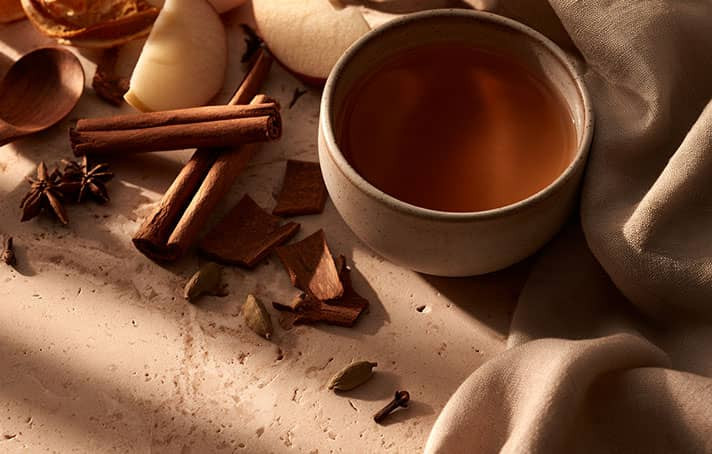
Cinnamon is a spice obtained from the inner bark of certain trees of the Cinnamomum genus. Once harvested and dried, this bark naturally curls to form the famous cinnamon sticks. It can also be ground into powder to be used in cooking recipes, desserts, hot drinks or spice blends.
In the cup, cinnamon is appreciated for its soft, warm and woody intensity. It immediately evokes autumn, winter, pastries, cooked fruits and comforting drinks.
Discover our selection of cinnamon herbal teas
Ceylon cinnamon or cassia cinnamon: what are the differences?
There are several types of cinnamon. The two best known are Ceylon cinnamon and cassia cinnamon.
Ceylon cinnamon
Ceylon cinnamon is often considered finer and more delicate. Its sticks are made up of thin layers of bark, with a more crumbly texture. Its taste is soft, subtle, low in perceived sweetness and less piquant than other varieties.
It is very well suited to delicate infusions, indulgent drinks, fruit desserts and recipes where you want a cinnamon that is present yet elegant.
Cassia cinnamon
Cassia cinnamon is generally more powerful, darker and more intense. Its sticks are thicker and harder. Its taste is more marked, more direct and sometimes more piquant.
It is widely used in spiced blends, winter hot drinks, chai-style recipes, compotes and preparations where real intensity is desired.
Which cinnamon should you choose for an infusion?
For a soft and refined infusion, Ceylon cinnamon is often interesting. For a spiced, powerful and very comforting drink, cassia cinnamon can offer more character.
In Provence d’Antan blends, the essential thing is to trust the balance of the recipe: cinnamon is rarely alone. It dialogues with other ingredients such as ginger, orange, apple, rooibos, black tea or other spices.
What does cinnamon taste like in infusion?
Cinnamon in infusion offers a warm, woody, round and naturally indulgent taste. It gives a sensation of sweetness without necessarily adding sugar. This is what makes it so precious in autumn and winter drinks.
It can evoke:
baked apple;
homemade compote;
gingerbread;
warm orange;
Christmas biscuits;
chocolate;
chai;
plant-based milk drinks.
On the palate, it brings sensory warmth. This sensation is real in the tasting experience, but it remains transient: cinnamon should not be presented as a spice that “warms the body” in a lasting way. Your document rightly recommends talking about perception, taste and conviviality, without turning the cup into a remedy.
What are the benefits of cinnamon in infusion?
Cinnamon is often searched for its benefits, especially in winter infusions, spiced drinks and after-meal herbal teas. To remain compliant, two things must be distinguished: the uses associated with cinnamon and the product actually consumed, whose dosage must be checked.
The internal reference framework associates cinnamon with supporting digestion, under dosage conditions, and also mentions a tonic use.
In a general public article, it can therefore be said that cinnamon is traditionally associated with digestive rituals and characterful drinks, but it is important to avoid promising a direct, immediate or guaranteed effect.
Cinnamon and digestion
Cinnamon can be mentioned around supporting digestion when dosage conditions are met. In editorial content, the most cautious formulation is:
Cinnamon is associated with supporting digestion, under dosage conditions.
For a pleasure infusion, particularly when it is an indulgent product or an occasional recipe, it is preferable to talk about an after-meal cup, a spiced ritual, a hot drink and a moment of taste comfort.
Cinnamon and cocooning ritual
Cinnamon is particularly interesting for creating an atmosphere. It accompanies moments when we slow down: Sunday afternoon snack, return from a walk, cool evening, cup after dinner, hot drink in front of a film.
Its main interest, in an infusion, is sensory: it gives an impression of warmth, roundness and comfort. It is an excellent ingredient for strengthening the desirability of a drink without medicalising it.
Cinnamon and indulgence without excess
Thanks to its naturally sweet perception, cinnamon makes it possible to create an indulgent drink without adding much sugar. It gives relief to a cup of rooibos, black tea, plant-based milk or apple-orange infusion.
It can also replace the desire for a very sweet drink when looking for a simpler, more botanical and more spiced pause.

How should cinnamon be dosed in infusion?
Dosage depends on the form used: stick, powder or ready-to-infuse blend.
With a cinnamon stick
For one cup, generally use a small piece of stick or half a cinnamon stick depending on the intensity desired. The longer the stick infuses, the more woody and spiced the cup becomes.
For a soft drink, start light. It is better to add a little cinnamon than to end up with a cup that is too intense.
With cinnamon powder
Cinnamon powder is more difficult to dose in infusion, as it disperses in the cup and can give a slightly cloudy or grainy texture. A small pinch is often enough.
It works better in plant-based milk drinks, hot chocolates, indulgent rooibos or latte-style recipes.
With a ready-to-infuse blend
For a tea, herbal tea or infusion that already contains cinnamon, the most important thing is to follow the product advice: quantity of water, infusion time, temperature and number of cups recommended if a frequency is indicated.
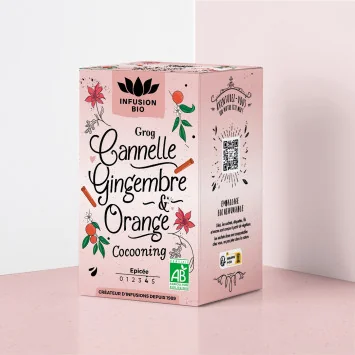
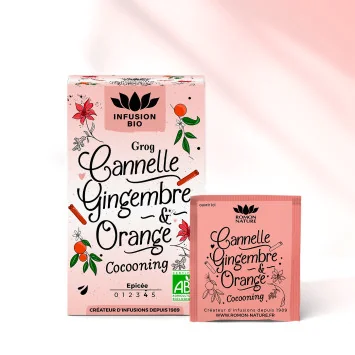
For Grog Cinnamon Ginger Orange Cocooning, the verified reference indicates preparation according to the box dosage, with possible indulgent variations in 250 ml of hot milk for 7 to 10 minutes or in 250 ml of hot juice for 10 minutes. No daily frequency is displayed: use should therefore remain within an occasional tasting register.
How to prepare a cinnamon infusion
Simple cup method
Place a cinnamon stick or a blend containing cinnamon in a cup.
Pour in very hot water.
Leave to infuse for 6 to 10 minutes depending on the desired intensity and the product advice.
Remove the stick or sachet.
Enjoy plain, or add a touch of honey, lemon, orange or plant-based milk according to preference.
Indulgent drink method
For a more cocooning cup, heat oat, hazelnut or almond milk. Add an infusion containing cinnamon, then leave to infuse for several minutes. Finish with milk foam and a few chocolate shavings.
This method works very well with spiced recipes, seasonal infusions and autumn drinks.
Hot juice method
For a fruity and festive drink, heat apple juice or orange juice without bringing it to the boil. Add an infusion with cinnamon, ginger or spices, then leave to infuse. Serve hot in a cup or a heat-resistant glass.
This version is perfect for an autumn evening, an afternoon snack or an alcohol-free Christmas ritual.
Cinnamon stick or cinnamon powder: which should you choose?
Cinnamon sticks are ideal for clear infusions, hot drinks, spiced juices and preparations where you want to easily remove the spice after infusion. They diffuse slowly and create an elegant cup.
Cinnamon powder is more practical in cooking: compotes, cakes, biscuits, porridge, lattes, hot chocolate, desserts. In pure infusion, it can be less pleasant because it does not dissolve completely.
For a herbal tea or tea, the stick or ready-to-infuse blend often remains more practical. For an indulgent recipe, powder can bring a visual and taste finishing touch: a pinch on milk foam, compote or a cooked pear.
The best indulgent pairings with cinnamon
Cinnamon and apple
This is the most obvious pairing. Apple brings its fruity sweetness, cinnamon its spiced warmth. Together, they evoke compote, apple tart and autumn afternoon snacks.
Cinnamon and orange
Orange gives brightness to cinnamon. It brings a fresh, sunny, lightly tangy note that is very pleasant in black teas, winter infusions or alcohol-free hot drinks.
Cinnamon and ginger
Ginger awakens cinnamon. It adds a lively, slightly piquant note that gives relief to the cup. It is an ideal duo for back-to-school, autumn and winter drinks.
Cinnamon and cardamom
Cardamom brings a spiced, almost floral freshness. It balances the roundness of cinnamon and gives the drink a more elegant dimension.
Cinnamon and rooibos
Rooibos, naturally theine-free, offers a round and soft base. With cinnamon, it becomes a very indulgent evening drink.
Cinnamon and chocolate
Cinnamon gives depth to chocolate. It works particularly well with hot chocolate, a square of dark chocolate or a few shavings on milk foam.
Cinnamon and plant-based milk
Oat milk, hazelnut milk or almond milk: cinnamon loves round textures. It transforms an infusion into an almost dessert-like drink.
Hot cinnamon recipe ideas
Hot apple juice with cinnamon
Heat apple juice, add a cinnamon stick or a spiced infusion, leave to infuse for a few minutes, then serve hot with a slice of orange.
Cinnamon rooibos and oat milk
Prepare a well-infused rooibos, add a little hot oat milk, then finish with a pinch of cinnamon. A soft drink, theine-free depending on the composition, perfect for the evening.
Orange cinnamon black tea
A great seasonal classic. Black tea brings structure, orange brings light and cinnamon brings roundness. To be savoured in the morning or afternoon, as black tea naturally contains theine.
Cinnamon, ginger and chocolate infusion
Prepare a spiced infusion, add a few dark chocolate shavings into the hot cup, then stir gently. An indulgent drink, to be reserved for cocooning moments.
Warm cinnamon and hazelnut milk
Heat hazelnut milk, add a cinnamon infusion or a small stick, leave to infuse, then serve with milk foam. Perfect for a cool evening.

Which Provence d’Antan products should you discover?
Grog Cinnamon Ginger Orange Cocooning
With its notes of cinnamon, ginger and orange, this alcohol-free grog is ideal for seasonal cups, cool evenings and cocooning rituals. It can be prepared in a classic version, but also in hot milk or hot juice for an even more indulgent drink.
Discover Grog Cinnamon Ginger Orange Cocooning
Organic Orange Cinnamon Black Tea
Organic Orange Cinnamon Black Tea combines the depth of black tea with the roundness of cinnamon and the brightness of orange. It is an ideal cup for the morning, afternoon snack time or the first cool afternoons.
Treat yourself to an Orange Cinnamon pause
Organic Christmas Tea Ginger Cinnamon
Ginger and cinnamon create a warm, spiced and generous duo. Even before the festive season, this tea can accompany autumn cravings, indulgent afternoon snacks and enveloping cups.
Taste Organic Christmas Tea Ginger Cinnamon
Provence d’Antan Christmas Infusions
To extend the cinnamon, orange, ginger, apple and spice universe, Christmas Infusions offer an ideal selection for composing warm, indulgent and festive drinks.
Explore our Christmas Infusions
Provence d’Antan Autumn Selection
For the first cool evenings, the Autumn Selection brings together teas, infusions and treats designed for seasonal rituals: warm cups, afternoon snacks, cocooning moments and comforting pauses.
Discover the Autumn Selection
Precautions to know
Cinnamon is a powerful spice. Even though it is very pleasant in infusion, it should be consumed in moderation, especially in case of frequent use.
Health formulations linked to cinnamon must remain conditioned by the dose actually consumed. Your compliance document reminds us that a digestive benefit should not be attributed to a product without validation of the cinnamon dose.
Certain overly strong formulations should also be avoided, such as “warms the body”, “stimulates immunity” or “prevents infections”.
Very hot drinks can irritate: it is better to wait until the temperature is comfortable before tasting.
Some cinnamon-based recipes may contain other plants or ingredients that require precautions. For example, Grog Cinnamon Ginger Orange Cocooning notably contains liquorice, which calls for caution in case of high blood pressure or with certain treatments.
In case of pregnancy, breastfeeding, medical treatment, chronic illness, allergy or doubt, seek advice from a healthcare professional before regular consumption.
Key points
Cinnamon in infusion brings a warm, woody, spiced and naturally indulgent note.
It can be used as a stick, powder or in a ready-to-infuse blend.
Ceylon cinnamon is often softer and more delicate; cassia cinnamon is more powerful and intense.
In terms of benefits, cinnamon can be associated with supporting digestion under dosage conditions.
For a product article or pleasure recipe, it is preferable to talk about ritual, taste, conviviality and cocooning drink.
Cinnamon pairs very well with apple, orange, ginger, cardamom, rooibos, chocolate and plant-based milks.
Like any spice, it should be consumed with discernment, especially in regular use.

FAQ
What are the benefits of cinnamon in infusion?
Cinnamon is associated with supporting digestion under dosage conditions. In a pleasure infusion, it is preferable to present it as a spice of ritual, sensory warmth and indulgence, without promising a direct or medical effect.
How to make a cinnamon infusion
Place a cinnamon stick or a blend containing cinnamon in a cup, pour in very hot water and leave to infuse for several minutes. You can pair it with orange, ginger, apple, rooibos or black tea.
How much cinnamon should be used in infusion?
For one cup, a small piece of stick or half a cinnamon stick is often enough. With cinnamon powder, a small pinch is preferable. For a ready-to-infuse product, follow the advice indicated on the box.
Can you drink cinnamon infusion every day?
It is preferable to remain moderate and respect the advice of the product consumed. The benefits associated with cinnamon depend on the dose actually consumed. In case of pregnancy, breastfeeding, medical treatment or doubt, seek advice from a healthcare professional.
Cinnamon stick or cinnamon powder: which should you choose for an infusion?
Cinnamon sticks are more suited to infusions, because they can be removed easily and diffuse slowly. Cinnamon powder is better suited to indulgent recipes, plant-based milk drinks or finishing touches on milk foam.
What is the difference between Ceylon cinnamon and cassia cinnamon?
Ceylon cinnamon is generally softer, finer and more delicate. Cassia cinnamon is more powerful, more intense and more spiced. Both can be used in drinks, depending on the desired profile.
What should cinnamon be paired with in infusion?
Cinnamon pairs very well with apple, orange, ginger, cardamom, rooibos, black tea, chocolate, honey, oat milk or hazelnut milk.
Does cinnamon contain theine?
No, cinnamon alone does not contain theine. However, if it is paired with black tea, green tea or white tea, the drink naturally contains theine.
Can cinnamon infusion be prepared with milk?
Yes, cinnamon pairs very well with oat, hazelnut or almond milk. A cinnamon blend can be infused in hot milk to obtain a soft, round and indulgent drink.
Is cinnamon suitable after a meal?
Cinnamon is traditionally associated with after-meal drinks and can contribute to supporting digestion under dosage conditions. For a pleasure cup, it is best to talk above all about an indulgent end-of-meal ritual.