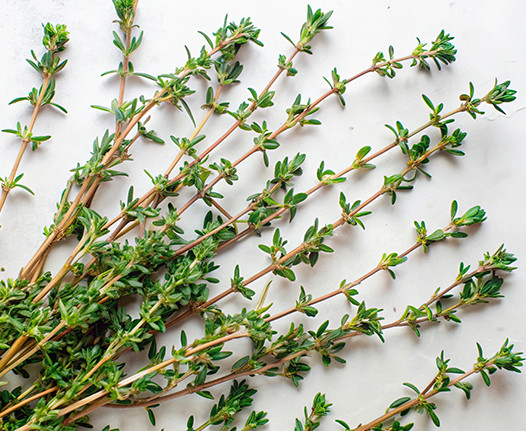
Eucalyptus benefits: varieties, herbal tea and precautions to know
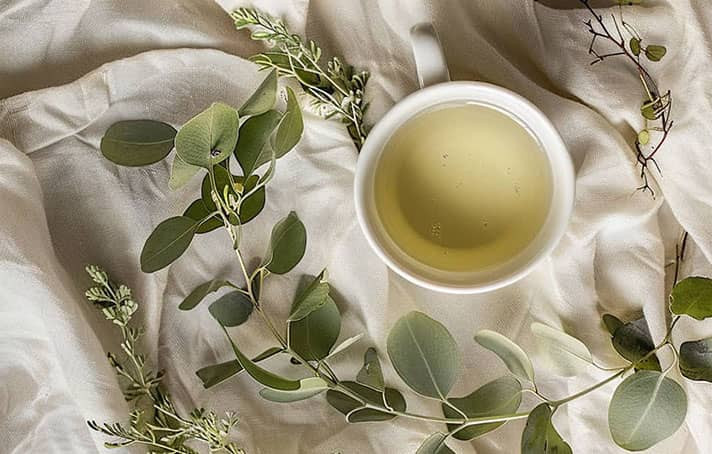
In short
Eucalyptus, a familiar tree in Provençal landscapes, offers in winter a leaf whose infusion is traditionally used to soothe the throat and relieve coughs associated with colds. This article presents its varieties, the right way to prepare it and the precautions to know: for adults only, not recommended during pregnancy and breastfeeding.
Eucalyptus benefits: what tradition says about the leaf
When the first frosts settle over Vernègues, a very particular scent drifts through some gardens: that of eucalyptus, fresh, camphor-like, almost minty. Its tall peeling trunks, its bluish leaves quivering in the mistral and its fragrance rising after the rain have been part of the Provençal scenery for more than a century. Native to Australia, the tree has adapted perfectly to our dry, luminous land.
Behind this familiar silhouette lies a plant whose leaf has long been used in herbal tea. When people wonder about the benefits of eucalyptus, they almost always mean Eucalyptus globulus, and it is this species that European monographs refer to: a traditional use, focused on the throat and upper airways, within a precise framework and for adults only.
In this article, we take the time to distinguish the varieties, describe the traditional use of the leaf, explain how to prepare the infusion and recall the essential precautions. You can then discover our selection of eucalyptus herbal teas, designed for winter evenings.

Table of contents
Eucalyptus varieties: globulus and its cousins
The genus Eucalyptus includes several hundred species, almost all native to Australia. They share evergreen foliage and a strong fragrance, but they are not equal when it comes to herbal tea. Picking them at random in a garden is therefore not a good idea: only a clearly identified species, sold for this use, deserves to end up in your cup.
Eucalyptus globulus, the reference species
This is the common eucalyptus, or Tasmanian blue gum. It can be recognised by its round, silvery-blue young leaves growing in pairs, then by its long, narrow, sickle-shaped adult leaves of a deeper green. Its bark peels off in long strips. It is the leaf of this species that the monograph of the EMA, the European Medicines Agency, describes for traditional use in leaf-based preparations.
A few other eucalyptus you may come across
- Eucalyptus radiata: narrow leaves, softer fragrance. It is mostly mentioned in aromatherapy, rarely in herbal tea.
- Eucalyptus citriodora: long leaves with a lemon-like scent. It is mainly appreciated for its fragrance.
- Eucalyptus gunnii: the cider gum, very common in gardens for its cold hardiness and decorative foliage.
- Eucalyptus polybractea: a narrow-leaved tree grown in Australia for its scents.
This overview is above all a reminder of a simple principle: here we only talk about the leaf of Eucalyptus globulus, as an infusion. Other species and essential oils belong to other uses, which are not the subject of this article.
Eucalyptus leaf infusion: a traditional use
In our countryside, eucalyptus leaf long had its place in the herb cupboard, next to thyme, savory and sage. It was gathered dry, kept in a tin box and brought out with the first colds. This gesture has remained in people's memories, and modern science has framed it with a monograph that specifies its use.
What is traditionally said about eucalyptus
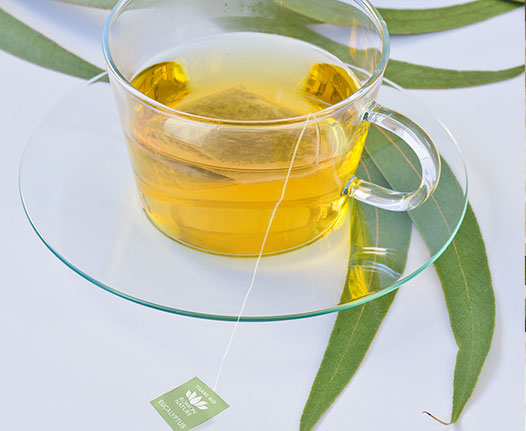
According to the EMA monograph, eucalyptus leaf preparations are traditionally used to relieve coughs associated with colds. They are also described as soothing for the mouth and throat, and as having a pleasant effect on the throat, pharynx and vocal cords. They are also mentioned for relief of a tickle in the throat and pharynx.
These statements are based on long-standing use, not on proof of efficacy: this is a traditional use. The infusion is in no way a treatment. It is a moment of warmth and fragrance that accompanies cold days.
A fragrance you notice before the first sip
Pouring hot water over eucalyptus leaf means first smelling the steam: camphor-like, resinous, slightly peppery. On the palate, the tea is bold, slightly bitter, with a lingering freshness. Many find it more pleasant softened with a spoonful of honey or combined with other plants. Its very assertive character also calls for carefully respecting the infusion times.
Making eucalyptus tea step by step
Preparation is simple, but the dose matters. For infusions, the EMA monograph indicates 1.5 to 3 g of leaf in 150 ml of boiling water, up to 4 times a day. This range is a ceiling, not a target: starting with the smallest dose and not exceeding four cups a day is the best way to respect the plant.
Preparation steps
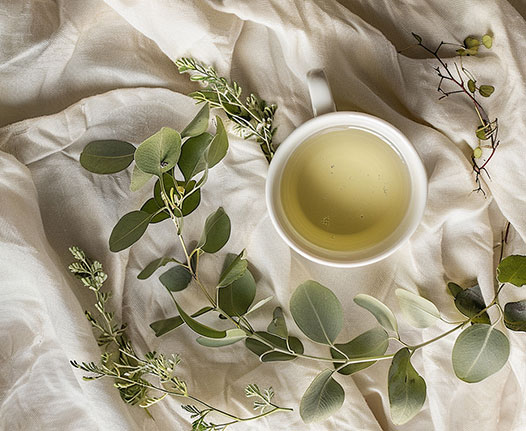
- Weigh the leaf: allow 1.5 to 3 g of eucalyptus leaf for a 150 ml cup. If you use tea bags, follow the manufacturer's instructions.
- Heat the water: bring the water to the boil, then pour it directly over the leaves.
- Cover: place a small saucer on the cup to keep the aromas in the infusion.
- Let it infuse: wait a few minutes, depending on the desired intensity, then strain.
- Enjoy it hot: in small sips, without burning yourself, in a calm moment.
Key points at a glance
| Point | To remember |
|---|---|
| Part used | Eucalyptus globulus leaf |
| Dose per cup | 1.5 to 3 g in 150 ml of boiling water |
| Maximum frequency | Up to 4 times a day |
| Intended for | Adults only |
| Source of the dose | EMA monograph |
Storing eucalyptus leaf
Like all aromatic plants, eucalyptus dislikes light, heat and humidity. Store it in an airtight box, in a dry place, away from sunlight. Properly stored, the leaf keeps its fragrance for a long time. If the scent has faded considerably, it is a sign that the plant is past its best.
Pairing eucalyptus with winter flavours
On its own, eucalyptus has character. For a gentler cup, it is often found in blends that give it roundness. At Provence d'Antan, we like to imagine winter as a time to gather around a cup, in the farmhouse kitchen, with a blanket and something warm to share.
Pairings that work on the palate
- Honey: a spoonful rounds off the camphor freshness, for example with a heather honey and its warm notes.
- Mint and liquorice: they extend the feeling of freshness, with a natural sweetness on the finish.
- Seasonal blends: herbal teas designed for winter combine several plants for rounder, more indulgent cups.
A ritual rather than a hurried habit
An infusion is meant to be sipped slowly. Choose a beautiful ceramic cup, set the teapot on a wooden trivet, open the window a little to feel the cold air, then close it on the fragrant steam. It is in this ritual that eucalyptus best reveals its personality.
To learn more about plants, their botanical names and their uses, you can browse the Provence d'Antan plant glossary. You will find precise information on each plant in your herbal tea cupboard, as well as our range of single-herb infusions.
Which Provence d'Antan products to discover?
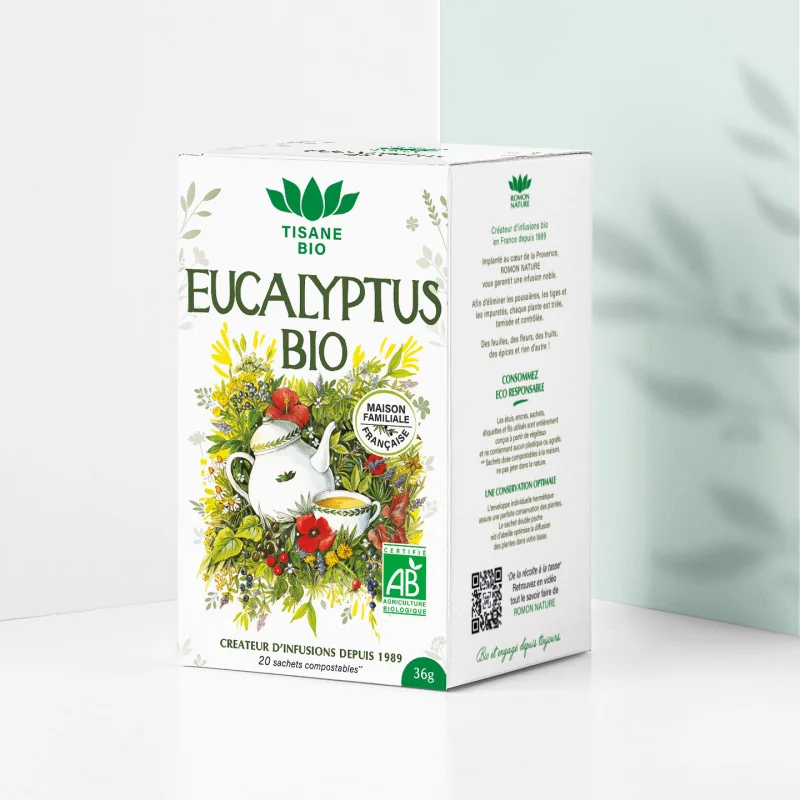
Organic Eucalyptus Herbal Tea*
The reference herbal tea to enjoy eucalyptus leaf in convenient tea bags, from €2.70. It is welcome at any time of the winter day, up to four cups a day.
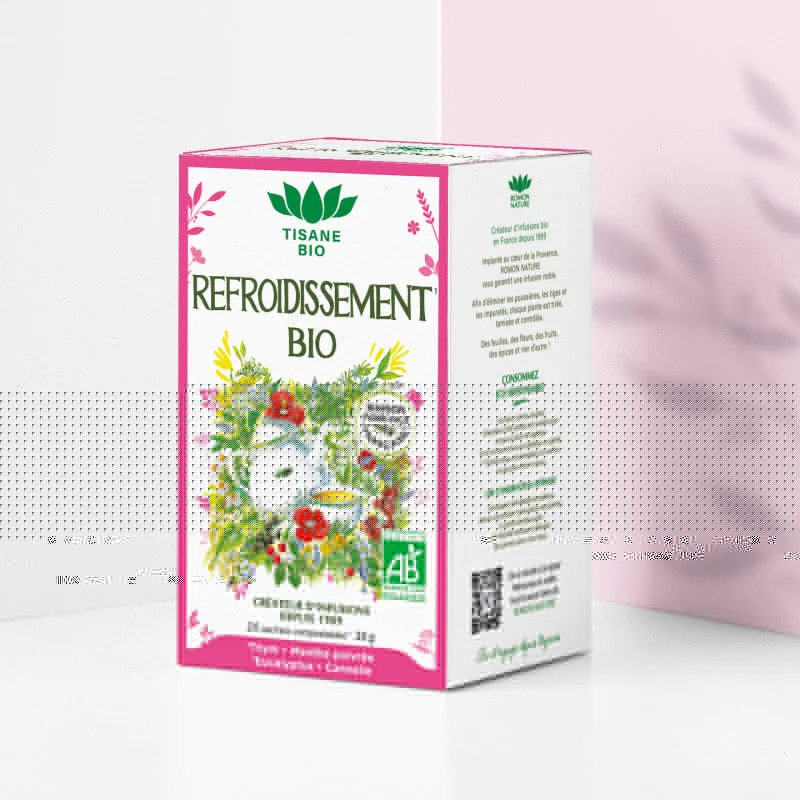
Organic Cold Relief Herbal Tea*
A herbal tea designed for the cold season, at €2.70, for those who like to vary plants from one cup to the next.
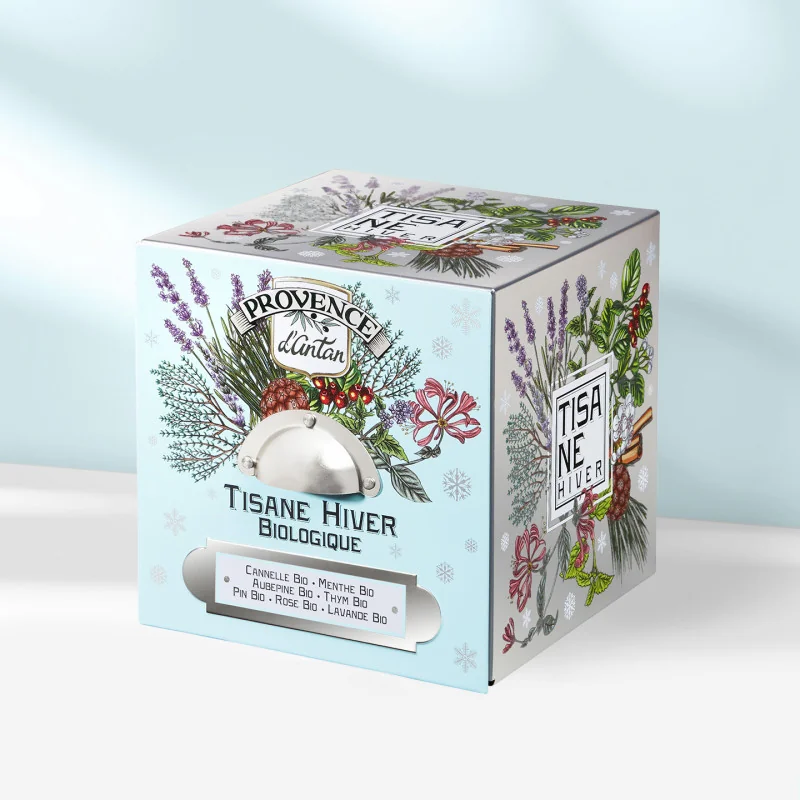
Organic Winter Herbal Tea*
A seasonal, indulgent and comforting infusion, at €7.45, to accompany evenings by the fire.
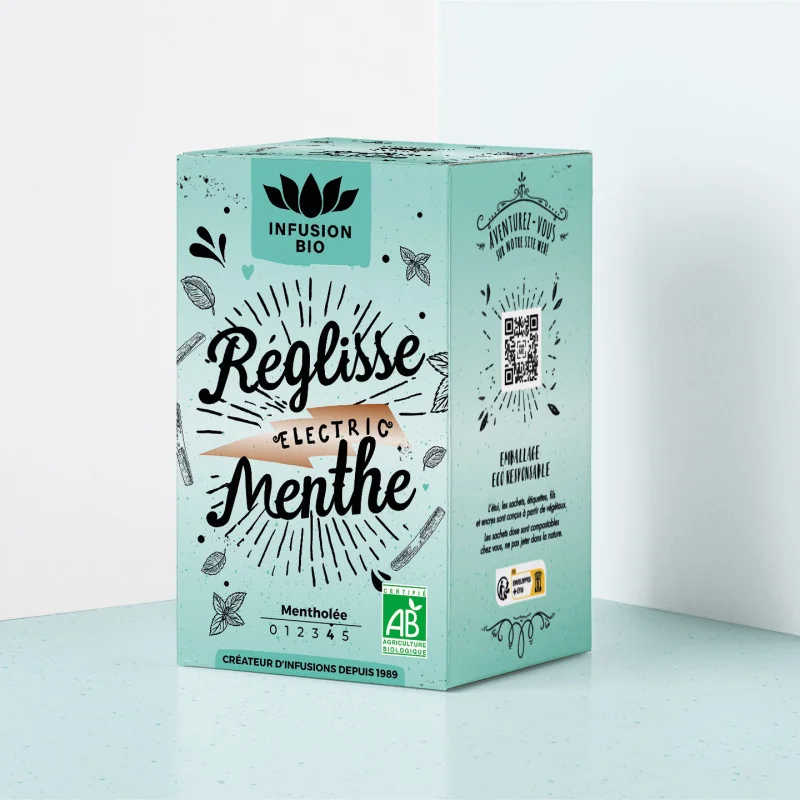
Organic Mint Liquorice Infusion*
A fresh and naturally sweet infusion, at €2.10, for lovers of minty flavours after a meal.

Organic North Pole Herbal Tea*
A winter herbal tea in a pouch of 24 tea bags, at €6.33, ideal for sharing lovely cups with family or friends.
See all our eucalyptus herbal teas · See our organic herbal teas
Precautions to know
- For adults only: eucalyptus leaf infusion is not intended for children.
- Pregnancy and breastfeeding: it is not recommended for pregnant or breastfeeding women.
- Ulcer or digestive inflammation: it is not recommended in case of ulcer or inflammation of the digestive tract.
- Respect the dose: 1.5 to 3 g of leaf in 150 ml of boiling water, up to 4 times a day at most.
- Internal use only as a leaf infusion: never drink eucalyptus essential oil and do not use any species other than the one sold for herbal tea.
- Seek advice: if the cough persists, if you are taking medication or if you have any doubt, talk to your doctor or pharmacist.
Key takeaways
- The reference species for herbal tea is Eucalyptus globulus, whose leaf is used.
- The leaf is traditionally used to relieve coughs associated with colds and to soothe the throat, pharynx and vocal cords.
- The infusion is prepared with 1.5 to 3 g of leaf in 150 ml of boiling water, up to 4 times a day.
- It is for adults only and not recommended for pregnant or breastfeeding women, or in case of ulcer or inflammation of the digestive tract.
- Medical or pharmaceutical advice remains useful as soon as symptoms persist.
FAQ
What is the main benefit of eucalyptus as a herbal tea?
Eucalyptus leaf is traditionally used to relieve coughs associated with colds. It is also described as soothing for the mouth and throat. This is a traditional use, not a treatment.
Which eucalyptus species should you choose for a herbal tea?
The EMA monograph covers the leaf of Eucalyptus globulus. Choose a clearly identified herbal tea sold for this purpose, and do not pick leaves at random in a garden.
How many cups of eucalyptus tea can you drink per day?
The indicated dose is 1.5 to 3 g of leaf in 150 ml of boiling water, up to 4 times a day. It is best to start with a single cup and not to exceed this limit.
Who should avoid eucalyptus tea?
It is for adults only. It is not recommended for pregnant or breastfeeding women, or in case of ulcer or inflammation of the digestive tract. If in doubt, ask a healthcare professional for advice.
Can you drink eucalyptus essential oil in an infusion?
No. This article only concerns the leaf as a herbal tea. Essential oil is a highly concentrated product that is never added to a herbal tea and must not be swallowed.