Ginger infusion: how to prepare it and pair it in cooking
Ginger is one of the few rhizomes to have travelled through the centuries without losing any of its character. Spicy, lemony and slightly woody, it is as much at home in a steaming cup as in a slow-cooked dish. In this article, we look at it from the angle of taste, culture and know-how: how to prepare it as an infusion, how to pair it in cooking, and how to bring it into your everyday life with simplicity.
Good to know before you start. Many people search online for "ginger benefits". This article deliberately takes a different approach: that of flavour, history and cooking. You will therefore find no health promises or advice here, but practical preparations and ideas to share at the table.
Ginger, portrait of a well-travelled rhizome
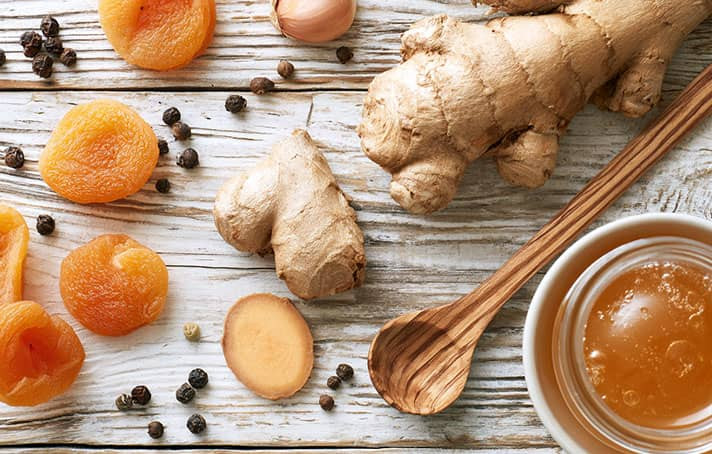
Ginger is not a root, as is often said, but a rhizome: a knobbly underground stem with thin, light beige skin and pale yellow, fibrous, juicy flesh. Native to Asia, it long travelled the spice routes, from Eastern markets to Mediterranean trading posts. Cuisines all over the world have made it their own: Indian curries, Asian broths, Northern European gingerbread, Caribbean lemonades.
In Provence, a land of markets and herbalists, it has found its place alongside thyme, verbena and rosemary. It does not grow here, but it pairs remarkably well with local flavours: its peppery liveliness makes a lovely counterpoint to the sweetness of lavender honey, almond, apricot or fig.
On the nose, fresh ginger evokes citrus and damp earth. On the palate, it first offers a fresh note, then a spicy warmth that builds without burning. It is this dual nature, at once bright and deep, that makes it an ideal companion for infusions.
Fresh, dried or in tea bags: which to choose?
Each form has its own personality. The choice depends on what you feel like, how much time you have and what you want to serve.
Fresh rhizome
This is the most aromatic and freshest version. Choose a firm piece with taut, smooth skin, with no wrinkled or mouldy parts. It can be grated, cut into thin slices or into sticks. It keeps for one to two weeks in the vegetable drawer, or for several months cut into pieces in the freezer.
Dried ginger
More concentrated, warmer and woodier, it loses a little of the lemony freshness of fresh ginger. It is well suited to baking, spice blends and longer infusions. It comes in pieces, slices or powder.
Tea bag infusions
Practical and consistent, they guarantee a constant dose and allow for balanced recipes combining other plants, spices or fruit. They are the ideal solution at the office, when travelling or for a quick break. Our spiced infusions are a good example: ginger plays the leading role.
How to make a ginger infusion, step by step
With fresh ginger
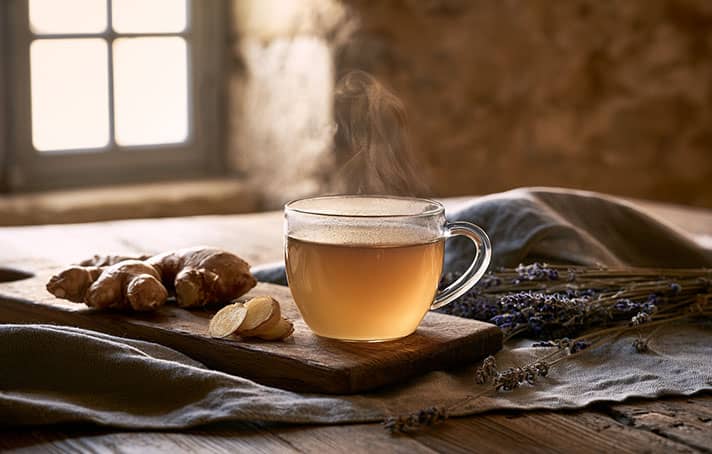
- Wash the rhizome, then cut a few thin slices. There is no need to peel it if it is organic and well scrubbed.
- Bring water to a simmer, around 95 °C, without a rolling boil.
- Pour the water over the ginger in a teapot or a large mug.
- Cover and leave to steep for 8 to 10 minutes: the longer it steeps, the spicier the cup.
- Strain, then add a spoonful of Provence honey or a dash of fruit juice if you like.
For a more intense version, you can let the slices simmer gently in a saucepan for a few minutes: this is called a decoction. The aroma gains depth, and so does the kick.
With a tea bag infusion
Heat the water to around 95 °C, pour it over the tea bag and leave to steep for 5 to 7 minutes, covered to retain the aromas. Remove the tea bag without squeezing it, which prevents bitterness. Ginger copes very well with a slightly longer infusion, as it does not become astringent like some teas.
Iced version
In summer, steep the ginger in hot water, let it cool, then chill for a few hours. Serve over ice with a mint leaf or a slice of orange. Fans of long, refreshing drinks will also enjoy our infusions to serve cold, some of which pair ginger with other spices.
Our house tip. A pinch of ground black pepper or a few crushed peppercorns in the cup bring out ginger's liveliness and add an unexpected length on the palate. Also try a small piece of unwaxed orange zest.
Quantities and steeping times at a glance
| Preparation | Quantity for 250 ml | Temperature | Time | Taste profile |
|---|---|---|---|---|
| Fresh ginger slices | 3 to 4 thin slices | 95 °C | 8 to 10 min | Fresh, lemony, spicy |
| Fresh ginger decoction | 1 piece of 2 cm | Simmering | 10 min | Intense, deep |
| Dried ginger | 1 teaspoon of pieces | 95 °C | 7 to 10 min | Woody, warm, rounded |
| Tea bag infusion | 1 tea bag | 95 °C | 5 to 7 min | Balanced, consistent |
| Cold infusion | 2 tea bags for 500 ml | 95 °C then fridge | 7 min + 2 h | Thirst-quenching, lively |
Pairing ginger in cooking
Ginger is a great ally for curious cooks. It works in both savoury and sweet dishes, whether fresh, dried or infused. Here are our favourite pairings.
Sweet pairings
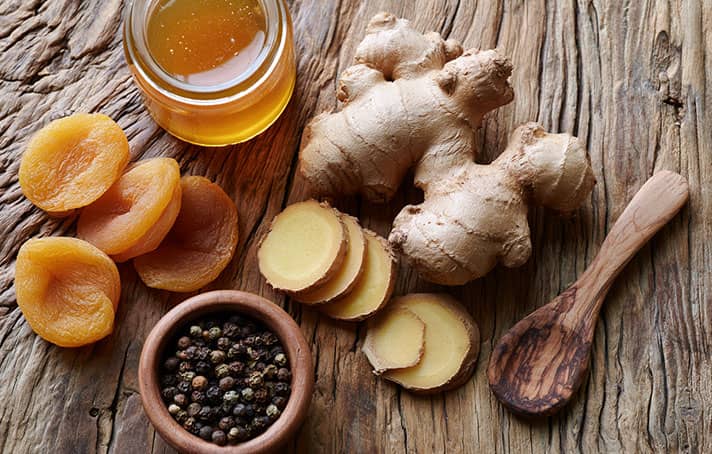
- Summer fruit: apricot, peach, melon, strawberry. A few strands of fresh ginger in a fruit salad add unexpected depth.
- Winter fruit: pear, apple, quince. Poach them in a ginger-infused syrup with a little honey.
- Chocolate: preferably dark. The warmth of ginger and the bitterness of cocoa complement each other beautifully in a fondant or ganache.
- Baking: shortbread biscuits, gingerbread, almond cake, rhubarb crumble.
- Honey and almond: a very Provençal duo, perfect with yoghurt or fromage blanc.
Savoury pairings
- Poultry and fish: grated into a marinade with lemon, olive oil and garlic, it flavours a white fish fillet or a roast chicken.
- Vegetables: carrots, squash, butternut, sweet potato. A little ginger in a soup adds a freshness that balances the sweetness of the vegetable.
- Wok cooking: stir-fried vegetables, noodles, egg fried rice, with soy sauce and garlic.
- Mediterranean cooking: lamb tagines with dried fruit, confit vegetables, onion or fig chutneys.
Drinks
Beyond the classic infusion, try ginger in a homemade lemonade (sparkling water, lemon juice, ginger syrup), in a hot spiced milk, or in cool water flavoured with mint and cucumber.
Homemade ginger syrup
Heat 250 ml of water with 150 g of sugar or honey until dissolved, add 80 g of thinly sliced fresh ginger and simmer for 15 minutes. Leave to cool, strain and store in a bottle in the fridge for about two weeks. Enjoy this syrup diluted with water, poured over vanilla ice cream or used to soak a cake.
Our selection of ginger infusions
To vary the pleasures without peeling or grating, here are a few of our house products. All are organic and ready in just a few minutes.
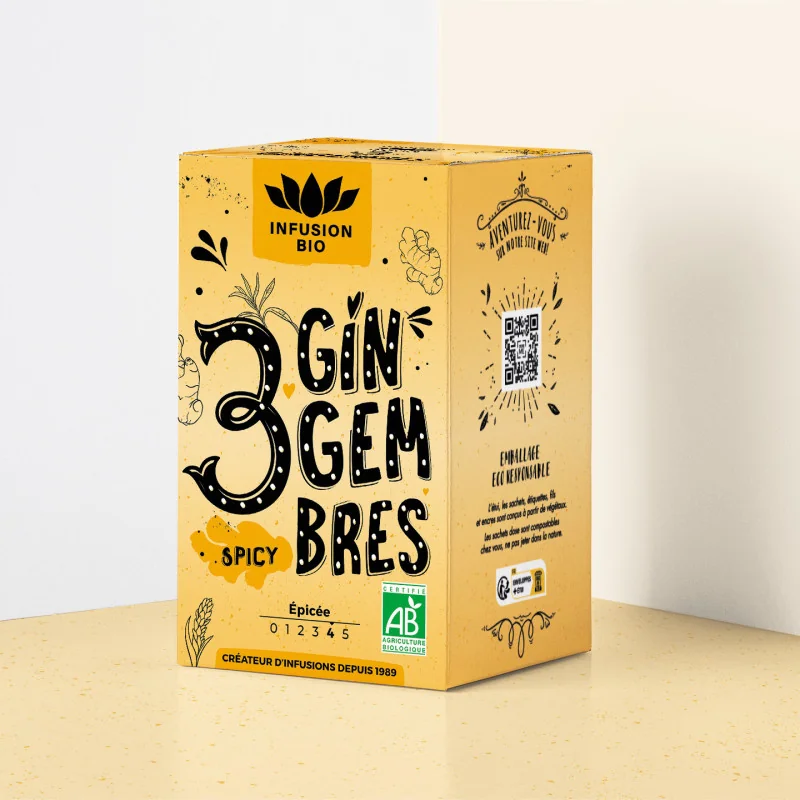
Organic 3 Ginger Infusion*
The go-to choice for lovers of pure, bold ginger. Designed around several facets of the rhizome, it offers a lively, aromatic cup. Enjoy it on its own, with a drizzle of honey, or as the base for a more elaborate drink.
€3.50 · 16 tea bags
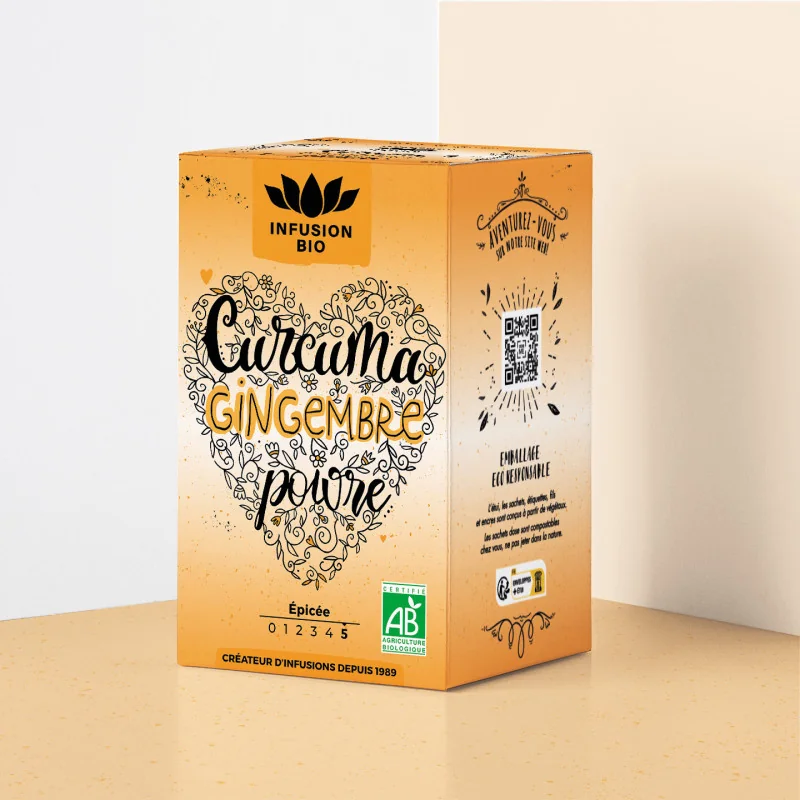
Organic Turmeric Ginger Pepper Infusion*
A recipe with warm spice accents, with pepper to extend ginger's kick and turmeric for its golden colour. It can be enjoyed hot or cold, and its bold personality appeals to those curious about strong flavours.
€3.50 · 16 tea bags
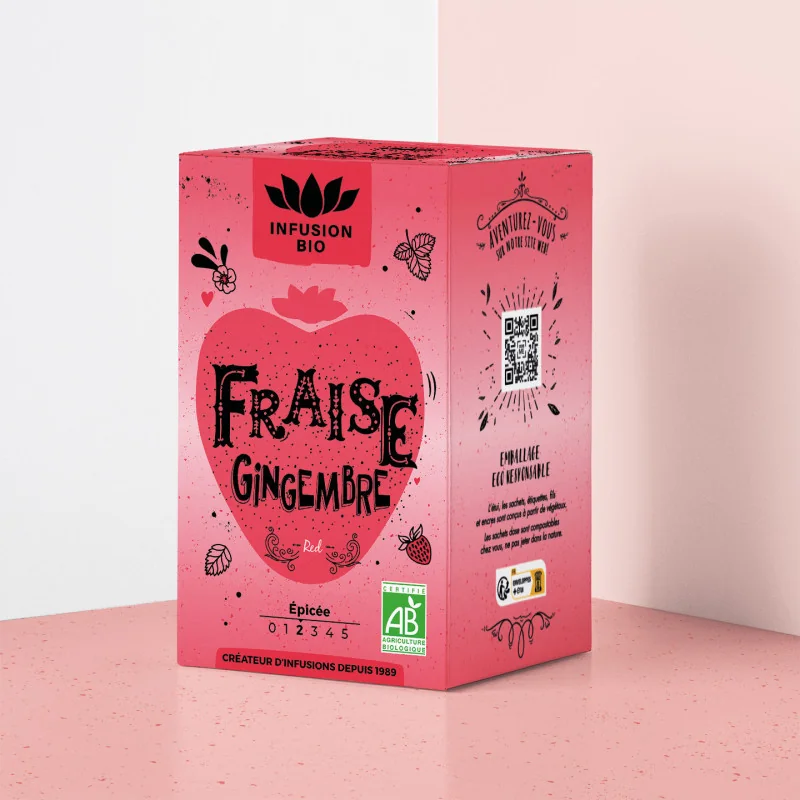
Organic Strawberry Ginger Infusion*
The indulgence of red fruit meets the liveliness of the rhizome. A gentle, fragrant infusion that wins over those who find pure ginger a little intense. Delicious iced in summer.
€3.50 · 16 tea bags
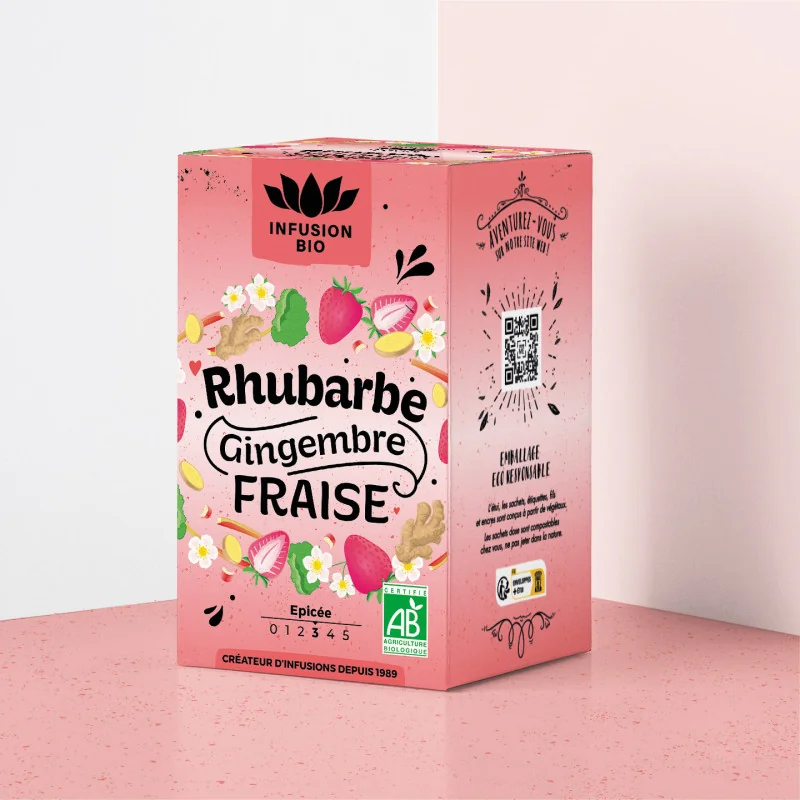
Organic Rhubarb Ginger Strawberry Infusion*
A trio reminiscent of grandma's crumble: the tang of rhubarb, the sweetness of strawberry and the spicy touch of ginger. An indulgent afternoon recipe, to enjoy with a shortbread biscuit.
€3.50 · 16 tea bags
How to choose?
- You love intense ginger: the 3 Ginger Infusion.
- You are looking for a more complex spice blend: the Turmeric Ginger Pepper Infusion.
- You prefer fruity sweetness: Strawberry Ginger or Rhubarb Ginger Strawberry.
Giving ginger: the gift set idea
Ginger makes a lovely gift: it evokes warmth, travel and conviviality. Rather than opting for predictable presents, you can put together an assortment that tells a story: a bold infusion, a fruity version, a jar of honey, a few biscuits.
If you want to save time, the Organic Assorted Herbal Tea Gift Set in a metal tin* brings together 60 tea bags in a variety of flavours in a reusable metal tin. Priced at €24.90, it is an affordable and lasting gift for a birthday, a celebration or a simple thank you.
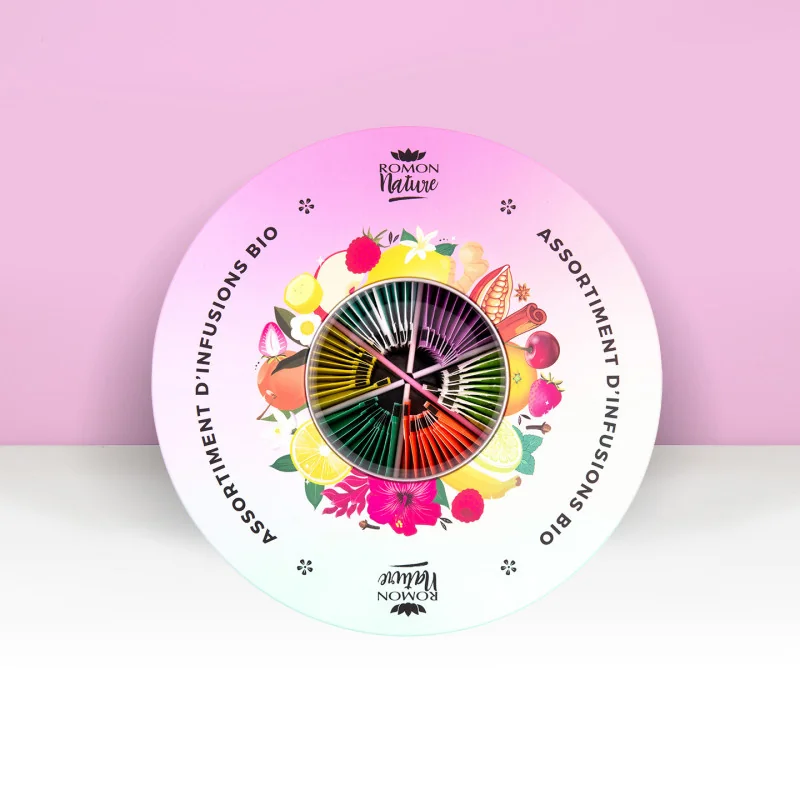
Organic Assorted Herbal Tea Gift Set – Metal Tin*
A multi-flavour assortment in a metal tin that will be used long after the last cup. Ideal for introducing several aromatic worlds to those receiving it.
€24.90 · 60 tea bags
For more inspiration, discover our selection of original gift boxes, designed to move away from conventional gifts.
Precautions for use
- Ginger has a powerful taste: start with small quantities and adjust to suit your sensitivity.
- Follow the steeping times and quantities indicated on the packaging.
- Check the ingredient list of each infusion if you are allergic to a plant, fruit or spice.
- Keep tea bags in a dry place, away from light and odours, and fresh rhizome in the fridge.
- If you are pregnant, breastfeeding, undergoing treatment or in a particular situation, ask your doctor or pharmacist for advice before regular consumption.
Infusions are not a substitute for a varied, balanced diet or for medical advice.
Frequently asked questions
Do you need to peel ginger for an infusion?
Not necessarily. If the rhizome is organic and well scrubbed, its thin skin can stay on. Otherwise, simply scrape it off with the back of a spoon.
Can you reuse ginger that has already been infused?
Yes, a second infusion is possible: it will be milder. You can also save the slices to add to a broth or a compote.
What is the difference between an infusion and a decoction?
An infusion involves pouring hot water over the plant and leaving it to steep. A decoction involves gently simmering the pieces in water, which suits tough parts such as the rhizome.
How do you store fresh ginger?
Wrapped in kitchen paper, in the vegetable drawer, for one to two weeks. To keep it longer, cut it into pieces and freeze it: it grates very well while still frozen.
What goes well with a ginger infusion?
Honey, orange zest, a pinch of pepper, cinnamon, a mint leaf or red berries. At the table, it goes well with shortbread biscuits, dark chocolate and fruit desserts.
Where can you find organic ginger infusions?
Several organic recipes are available in our shop, from pure ginger to fruity or spiced blends. They are carefully prepared in Vernègues, in the heart of Provence.
Whether you grate it fresh over fish, steep it in a syrup or prefer the simplicity of a tea bag, ginger is a wonderful invitation to explore flavour. It's up to you to create your own cup, in step with the seasons and your mood.
*Products from organic farming.