What does a ginger lemon infusion taste like?
Ginger brings a piquant note, more or less present depending on the quantity used and the preparation time. Lemon adds a tangy touch that lightens the perception of the spices. The balance is therefore created between these two sensations: a very lemony cup feels livelier, while a preparation generous in ginger leaves more warmth on the palate.
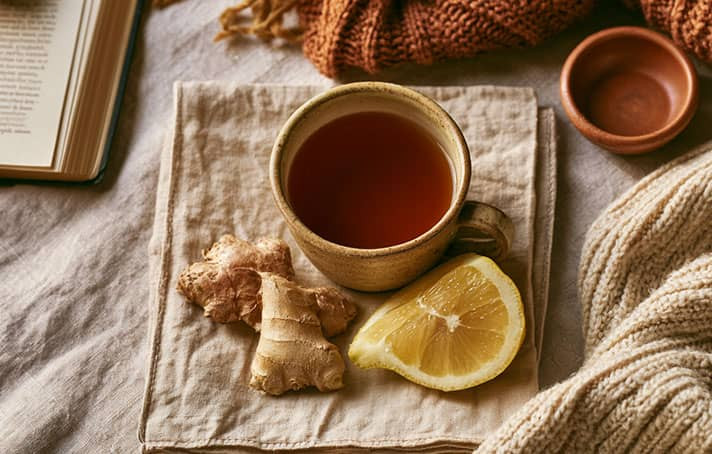
Start by tasting your infusion plain. You can then choose to soften it or preserve its frank character. A ceramic cup, a small tray and a few minutes near a window are enough to turn this preparation into a moment of your own. In a Provençal kitchen, the autumn light and half-open shutters give it a beautifully simple setting.
A sachet and a homemade recipe give different cups
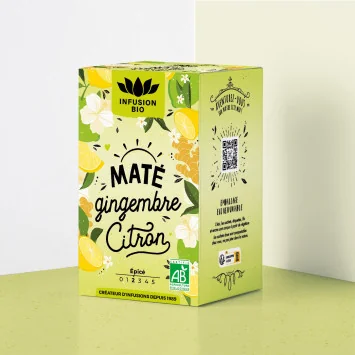
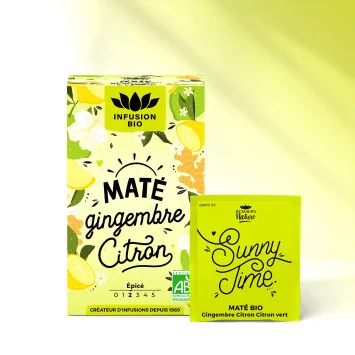
A ready-to-infuse blend may contain other plants and spices. The Organic Ginger Lemon Infusion by Romon Nature, available on the Provence d’Antan website, notably contains 30% ginger, hibiscus, apple, cinnamon and lemon extract. This selection is not its complete composition: consult the product page to find it. It therefore differs from a cup prepared only with fresh ginger and lemon.

How to prepare a ginger lemon infusion in a sachet
For this Romon Nature reference, use one sachet for 200 ml of water heated to 95–100°C. Leave to infuse for 6 to 8 minutes, then remove the sachet. These instructions are specific to this product; for any other reference, follow the preparation advice indicated on its packaging.
A small timer can help you recreate the cup you enjoy. Start with the shortest recommended infusion time, then try a longer infusion next time and compare. Avoid changing both the water volume and infusion time at once: this will help you better understand what affects the taste. If the drink seems too intense, simply add a little hot water to your cup.
Also take the time to read the usage advice. The product page for this blend states that it is not recommended for children, pregnant women or breastfeeding women. These indications concern the reference mentioned and should be taken into account when choosing it.
How to prepare an infusion with fresh ginger and lemon
For a first cup, use around 200 ml of water, two or three thin slices of fresh ginger and a little lemon juice. This is a simple culinary starting point, to be adjusted according to your taste. Wash the ginger and lemon, prepare the slices, then place the ginger in a small teapot or heat-resistant container.
Pour very hot water over the ginger and cover. Leave to infuse for a few minutes, taste, then extend the infusion time if you would like more character. Strain the preparation, then add the lemon juice gradually once the ginger has been removed. This allows you to adjust the acidity without losing the balance of your tasting experience. Wait until the drink reaches a pleasant temperature before enjoying it.
Finding the intensity that suits you
For a softer version, use only a little ginger and add the lemon gradually. For a more expressive cup, slightly increase the amount of ginger during your next preparation. If you grate the ginger, it will release very fine pieces: in that case, use a suitable strainer. Note your favourite combination in a kitchen notebook so you can recreate it easily.
Three autumn tasting ideas
With a touch of honey
A small spoonful of honey can soften a cup that feels too lively for your taste. Add it gradually after infusion and stir well before tasting. The idea is to keep the ginger and lemon clearly perceptible on the palate. Paired with a slice of bread or a plain biscuit, it becomes a simple mid-morning pause.
With a fruit snack
Serve your cup with a few apple wedges, a ripe pear or a slice of homemade fruit cake. The contrast between a soft bite and a livelier sip makes the tasting experience more interesting. To extend the seasonal spirit, our article on back-to-school spices also explores cinnamon, cardamom and ginger in the cup.
In a carafe, for a shared moment
When preparing a homemade version for two adults, keep the base moderate and serve the lemon separately. Each person can then adjust their own cup. Prepare two mugs, arrange the lemon slices on a small saucer and serve a small quantity at a time. This keeps the drink pleasant to enjoy while avoiding a large volume sitting on the table for too long.

How to choose your ginger lemon blend
Look at the ingredient list, the format and the preparation advice. The name of the pairing gives a direction of taste, but the plants that accompany it change the result. To discover other lemony profiles, browse the tangy lemon infusions. If it is mainly the spiced depth that attracts you, the ginger infusions offer another starting point for your choice.
Are you looking more specifically for the benefits of ginger lemon infusion? Before associating a property with a blend, it is necessary to know its composition and the corresponding conditions of use. A recipe with fresh ginger and a sachet bringing together several ingredients are not interchangeable. For your tasting experience, the most useful information remains concrete: ingredients, taste, preparation and advice specific to the chosen product.
Finding your favourite cup
A successful ginger lemon infusion comes down to a few simple gestures: choose your base, follow the indications of the blend or adjust a homemade recipe, then taste before adding lemon or honey. Keep your preferred balance and adapt the pairing to the time of day. From the first attempt to a familiar ritual, the pleasure above all comes from a preparation you know and enjoy making again.