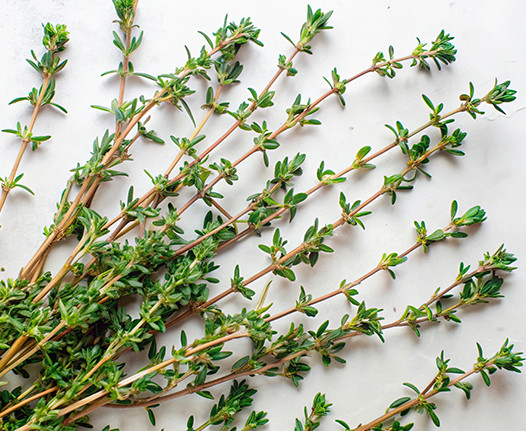
Rosemary benefits: traditional uses, herbal tea and Provençal cooking ideas
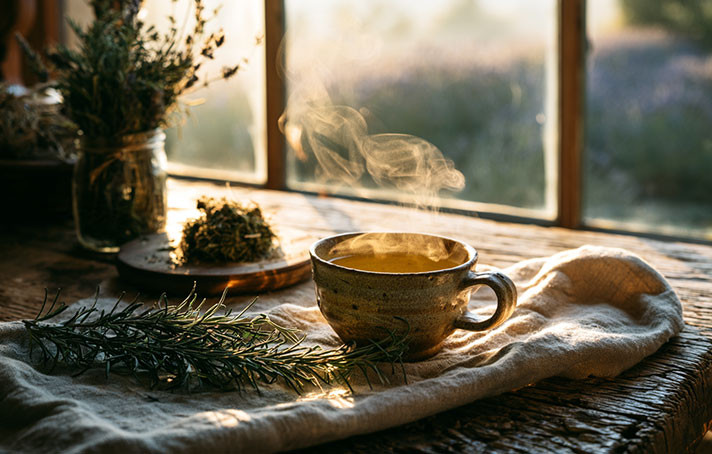
Rosemary grows all over our hills: on the stony slopes of Vernègues, among the kermes oaks, thyme and Aleppo pines, it scents the air as soon as the sun warms the stone. Just brush against a branch and its essential oils cling to your hand. It is the smell of the countryside, of Sunday cooking, of vine-cutting fires and the family home. When you look up the benefits of rosemary, you are probably trying to understand why this plant has accompanied our meals and herbal teas for so long.
This article offers an honest and gourmet overview: what tradition says about rosemary, how to prepare a lovely infusion, and how to bring it into everyday Provençal cooking. We stick to traditionally recognised uses, with no medical promises, as is only right for a plant we love as much for its flavour as for its history.
At a glance
- Rosemary (Salvia rosmarinus, also known as Rosmarinus officinalis) is used as dried leaves, in infusions and in cooking.
- Traditionally, it is used to aid digestion and for digestive comfort.
- It contains natural antioxidants.
- It is not recommended for children under 12, pregnant or breastfeeding women, or in case of biliary disorders.
Contents
Rosemary, a plant of the garrigue
Rosemary belongs to the Lamiaceae family, like thyme, sage and lavender. Its original Latin name, Rosmarinus, means “dew of the sea”: it was often found near the Mediterranean coast, where it is content with poor soil, wind and sunshine. Modern botany has placed it in the genus Salvia, which gives it the name Salvia rosmarinus. Herbalists, however, often still say Rosmarinus officinalis, and both names refer to the same plant.

Its evergreen, needle-like leaves are dark green on top and silvery underneath. They hold all the aroma: camphor-like, resinous, slightly peppery, with a hint of pine and lemon. Its small pale blue flowers sometimes appear as early as late winter, to the delight of the bees. In Provence, rosemary is one of the pillars of herbes de Provence, the blend of aromatic garrigue herbs that flavours grilled dishes, summer vegetables and slow-cooked stews.
Grown in France and harvested when mature, it is carefully dried to preserve its fragrance. It is this dried leaf that you will find in our herb jars as well as in our herbal tea bags.
Traditional uses of rosemary
When talking about the benefits of rosemary, it is important to be precise. Here we rely on traditional uses documented in reference works and monographs on medicinal plants. These are in no way promises of results: they are uses that have been handed down, described and practised for a long time.
A plant traditionally associated with digestion
This is the most widespread use. Rosemary is traditionally used to aid digestion. Reference works describe it as a plant that supports digestive comfort: it is said to help stimulate the production of digestive fluids and to support the digestion of fats, which explains its natural place alongside roast meats, lamb, sautéed potatoes and the rich dishes of our Provençal tables.
Pharmacopoeia monographs also mention it as a carminative and an antispasmodic when taken orally, in other words a plant traditionally used to help relieve flatulent indigestion and the discomforts of dyspepsia. In family practice, this means a warm cup of herbal tea after a hearty meal, sipped slowly.
The liver and bile ducts
Tradition also links rosemary to the liver and bile. It is described for its choleretic properties, for its traditional support of liver and biliary function, and for antispasmodic effects on the gallbladder ducts. Some sources also mention support for hepatobiliary drainage.
This is precisely why the precautions for use matter: in case of bile duct obstruction or any biliary disorder, rosemary is not recommended. We come back to this below.
Purification and intestinal function
In traditional medicine literature, rosemary is cited as helpful for maintaining the body’s physiological purification functions and for supporting intestinal function. Taken orally, it is also described as a tonic, diuretic, diaphoretic, cholagogue and emmenagogue. These uses come from tradition, and we report them as cultural and historical information.
Natural antioxidants
Rosemary contains natural antioxidants. Antioxidants are compounds that help protect cells and tissues against oxidative damage caused by free radicals. This richness partly explains the long-standing interest of cooks, who also use it to preserve certain preparations, and of plant lovers who like to give it a place in a varied diet.
Rosemary at a glance
| Use | What tradition says | Usual form |
|---|---|---|
| Digestion | Traditionally used to aid digestion and digestive comfort | Infusion of dried leaves |
| Flatulent indigestion | Carminative and antispasmodic use described in pharmacopoeias | Infusion, decoction |
| Liver and bile | Traditional support of liver and biliary function | Leaf infusion |
| Purification | Helpful for maintaining physiological purification functions | Herbal tea |
| Antioxidants | Contains natural antioxidants | Dried leaf, cooking, herbal tea |
How to make the perfect rosemary infusion
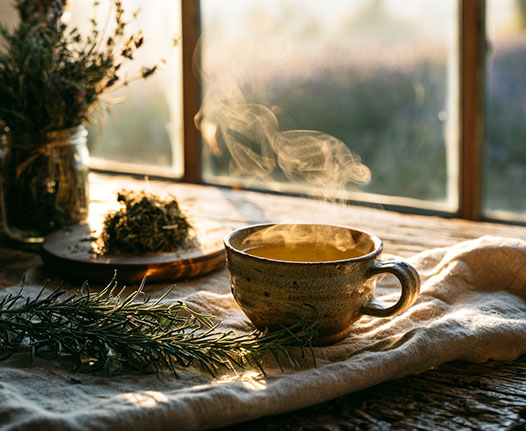
An infusion is the simplest, and probably the most pleasant, way to enjoy rosemary. Tea bags offer consistency, while loose leaves invite a little ritual. Either way, a few simple steps make all the difference.
The right technique
- Choose soft water, spring or filtered, to let the aroma come through.
- Bring the water to a simmer, just before a full boil, then pour it over the leaves.
- Cover your cup to hold in the volatile aromas, which are the soul of rosemary.
- Leave to infuse for a few minutes, depending on the strength you like. Any longer and the tea becomes more camphor-like and bitter.
- Strain and enjoy slowly, ideally at the end of a meal.
For quantities, follow the directions on each product’s packaging. Reference monographs describe traditional uses as an infusion of dried leaves, but we prefer to invite you to respect the manufacturer’s dose and not to increase your intake without professional advice.
A few tasty variations
- Rosemary and lemon: the zest brings a lively freshness that softens the plant’s resinous notes.
- Rosemary and Provence honey: a little touch of sweetness for winter evenings.
- Iced rosemary: let the infusion cool, add ice cubes and a slice of lemon for a summer drink.
Our house tip
Keep your dried leaves away from light and moisture, in a tightly closed jar. They will keep their garrigue fragrance for much longer.
Rosemary in Provençal cooking
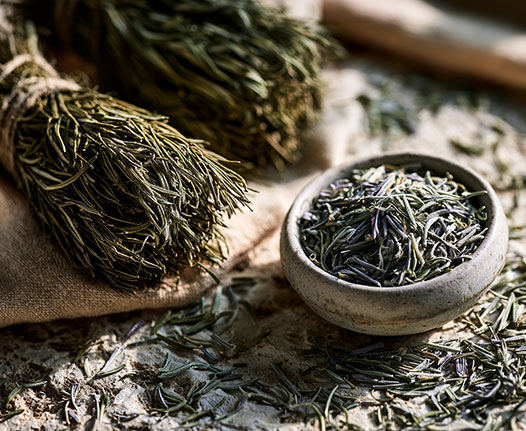
In Provence, rosemary is never used by chance. It has its place, its moment, its way. Its strength calls for a little restraint: a single sprig is enough to flavour a whole dish. Here are a few simple ideas, the way we do it here.
Meat and fish
Rosemary pairs naturally with lamb, chicken, rabbit and pork. Stud a leg of lamb with garlic cloves and sprigs of rosemary before roasting, or lay a branch on the barbecue embers to flavour a lamb chop. It also goes beautifully with roasted sea bream, a few slices of lemon and a drizzle of olive oil.
Summer vegetables
Roasted baby potatoes, courgettes, aubergines, peppers and confit tomatoes: they all welcome a few dried rosemary leaves added at the start of cooking. To save time, a ready-made blend such as Organic Vegetables & Spices does the job in seconds.
Slow-cooked dishes
In a daube, a stew or a vegetable soup, rosemary slips into a bouquet garni, which is removed before serving. This little bundle of herbs, tied or in a sachet, adds a subtle depth, far from overpowering aromas.
Sweet treats
Few people think of it, and yet rosemary goes very well with orange, lemon, figs and apricot. A few chopped needles in shortbread dough, a sprig infused in a syrup for a fruit salad, and the surprise is a delight.
Flavoured salt
A rosemary and lemon salt instantly lifts fried eggs, grilled meat, roasted vegetables or even a simple slice of bread with olive oil. It is one of the little pleasures of everyday cooking.
Our rosemary selection
At Provence d'Antan, we have gathered a few products so you can enjoy rosemary in all its forms, from cup to plate. Each one comes from organic farming and is carefully packed.
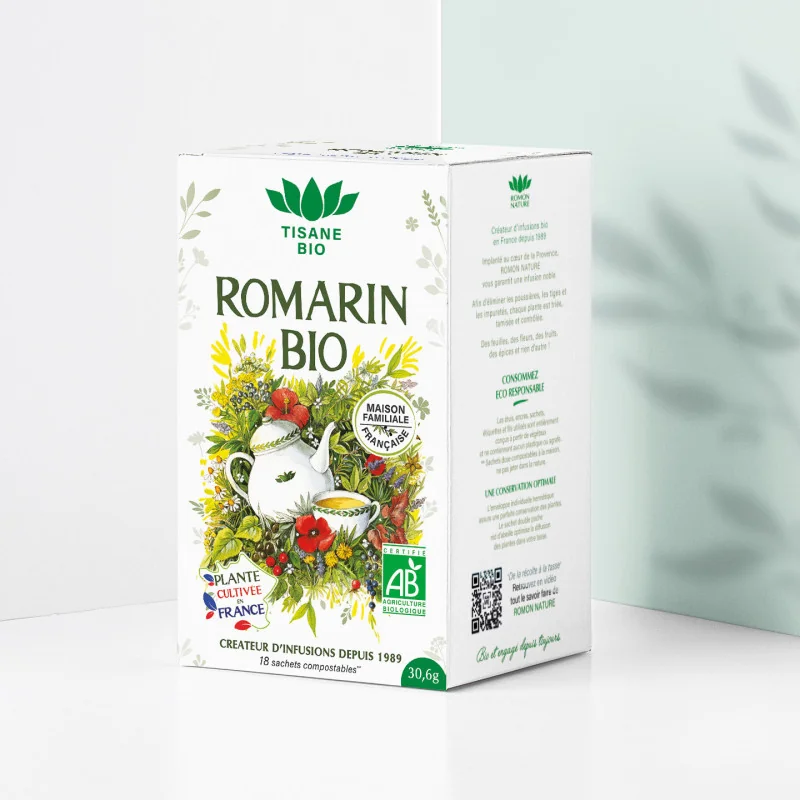
Organic* Rosemary Herbal Tea grown in France
The go-to herbal tea to enjoy rosemary in all simplicity. Leaves grown in France, a scent of garrigue, ideal after a meal.
€4.50
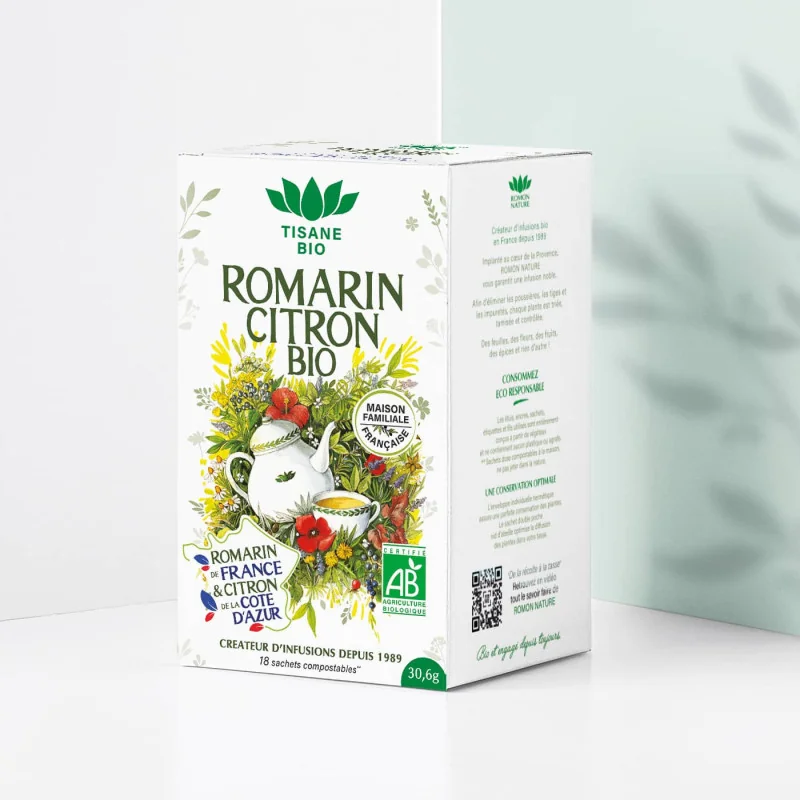
Organic* Rosemary & Lemon Herbal Tea from France
Rosemary becomes livelier with lemon. A bright herbal tea, to enjoy hot or cold.
€4.50
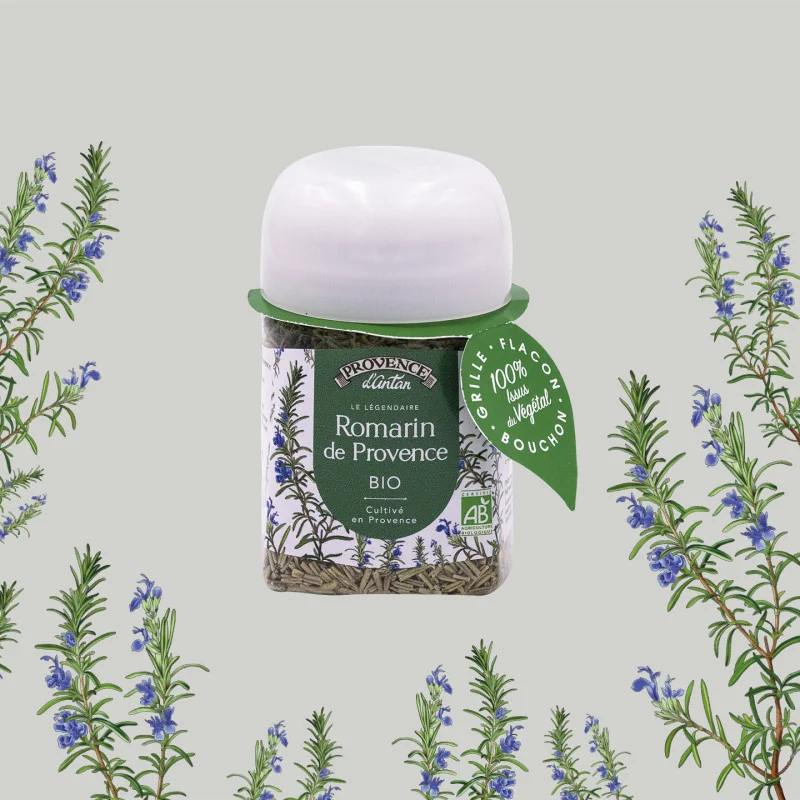
Organic* Rosemary 30g - Plant-based PLA Jar
Rosemary leaves for cooking: meat, vegetables, marinades and breads. A must-have in any Provençal pantry.
€4.45
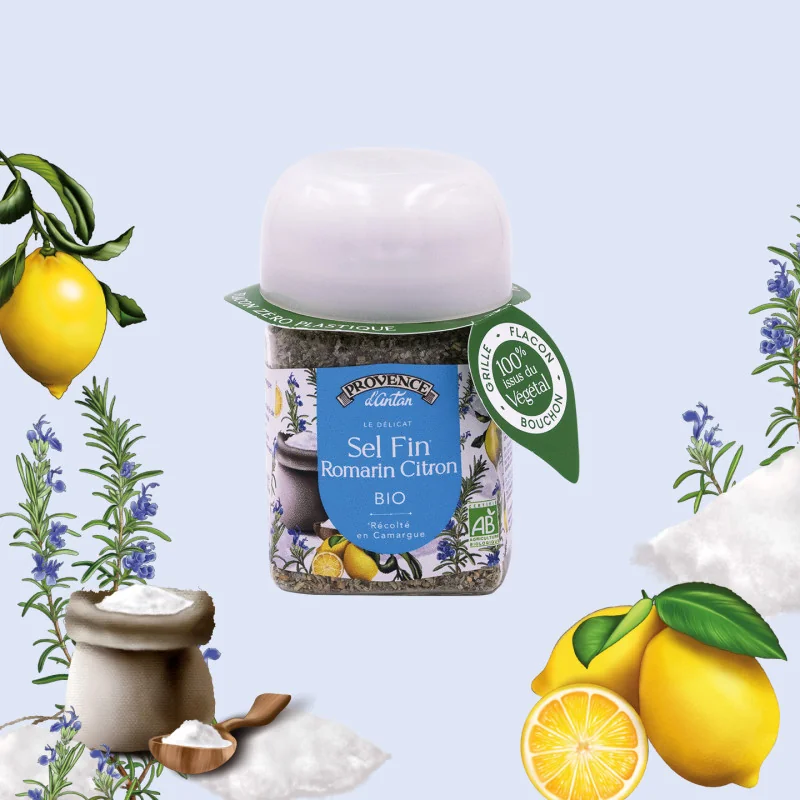
Organic* Rosemary Lemon Fine Salt 80g - Plant-based PLA Jar
A flavoured salt to season fish, white meat and roasted vegetables in one simple gesture.
€4.45
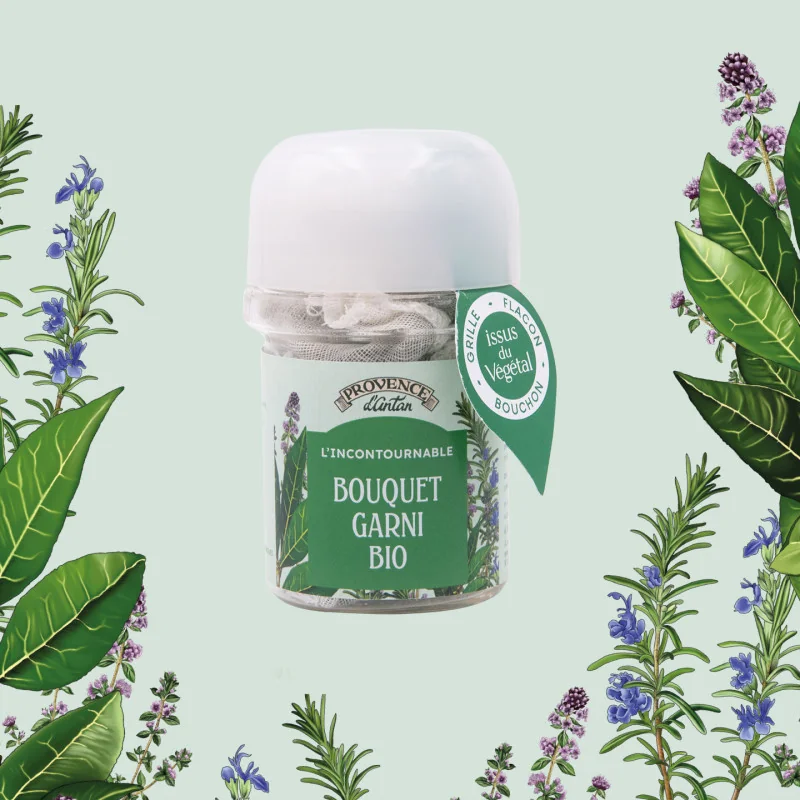
Organic* Bouquet Garni - 12g Plant-based PLA Jar
For daubes, soups and broths: a blend of herbs, including rosemary, that slowly infuses your stews with flavour.
€4.45
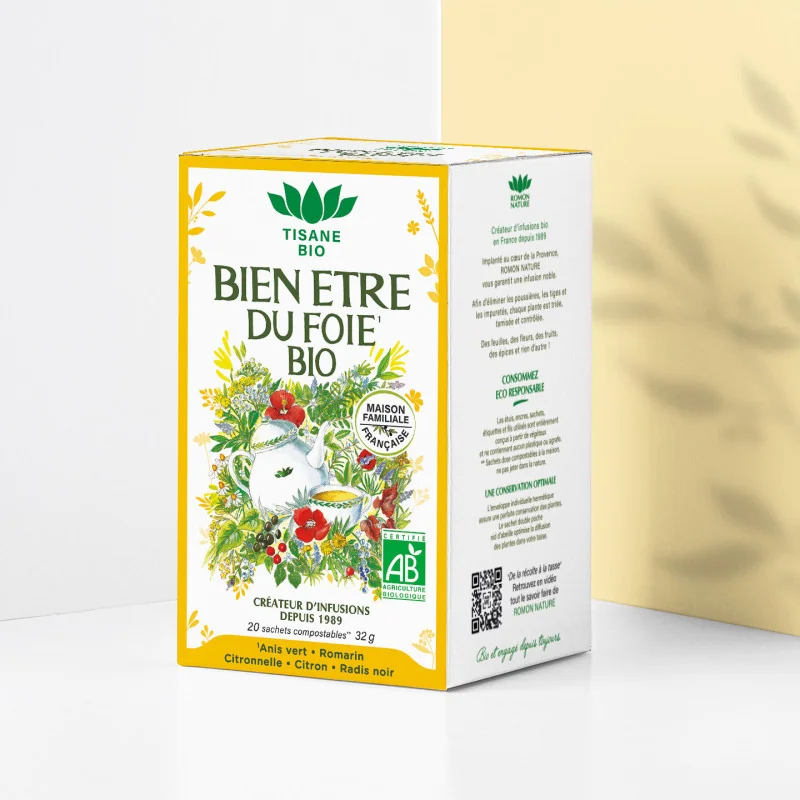
Organic* Liver Wellbeing Herbal Tea
A herbal tea from our digestion range, designed for the moments after a generous meal.
€4.50
Rosemary as a gift
Rosemary also makes a lovely gift idea. A herbal tea, a jar of herbs and a flavoured salt are all it takes to put together a thoughtful present, full of Provençal sunshine. If you are looking for something to slip under the tree or to give for a birthday, take a look at our selection of tea gift boxes : you will find plenty to delight those who love a warm cup and beautiful plants.
For a homemade gift, you can also put together a small basket yourself: a rosemary and lemon herbal tea, a jar of rosemary for cooking, a flavoured salt and a handwritten note. Simple, heartfelt, and very Provençal.
Precautions for use
Please read before regular use
- Rosemary is not recommended for children under 12.
- It is not recommended for pregnant or breastfeeding women.
- It is not recommended in case of bile duct obstruction or other biliary disorders.
- Respect the dose indicated on the packaging and do not prolong use without professional advice.
- Occasional culinary use does not carry the same weight as regular intake as an infusion: if you are undergoing medical treatment, talk to a healthcare professional.
A herbal tea is no substitute for medical treatment or for a varied and balanced diet. If in doubt, ask your doctor or pharmacist for advice.
Frequently asked questions
What is the main benefit of rosemary?
Traditionally, rosemary is mainly used to aid digestion and support digestive comfort. It also contains natural antioxidants. These are traditional uses, not medical promises.
Can you drink rosemary every day?
Daily culinary use as a seasoning generally raises no particular concern. For infusions, follow the dose indicated on the product and ask a healthcare professional for advice if you wish to make it a long-term habit, especially if you are taking any medication.
When should you drink rosemary tea?
Tradition places it at the end of a meal, especially after a rich one. Many people prefer it during the day, as its fragrance is rather invigorating.
Is fresh or dried rosemary better?
In cooking, both work just as well: fresh is more delicate, dried is more concentrated and easier to store. For infusions, the dried leaf is the most common and most consistent form.
Is it the same rosemary as in herbes de Provence?
Yes, it is the same plant. Rosemary is one of the ingredients of herbes de Provence, alongside thyme, savory, oregano and other herbs, depending on the recipe.
Who should avoid rosemary?
It is not recommended for children under 12, pregnant or breastfeeding women, or people with bile duct obstruction or other biliary disorders.
In conclusion
Rosemary is one of those plants that speak of Provence without saying a word: you smell it, pick it, dry it, infuse it, and slip it into your cooking and your cup. Its benefit, in the traditional sense, lies in this age-old link with digestion and comfort after meals, and in its wealth of natural antioxidants. But above all, it lies in the simple pleasure of sharing a scent of the garrigue.
Whether you enjoy it as a herbal tea, in a jar of herbs or in a flavoured salt, make a little room for it in your home: it will do the rest.
* Products from organic farming.