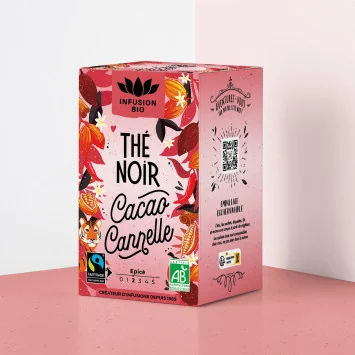
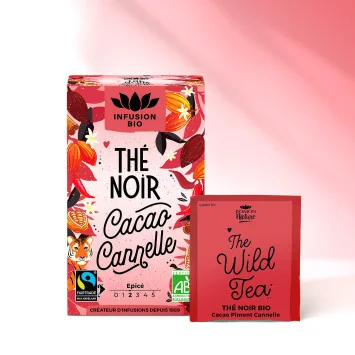
Black tea
Organic tea The wild tea - 16 teabags
Pepper - Cocoa - Cinnamon - Black Tea
Energise your day with our organic ginger infusions. Tonic and spiced, ginger is traditionally associated with vitality and digestive comfort. A lively, warming drink to enjoy naturally and with pleasure at any time of day.
Filter By
Black tea
Organic tea The wild tea - 16 teabags
Pepper - Cocoa - Cinnamon - Black Tea
Organic Ginger Infusions
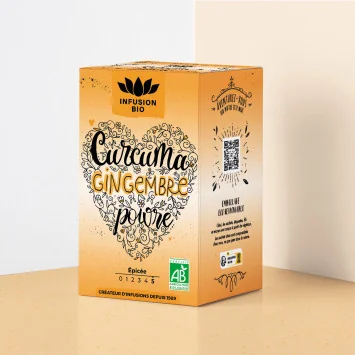
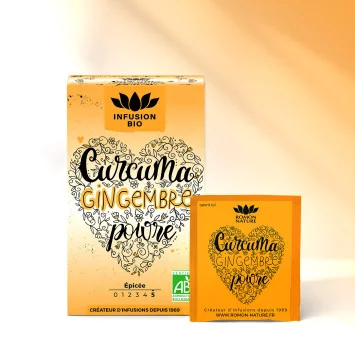
Organic Turmeric Ginger Pepper Infusion*
Ginger - Turmeric - Black Pepper
Ginger infusions seduce with their lively, spiced and slightly piquant character. Long used in cooking as well as in traditional plant-based preparations, ginger (Zingiber officinale) is particularly well suited to infusion. Its rhizome can be used on its own or combined with other ingredients, notably lemon, to create drinks full of character. Traditionally associated with digestive comfort and vitality, ginger can be enjoyed hot or cold, plain or with a little honey. An essential plant for bringing a warm note to the cup.
Ginger corresponds to Zingiber officinale and the part used is the rhizome.
It is traditionally associated with digestive comfort.
The botanical reference framework also attributes tonic properties to it, associated with vitality.
It can be prepared as an infusion using fresh, dried or powdered rhizome.
Ginger, lemon and honey form a simple combination for preparing a homemade drink.
Traditionally used to bring a warm, spiced and aromatic flavour to infusions.
Traditionally used in botanical drinks for its fresh and tangy notes.
Turmeric contributes to the normal functioning of digestion.
Traditionally used in hot drinks for its warm and spiced notes.
Traditionally used for its fresh and spiced aromatic notes.
Contributes to the normal functioning of the digestive system.
Contributes to the protection of cells against oxidative stress.
Ginger has long held an important place among plants traditionally used in food and herbalism.
But which benefits of ginger infusion can truly be mentioned?
This is one of the best-documented uses in our reference framework.
Ginger helps support digestion and contributes to the normal functioning of the intestinal tract. Its rhizome is also traditionally used in certain preparations to accompany various digestive discomforts.
These properties concern ginger itself and should not be interpreted as a promise that an infusion treats a digestive disorder.
Ginger is also traditionally associated with tone.
Our reference framework indicates that it contributes to promoting vitality and attributes stimulating and tonic properties to it in relation to resistance to fatigue.
This explains, in particular, its place in drinks enjoyed at breakfast or when looking for a cup with a more dynamic character.
Research around ginger frequently leads to the notions of immune system and natural defences.
Our reference framework does indeed mention a claimed “immunostimulant” property. However, in this section, it does not provide wording precise enough to directly present a ginger infusion as a product that “strengthens natural defences”.
It is therefore preferable not to turn this notion into a promise.
At Provence d’Antan, we retain the best-established formulations for this plant: digestion, vitality and tone.
Ginger is also regularly searched for online in association with menstrual pain.
However, this specific use is not validated in the plant reference framework used by Provence d’Antan.
We therefore do not present our ginger infusions as a solution for period pain. In the case of significant, unusual or persistent menstrual pain, medical advice is preferable.
At Provence d’Antan, ginger infusion evokes the meeting between botanical freshness and the warmth of spices.
It draws inspiration from herbalist traditions in which aromatic roots hold an essential place in everyday tasting recipes. Its lively, spiced and elegant profile makes it an infusion appreciated at different moments of the day.
Combined with citrus fruits, spices or aromatic plants, ginger creates balanced recipes that invite you to savour a botanical pause full of character.
Ginger is a rhizome with a particularly recognisable personality.
In the cup, it brings a warm, lively and slightly piquant sensation, making it possible to build very different compositions depending on the ingredients with which it is combined.
With lemon, the result becomes brighter and tangier. With spices, the cup takes on a warmer character. A small amount of honey can, on the contrary, bring more roundness.
It is precisely this versatility that explains why ginger finds its place so easily in an infusion as well as in cooking.
For a Provence d’Antan infusion, the best reference remains the preparation advice indicated on the chosen product.
The composition of a blend does indeed influence dosage and infusion time.
With a homemade preparation, the result also depends on the form used: fresh ginger, dried rhizome or powdered ginger are not dosed in exactly the same way.
Start with a moderate quantity and adjust according to the intensity you are looking for.
Yes. Ginger makes it very easy to prepare a homemade infusion.
Cut a few thin slices of fresh rhizome, add them to hot water and leave to infuse. The greater the quantity of ginger and the longer the contact time, the more characterful the drink becomes.
You can then add lemon or a small amount of honey according to your preferences.
Powdered ginger can also be used, but it behaves differently: it does not dissolve completely in water and may form a deposit at the bottom of the cup.
For one cup, start with a small quantity — for example around ¼ teaspoon — then adjust according to your taste. This is a culinary guideline, not a dosage intended to obtain a physiological effect.
Infuse a few thin slices of fresh ginger in hot water.
Then add a little lemon juice and, once the drink has cooled slightly, a small spoonful of honey.
A simple recipe that balances the piquant character of ginger with the acidity of lemon and the softness of honey.
Infuse a few slices of ginger with small pieces of apple.
Apple brings a fruity sweetness that contrasts with the character of the rhizome.
Enjoy hot on a cool day.
Prepare a ginger infusion, leave it to cool, then place it in the refrigerator.
Add lemon and serve with ice cubes.
A particularly pleasant way to enjoy ginger when temperatures rise again.
Ginger easily moves from the teapot to the kitchen.
Fresh or powdered, it can be used in the preparation of stir-fried vegetables, soups, marinades, sauces, curries or desserts.
Its character makes it possible to awaken a recipe without necessarily looking for a strong spicy sensation.
You can therefore use the same ingredient to prepare your morning infusion and then cook your evening meal.
There is no single moment to enjoy a ginger infusion.
In the morning, its lively character pairs well with the start of the day. After a meal, its traditional use around digestion naturally gives it a place. In the afternoon, it can replace another hot drink.
In summer, it can also be prepared and then cooled to create an iced drink.
The ideal moment therefore depends above all on your taste and your own sensitivity.
Fresh ginger makes it easy to prepare a homemade recipe and adjust the intensity according to the number of slices used.
Ginger powder is practical to store and particularly versatile, as it can also be used in cooking. However, it gives a different texture in infusion.
The infusion sachet favours simplicity: the composition and quantity are already designed for preparing the drink.
There is therefore no systematically better solution: choose according to the time you have available and the ritual you are looking for.
Uses and precautions may vary depending on the quantity consumed, the form of ginger and the other ingredients present in a preparation.
Our reference framework notably provides precautions for certain uses and dosages of ginger for people taking anticoagulants, anticancer treatments or immunosuppressants, as well as in the presence of obstruction, disorder or biliary pathology.
Recommendations relating to pregnancy also depend on the use and preparation concerned. It is therefore preferable to seek advice from a healthcare professional before consumption for a specific purpose during pregnancy or breastfeeding.
Finally, dosages from botanical monographs should not be automatically transposed to a sachet blend: respect the indications specific to the chosen product.
Morning
Ginger and citrus infusions for a fresh and aromatic tasting moment.
Afternoon
Ginger, fruit or spice pairings for an indulgent pause.
Evening
Softer recipes combining ginger and aromatic plants.
Fresh and lively notes
Ginger and lemon.
Warm spiced notes
Ginger and cinnamon.
Oriental and fragrant notes
Ginger and cardamom.
A ginger infusion is a drink made from plants, fruits, spices or roots, in which ginger brings a lively, warm and slightly piquant note. Its intense taste gives depth to recipes and pairs very well with lemon, turmeric, cinnamon or citrus fruits. At Provence d’Antan, ginger infusions are elaborated in France to offer a spiced, botanical and characterful tasting experience.
Ginger herbal tea offers a spiced, lively, slightly peppery and sometimes lemony taste. Its warmth on the palate is recognisable, without necessarily being too strong when well balanced with other plants. Depending on the recipes, ginger can bring a tonic sensation, a piquant freshness or a warmer roundness when combined with cinnamon, turmeric or fruits.
Ginger infusion can be enjoyed in the morning, after a meal, during the day or during a pause when you are looking for a lively and warm cup. Its spiced profile is particularly suited to moments when you want a drink with character. It is also very pleasant in autumn and winter, but can be enjoyed iced in warmer weather for a fresher and bolder tasting experience.
Ginger infusion generally contains no theine when it is composed only of ginger, plants, fruits, spices or roots. However, some recipes may contain green tea, black tea, maté or coffee, which naturally contain theine. For evening tasting or for people sensitive to theine, it is advisable to check the composition of each product.
Yes, ginger infusion can be drunk in the evening if its recipe does not contain tea, maté, coffee or naturally stimulating ingredients. Ginger has a lively and spiced character, which can be enjoyable after a meal or on a cool evening. For a softer pause, choose a recipe where it is combined with round notes such as cinnamon, apple or rooibos.
Ginger pairs very well with lemon, turmeric, cinnamon, cardamom, mint, liquorice, apple, orange or hibiscus. These combinations make it possible to create very different infusions: fresh and lemony, warm and spiced, fruity and tangy, or rounder and more indulgent. It is an ideal root for giving depth to a botanical recipe.
A ginger lemon infusion emphasises freshness, liveliness and tangy notes. It offers a bright cup, very pleasant both hot and iced. A ginger turmeric infusion is often rounder, warmer and more spiced, with a golden colour and a more enveloping profile. Both recipes express ginger’s character, but in different sensory universes.
To prepare ginger infusion, pour simmering water over the sachet or plant blend, then leave to infuse for the time indicated on the packaging. Ginger, like roots and spices, often needs a few minutes to reveal its full intensity. For a more generous cup, you can cover your infusion during preparation to preserve its warm and spiced notes.
Ginger is traditionally associated with digestive comfort. It helps support digestion and is also associated with tone and vitality in the botanical reference framework used by Provence d’Antan.
Ginger, Zingiber officinale, helps support digestion and contributes to the normal functioning of the intestinal tract. This property concerns the plant and does not turn the infusion into a treatment for a digestive disorder.
The reference framework used by Provence d’Antan mentions a claimed “immunostimulant” property, but in this section it does not provide wording precise enough to promise that a ginger infusion strengthens the immune system. We therefore prefer not to present this effect as a benefit of our infusions.
We do not present ginger infusion as a product intended to strengthen natural defences. The formulations retained for the plant mainly concern digestion, tone and vitality.
Use for menstrual pain is not validated in our plant reference framework. Provence d’Antan therefore does not present its ginger infusions as a solution for period pain.
For a simple culinary preparation, you can start with around ¼ teaspoon per cup, then adjust according to the desired intensity. This taste guideline does not correspond to a dose intended to obtain a health effect.
Oui. Le miel apporte de la douceur et permet d'équilibrer le caractère vif du gingembre. Ajoutez-le selon vos préférences lorsque l'infusion a légèrement refroidi.
Oui. Découpez quelques fines lamelles de gingembre frais, versez de l'eau chaude et laissez infuser. Ajustez la quantité et la durée selon l'intensité recherchée.
Oui. Le citron apporte une note vive et acidulée qui s'accorde particulièrement bien avec le caractère épicé du gingembre.
Oui. Préparez l'infusion, laissez-la refroidir puis placez-la au réfrigérateur avant de la servir avec des glaçons.
La partie utilisée de Zingiber officinale est le rhizome, même si celui-ci est souvent appelé « racine de gingembre » dans le langage courant.
Le gingembre frais et le gingembre en poudre possèdent de nombreux usages culinaires. Ils peuvent notamment être employés dans des boissons, marinades, sauces, légumes ou desserts.
Elle peut être dégustée le matin, dans la journée ou après un repas selon les habitudes et préférences de chacun.
Oui, une infusion au gingembre est souvent appréciée après un repas pour son profil chaud, épicé et agréable en bouche. Elle prolonge l’instant avec une note vive et parfumée, sans lourdeur. Les recettes associant gingembre, citron, menthe, cannelle ou réglisse sont particulièrement intéressantes pour accompagner une fin de repas avec une sensation de fraîcheur et de caractère.
Oui, une infusion au gingembre peut se déguster glacée. Pour cela, préparez une infusion légèrement plus concentrée, laissez-la refroidir, puis placez-la au réfrigérateur. Servie avec des glaçons, des rondelles de citron, de l’orange ou quelques feuilles de menthe, elle devient une boisson fraîche, épicée et originale. Le gingembre apporte alors une touche piquante très agréable en été.
Pour une pause tonique, choisissez une infusion au gingembre associée à des notes fraîches et lumineuses comme le citron, la menthe, l’orange ou l’hibiscus. Ces ingrédients renforcent la sensation de vivacité en bouche et donnent une tasse pleine d’éclat. Une infusion au gingembre Provence d’Antan est idéale pour celles et ceux qui aiment les boissons végétales intenses, épicées et expressives.
Pour l’hiver, privilégiez une infusion au gingembre associée à des épices chaudes comme la cannelle, la cardamome, le clou de girofle ou le curcuma. Ces compositions offrent une tasse plus enveloppante, idéale lors des journées fraîches. Le gingembre apporte du caractère, tandis que les épices créent une sensation chaleureuse et réconfortante, parfaite pour une pause cocooning.
Une infusion au gingembre peut être plus ou moins intense selon la quantité de gingembre utilisée et les ingrédients qui l’accompagnent. Seul ou très présent, il offre une note piquante et affirmée. Associé à des fruits, des fleurs ou des plantes plus rondes, il devient plus équilibré et accessible. Pour une première découverte, choisissez une recette où le gingembre est adouci par le citron, la pomme ou la cannelle.
Oui, une infusion au gingembre est une belle idée cadeau pour les amateurs de boissons épicées, originales et pleines de caractère. Elle convient particulièrement aux personnes qui aiment les tasses vives, les recettes citronnées, les mélanges d’hiver ou les infusions aux épices. Élaborée en France, une infusion au gingembre Provence d’Antan apporte une attention chaleureuse, végétale et raffinée.
Choisir une infusion au gingembre Provence d’Antan, c’est savourer une recette élaborée en France, inspirée par la puissance des racines, la délicatesse des plantes et l’art de vivre provençal. Le gingembre y révèle son caractère épicé, vif et chaleureux, dans des compositions équilibrées et sensorielles. Chaque tasse offre une pause pleine de relief, entre naturalité, intensité et plaisir végétal.
Which part of ginger is used? The rhizome.
What is its botanical name? Zingiber officinale.
What benefits are traditionally associated with ginger? It is notably associated with supporting digestion, gastrointestinal well-being and vitality.
Can you prepare a homemade infusion? Yes, notably with fresh or powdered ginger.
Can honey be added? Yes, according to taste preferences.
Can ginger infusion be drunk cold? Yes, it is also very well suited to iced tasting.
What should ginger be paired with? Lemon is notably a particularly appreciated pairing.